chicky run descargar cialis super active fotune mouse apk fortune rabbit demo Tigrinho diflucan online fortune rabbit app lexapro cialis Canadian Pharmacy canadian pharmacy cialis cialis from canada prednisone cialis online cialis cialis online cialis for sale canadian pharmacy online pharmacy prednisone online generic cialis cialis Prednisone

The Art of Letting Go: Releasing Control in Recovery

Avatar photo Ian Young
23 Nov, 2025
05 min read

When Holding On Becomes Too Heavy

For many people in recovery, control once felt like safety.
Control over emotions. Control over pain. Control over what could go wrong.

Addiction, ironically, is often born from that same desire — to manage feelings, to predict the unpredictable, to protect oneself from the chaos within.
But control becomes its own prison. It isolates, tightens, and exhausts.

Letting go feels terrifying at first — but it’s also the doorway to freedom.

At Holina Rehab Thailand, clients learn that surrender isn’t weakness. It’s wisdom.
Because when you stop fighting life, you finally make space to live it.

Why Control Feels So Necessary

Control gives the illusion of safety.
When life feels unpredictable or painful, control becomes a coping mechanism — a way to create order where there was once fear.

For people with addiction or trauma, control often emerges from survival.
It’s the body’s way of saying, “Never again will I feel helpless.”

That instinct once protected you. But in recovery, it can block growth.
Healing requires openness — to uncertainty, vulnerability, and trust.

As one Holina therapist explains:

“You can’t heal what you’re still trying to manage. Letting go isn’t giving up — it’s allowing life to help you.”

The Cost of Control

When we hold too tightly — to habits, relationships, emotions, or expectations — we become disconnected from reality.
The tighter the grip, the more pain we feel when life inevitably changes.

In addiction, control often looks like self-sabotage: trying to control what you feel by numbing it.
In recovery, it might appear as overthinking, rigid routines, or fear of relapse.

Control promises peace but delivers tension.
Letting go, paradoxically, brings the very freedom control could never achieve.

The Psychology of Letting Go

Psychologically, letting go means shifting from a fixed mindset (“I must make this happen”) to a trust mindset (“I will meet life as it unfolds”).

In the brain, control patterns are linked to the amygdala — the fear center.
When you release control, you activate the prefrontal cortex, the part of the brain that regulates calm, clarity, and reason.

This shift rewires the nervous system from survival to safety.
The body relaxes, the breath deepens, and presence returns.

Letting go isn’t something you do with effort.
It’s something that happens when you stop resisting what is.

Surrender in Recovery

In recovery, surrender doesn’t mean defeat. It means alignment.
It’s choosing to stop fighting the truth — about the past, about pain, about what you can and cannot control.

In 12-Step philosophy, surrender is the foundation of healing: admitting powerlessness over addiction, and opening to a Higher Power — however you define it.

At Holina, surrender is practiced not as a single moment, but as a daily rhythm.
It’s in each breath, each decision to soften, each choice to trust instead of tighten.

Surrender is not collapse.
It’s cooperation — with life, with growth, with grace.

The Holina Approach to Letting Go

Holina’s programs integrate both psychological and spiritual practices to help clients safely explore surrender:

  • Mindfulness and Meditation: Observing thoughts without attachment, learning that control is not needed for peace.

  • Trauma-informed Therapy: Releasing the old belief that control equals safety.

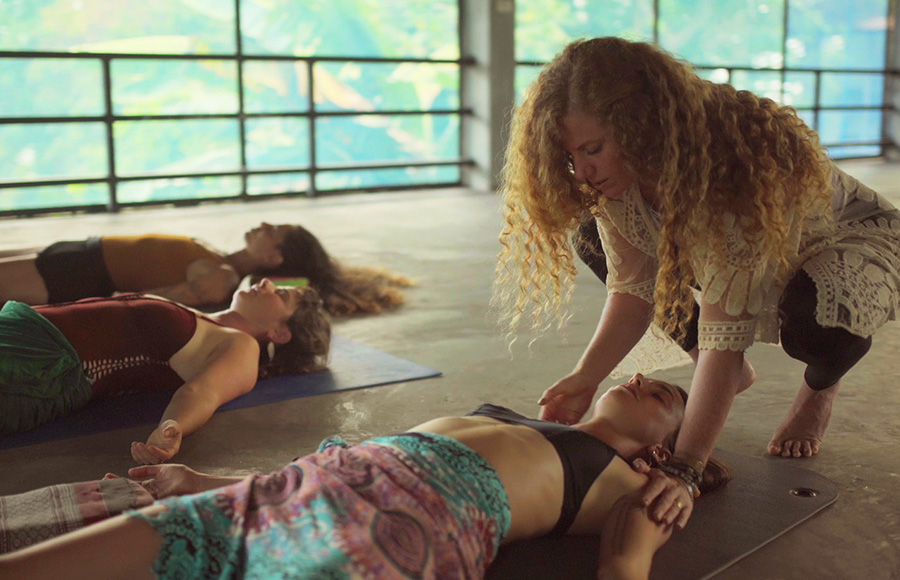
  • Somatic and Breathwork Practices: Calming the nervous system to feel safe enough to let go.

  • 12-Step Reflection: Understanding surrender as strength, not weakness.

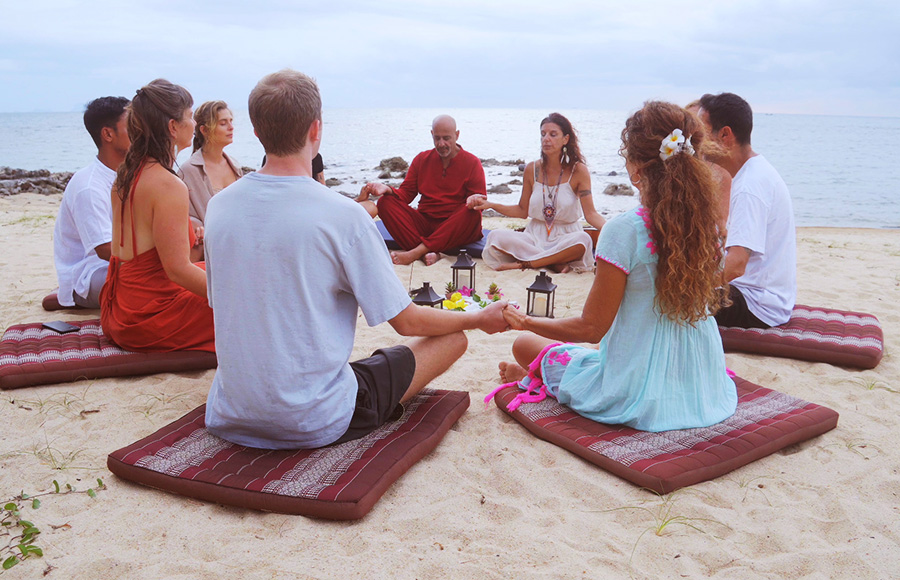
  • Nature-Based Rituals: Symbolic acts of release — such as ocean ceremonies or fire circles — where clients physically let go of what no longer serves them.

Through these experiences, clients begin to trust that letting go doesn’t mean losing control — it means gaining peace.

What Letting Go Looks Like in Daily Life

Letting go isn’t dramatic — it’s subtle. It happens in the small choices:

  • Choosing to pause instead of react.

  • Allowing yourself to cry instead of holding it in.

  • Saying “I don’t know” and being okay with it.

  • Forgiving instead of replaying the past.

  • Trusting your process even when it feels uncertain.

At Holina, clients often describe these moments as turning points — when they stop managing healing and start experiencing it.

“The day I stopped trying to control my recovery was the day I started living it.”
— Holina graduate, UK

Letting Go of the Past

Addiction is often entangled with regret — things done, things lost, people hurt.
Holding onto guilt becomes a way to punish oneself, as if pain could pay for peace.

But you cannot heal in the past. You can only heal here, now.

Holina’s forgiveness practices — including letter writing, mindfulness, and compassionate dialogue — help clients make peace with what’s gone.
They learn that forgiveness doesn’t erase accountability; it releases attachment to suffering.

The past doesn’t need to be controlled. It needs to be understood — and then let go.

Letting Go of Perfection

Recovery often awakens the “inner perfectionist” — the voice that says, “I should be further along by now.”
But healing isn’t linear, and perfection is the opposite of presence.

At Holina, clients are reminded that progress is enough. That every step, even backward ones, are part of growth.

Letting go of perfection means learning to celebrate process over outcome.
It’s realizing that being real is far more powerful than being perfect.

Letting Go of Fear

Fear thrives on control. It whispers, “If I just plan everything, I’ll be safe.”
But real safety comes from resilience, not rigidity.

Through guided therapy and mindfulness, Holina helps clients reframe fear as information — a message from the body asking for attention, not avoidance.

When you meet fear with curiosity instead of control, it loses its power.
You discover that courage is not the absence of fear, but the willingness to move with it.

Letting Go of Outcomes

Recovery invites trust — in timing, in process, in the unknown.
At Holina, clients often work on releasing attachment to specific outcomes:
What others think. How fast healing should happen. What the “future me” should look like.

Through mindfulness and group reflection, they learn to focus on alignment instead of achievement.
The paradox of letting go is that the less you force life, the more life flows.

“When I stopped trying to control everything, life started helping me.”
— Holina alumni, Singapore

The Role of Nature in Learning to Let Go

The island itself teaches surrender.
Waves rise and fall without effort. Trees shed leaves without resistance.

Holina’s ocean ceremonies and fire rituals help clients embody this truth.
In one powerful exercise, clients write what they’re ready to release — fear, guilt, control — and offer it to the sea or flame.

The act is simple, but the symbolism is profound:
You give back what was never yours to hold.
You make room for grace.

The Physiology of Surrender

Letting go changes the body.
When you release mental tension, the parasympathetic nervous system activates — lowering stress hormones, relaxing muscles, and improving digestion and sleep.

Breath deepens. Shoulders drop. Heart rate steadies.
The body learns that safety doesn’t come from control — it comes from presence.

Somatic therapists at Holina help clients tune into this process through gentle body scans and awareness practices.
The message is simple: your body knows how to let go. You just have to let it.

Spiritual Surrender: Trusting the Flow

For many, letting go takes on a spiritual dimension.
It’s the realization that life — or the universe, or a Higher Power — is not against you.

Through meditation, prayer, or quiet reflection, clients reconnect to something larger than themselves.
They begin to trust that even the hard moments serve a purpose.

Spiritual surrender is not passive — it’s participatory.
It says, “I will keep showing up, and I will trust what unfolds.”

That trust becomes the anchor of recovery.

Letting Go in Relationships

Control often shows up most strongly in relationships — through expectations, caretaking, or fear of abandonment.

At Holina, clients learn healthy detachment: loving without controlling, caring without rescuing, trusting without needing to manage others.

This creates space for genuine connection — where love is chosen freely, not earned through control.

Letting go in relationships means replacing “What if they leave?” with “I’ll still be okay.”
It’s remembering that peace cannot depend on someone else’s choices.

Letting Go of the Need to Understand Everything

Recovery awakens big questions — Why did this happen? Why me? What now?
But some healing doesn’t arrive as answers — it arrives as acceptance.

Through mindfulness and reflective therapy, Holina helps clients find peace in not knowing.
Because life doesn’t always explain — it invites.

Letting go of the need to understand everything opens space for awe, humility, and grace.

Stories of Letting Go and Healing

“I spent years trying to control everything — my feelings, my recovery, even my healing. The moment I stopped fighting, I found peace.”
— Holina graduate, UK

“Letting go didn’t mean I lost power. It meant I stopped wasting it.”
— Holina alumni, Australia

“Control used to keep me alive. Now, surrender keeps me free.”
— Holina client, Germany

Each story carries the same truth: the art of letting go is the art of living again.

FAQs About Letting Go in Recovery at Holina Rehab

Q1: What if letting go makes me feel unsafe?
That’s completely natural. At Holina, we help you build emotional and physical safety first, so surrender feels like freedom, not fear.

Q2: How do I know what to let go of?
Start with what feels heavy — guilt, expectations, control. Your body will tell you what’s ready to release.

Q3: Does letting go mean not caring anymore?
No. It means caring differently — with compassion, not control.

Q4: Is surrender part of the 12-Step program?
Yes. Step 1 and Step 3 center on surrendering control to something greater than oneself — a key part of emotional and spiritual recovery.

Q5: Can I practice letting go after leaving Holina?
Absolutely. Meditation, journaling, and mindfulness rituals are simple ways to continue the practice daily.

Conclusion: Letting Go Is How You Return to Life

The moment you let go, you make space for something new — peace, connection, freedom.
Control may have once protected you, but it’s not needed in healing.

At Holina Rehab Thailand, letting go becomes a living practice — one of trust, softness, and courage.
Because recovery isn’t about holding everything together. It’s about allowing everything to unfold.

And when you finally release what’s not yours to carry, you discover what’s always been waiting underneath — your true self.

Begin your healing journey with Holina today.
Get back to yourself — and let life meet you halfway.

About Me

Avatar photo

Ian Young

Ian Young is the Global Manager at Holina Care Centres in Koh Phangan, Thailand. Ian oversees the rehabilitation programs that blend the 12 Step model, Psychology, Counselling, Coaching, Somatic and many other therapeutic engagements, alongside various evidence-based therapies with holistic healing practices. Holina Rehab treats addictions, trauma, anxiety, depression, and other emotional challenges, offering comprehensive care in a serene resort environment. Ian, a charismatic speaker and author of “It’s Not About Me” leveraging his own recovery journey from addiction to inspire and guide others toward a fulfilling, addiction-free life.


Tags

Newsletter

Have a Question?