
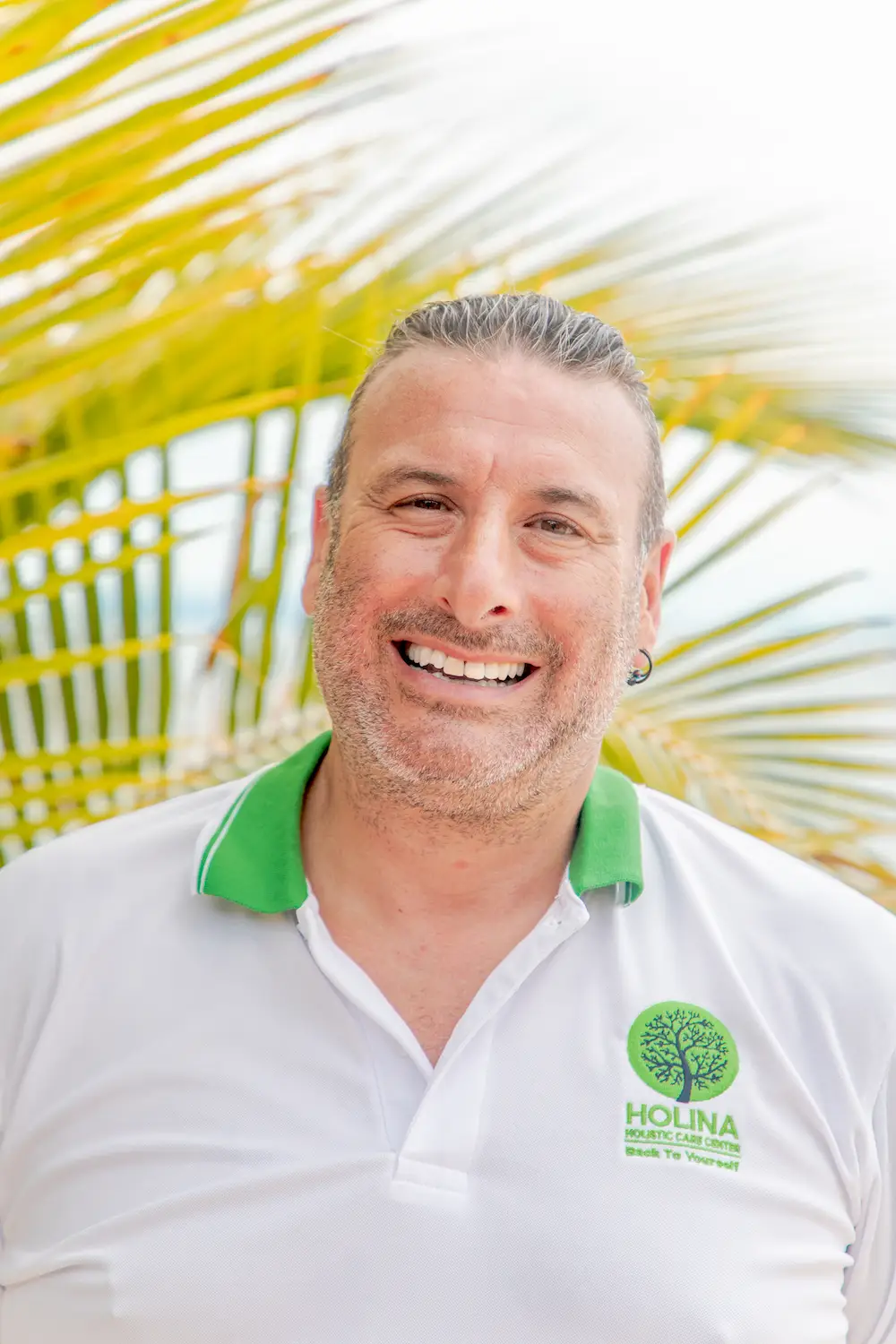

Clinically reviewed by Marc Rower, Trauma Therapist, Holina Rehab. Review pending final sign-off.
Choosing residential addiction treatment is one of the most important decisions a person can make, and the environment in which that treatment happens matters. A calm, private, comfortable setting is not a luxury add-on to recovery, it is part of what makes deep clinical work possible. When the nervous system finally feels safe, people can face the substance use and the pain beneath it without being overwhelmed. That is the principle behind residential care at Holina Rehab on the island of Koh Phangan, Thailand, a licensed addiction-treatment facility (Thai Ministry of Public Health licence #84-03-00294) where a restorative setting supports a structured, clinically grounded recovery programme rather than replacing it.
In this article we look at what a genuinely healing residential environment provides during addiction treatment, why comfort and calm support clinical outcomes, and how Holina combines the 12-step social model, trauma-informed therapy and holistic modalities inside one programme. For more information, contact us on +66 82 113 0657 (international) or +66 61 936 8047 (Thai).
Why the Recovery Environment Matters in Addiction Treatment
Addiction rarely exists on its own. For many people, substance use began as a way to cope with trauma, chronic stress or unresolved emotional pain, and the two become tightly bound together. Peer-reviewed literature estimates that roughly 30 to 60 percent of people with post-traumatic stress disorder also have a co-occurring alcohol or drug use disorder, and among people seeking treatment for addiction, 30 to 50 percent meet criteria for lifetime PTSD. Trauma keeps the body’s stress response switched on, and substances offer temporary relief that reinforces the cycle.
This is why a safe, low-pressure environment is clinically useful, not indulgent. When someone is not braced against constant alarm, the therapeutic work of early recovery becomes possible. A stable, supportive residential setting reduces the distractions and triggers of everyday life and gives people the space to engage fully with treatment. At Holina this is the foundation of the Dual Treatment programme, which addresses addiction and its underlying psychological drivers at the same time rather than one after the other.
Who Residential Addiction Treatment Is For
Holina Rehab is for people whose relationship with alcohol, drugs or addictive behaviour has begun to damage their health, relationships, work or sense of self. The programme treats substance dependencies including alcohol, cocaine, crack, crystal meth, ketamine, heroin, methadone and benzodiazepines, as well as process and behavioural addictions such as gambling, sex, love and co-dependency.
It is well suited to people who have tried to stop before and could not sustain it, people carrying trauma alongside their addiction, and those who want treatment that addresses the whole person rather than the substance alone. Residential care is also appropriate for anyone who needs distance from the environment where their addiction took hold in order to begin recovery on stable ground.
What Holina’s Programme Includes
Recovery at Holina is delivered by a clinical and therapeutic team, overseen by a Clinical Director and supported by a consultant psychiatrist, medical doctor and nursing staff. Treatment is built around the 12-step social model and combined with trauma-informed, evidence-based therapy. Structured elements include:
- One-to-one counselling and individual therapy sessions
- Group therapy and the 12-step recovery model
- Trauma therapy addressing the root causes driving addictive behaviour
- Somatic therapy and breathwork to help re-regulate the nervous system
- Art, movement and psychodrama therapy for emotional processing
- Mindfulness, meditation, yoga and structured physical activity such as Muay Thai
Each treatment plan is individualised rather than a fixed template, and modalities are matched to the person’s clinical needs. For those whose addiction is rooted in trauma, this work connects directly to Holina’s trauma treatment approach.
A Setting That Supports Clinical Work
Holina’s location on Koh Phangan provides private accommodation, quiet gardens, nourishing meals and access to the sea and nature. This is not a spa holiday and it is not a substitute for treatment. The calm surroundings exist to reduce stress and help residents feel safe enough to do difficult clinical work. Body-based and water therapies, including the aquatic work led by the therapy team, are used as clinical tools to help people reconnect with a sense of physical safety, which is often disrupted by trauma and addiction.
Care is residential and structured, with a daily routine that balances therapy, rest and healthy activity. Programmes run over 30, 60 and 90-day options, with many residents choosing 60 days for deeper stabilisation. Every admission includes a free six-month aftercare programme, because sustained recovery depends on ongoing support after leaving treatment. Holina holds a 4.8 out of 5 rating across 82 Google reviews.
“I was looking for a holistic and mainly somatic approach to treat my addiction due to trauma. And this is exactly what I found at Holina, Thailand. A tailored variety of treatments in one on one settings or in different group settings also fun activities like Muay Thai Boxing. My recovery went better than I ever thought would be possible. I can’t praise staff and therapists highly enough.”
— Mon, Google review, 28 March 2025
How to Choose the Right Addiction Treatment Centre
When comparing residential rehab options, it helps to ask focused questions. Does the centre hold a recognised licence to provide addiction treatment? Does it address underlying causes such as trauma, or only the substance use? Are treatment plans individualised? Is there qualified clinical and medical oversight? And is there structured aftercare once the residential stay ends? A comfortable environment matters, but it should always sit alongside real clinical substance, not in place of it.
Holina is a private-pay facility and does not process insurance claims. Pricing is all-inclusive and depends on room type and programme length. You can read more about Holina’s approach on the Dual Treatment programme page or learn about the wider treatment of drug addiction.
A Note From the Clinical Team
“At Holina, trauma therapy complements the social model of the 12-step programme. We work to understand the root causes driving the symptoms and coping strategies of addiction. Seen in that light, addictive behaviour is often not the problem itself but an attempt to cope with deeper emotional pain, and a safe, supportive environment gives people the stability to face that pain and move toward lasting recovery.” — Marc Rower, Trauma Therapist, Holina Rehab (draft quote, pending sign-off)
Conclusion
A calm and comfortable setting can make residential addiction treatment more bearable, but on its own it does not create recovery. What changes lives is structured, trauma-informed clinical care delivered by an experienced team, in an environment safe enough to allow the work to happen. That is what Holina Rehab offers on Koh Phangan: a licensed addiction-treatment programme that treats the substance use and the pain beneath it together. If you or someone you love is ready to take that step, contact the Holina team on +66 82 113 0657 (international) or +66 61 936 8047 (Thai).
Frequently Asked Questions
Is Holina a wellness retreat or an addiction treatment centre?
Holina Rehab is a licensed addiction-treatment facility (Thai MoPH licence #84-03-00294), not a wellness retreat. Holistic modalities are used as part of a structured clinical recovery programme, not as standalone spa services.
What addictions does Holina treat?
Substance dependencies including alcohol, cocaine, crack, crystal meth, ketamine, heroin, methadone and benzodiazepines, along with process and behavioural addictions such as gambling, sex, love and co-dependency.
How long is the programme?
Holina offers 30, 60 and 90-day programmes. Many residents choose 60 days for deeper stabilisation, and every admission includes a free six-month aftercare programme.
Does treatment address trauma?
Yes. Holina’s Dual Treatment programme addresses addiction and its underlying psychological drivers, including trauma, at the same time through trauma-informed, evidence-based therapy.
Where is Holina located?
On the island of Koh Phangan, Thailand, in a private residential setting designed to support recovery.
Ready to Start Your Recovery Journey?
Our clinical team is available to answer your questions and help you find the right programme for your needs.
Speak with Our Team →