
Modalities for Healing Trauma
Holina Rehab treats trauma as part of addiction recovery, not as a separate retreat. Within our Dual Treatment programme, licensed therapists use breathwork, aquatic tuning, somatic therapies, NARM, TRE, Inner Walk, and trauma-focused psychotherapy to resolve the trauma that so often drives compulsive substance use — alongside medical detox and evidence-based addiction therapy.
- Licensed Facility
- Medical Detox Available
- Koh Phangan, Thailand
- 30–90 Day Programmes
What Are the Modalities for Healing Trauma at Holina Rehab?
Trauma is a deeply personal experience, and the process of healing must take into account the many ways it affects the body, mind, and spirit. At Holina Rehab, trauma is not treated as a standalone condition — it is addressed because it so often sits underneath the addiction that brought someone to us in the first place. Unresolved trauma can keep the nervous system on high alert long after the original event, and substance use frequently becomes the way clients have learned to manage that state.
The modalities on this page — Breathwork, Aquatic Tuning, Somatic Therapies, NARM, TRE, Inner Walk, and Psychotherapy for Trauma — are specialised treatments used to help clients process and release the stored emotions, memories, and physical tension resulting from traumatic experiences, delivered as part of our residential Dual Treatment programme for addiction and its underlying drivers. These modalities combine traditional and body-based approaches, and are assigned according to each client’s clinical assessment rather than offered as a fixed menu.
The link between unresolved trauma and addiction is well documented. The landmark CDC-Kaiser Adverse Childhood Experiences (ACE) Study found that adults reporting four or more categories of childhood adversity had a 4- to 12-fold increased risk of alcoholism, drug abuse, depression, and suicide attempt compared with adults reporting none (Felitti et al., American Journal of Preventive Medicine, 1998). SAMHSA’s Trauma-Informed Care in Behavioral Health Services similarly describes trauma exposure as widespread among people in behavioural health and substance use treatment, and identifies addressing that trauma — not just the substance use — as central to effective care (SAMHSA, TIP 57, 2014). And the National Institute on Drug Abuse is explicit that “effective treatment attends to multiple needs of the individual, not just his or her drug use” (NIDA, Principles of Drug Addiction Treatment: A Research-Based Guide, 3rd Edition, 2018). Holina’s Dual Treatment programme is built around this evidence: addiction and its underlying trauma are treated together, not in sequence.
How Does Holina Rehab Treat Trauma As Part of Addiction Recovery?
Following clinical assessment, our therapists draw on the following modalities — alone or in combination — to resolve the trauma underneath a client’s addiction. Each is delivered by our clinical team within the residential programme, alongside medical detox, the 12-Step model, CBT and DBT — not as a separate retreat track.
Breathwork
Guided breathing practices calm the nervous system and help create the physiological balance clients need to safely process stored trauma while working on their addiction.
Breathwork for Trauma Recovery →Aquatic Tuning
A water-based therapeutic method built on sensory awareness and nervous system regulation, used at Holina to support recovery from addiction, depression, and anxiety together.
Aquatic Tuning for Trauma Recovery →Somatic Therapies
Body-focused work that helps clients bring awareness to physical sensation, safely releasing trauma stored in the body rather than only processed intellectually.
Somatic Therapies →NARM
The NeuroAffective Relational Model addresses developmental and relational trauma, helping clients understand how early experience shaped the coping patterns that fed their addiction.
NARM Therapy for Trauma Recovery →TRE
Trauma Releasing Exercises use a series of gentle physical exercises to help the body release tension and stress that has been held since a traumatic experience.
TRE at Holina Rehab →Inner Walk
A guided, movement-based reflective practice that helps clients build an honest connection to self — a foundation for both trauma recovery and sustained sobriety.
Inner Walk for Trauma Recovery →Psychotherapy for Trauma
One-to-one trauma-focused psychotherapy, including EMDR and trauma-focused CBT, helps clients process traumatic memories in a safe, structured way and change the thought patterns trauma leaves behind.
Psychotherapy for Trauma Recovery →Your Personalised Plan
No two clients receive the same combination. Your clinical assessment determines which of these modalities are built into your addiction treatment plan — and in what order.
Start Your Assessment →Why Does Trauma Treatment Need More Than One Modality?
Trauma affects the body, mind, and nervous system in different ways, so no single therapy addresses all of it. Holina Rehab combines talking therapies with body-based work because clients process trauma differently — and because the same combined approach that resolves trauma also reduces the risk of relapse.
Assessment
Clinical evaluation identifies whether trauma is present and which modalities are indicated, alongside the addiction treatment plan.
Stabilisation
Medical detox and nervous-system regulation (breathwork, aquatic tuning) create the safety needed before deeper trauma work begins.
Processing
Somatic therapies, NARM, TRE, Inner Walk and trauma-focused psychotherapy address the trauma directly, alongside CBT and DBT for the addiction.
Integration
Aftercare planning carries the trauma and addiction work forward together, so progress in one does not unravel without the other.

Trauma-Informed. Individually Assigned.
-
Dual Treatment — Addiction & Trauma
Trauma is treated as a driver of addictive behaviour, not a separate condition, by the same clinical team managing your addiction recovery.
-
Body and Mind, Together
Talking therapies (EMDR, TF-CBT, NARM) are combined with body-based work (breathwork, aquatic tuning, TRE) so trauma is addressed on every level.
-
Delivered Within Residential Care
Every modality on this page is delivered inside Holina’s licensed residential programme in Koh Phangan — not as a separate retreat product.
Trauma-Informed Care, Inside Addiction Treatment

One Team, One Plan
Holina Rehab is fully licensed by the Thai Ministry of Public Health. The same clinical team — our Clinical Director, trauma therapist, counselling psychologist, and mindfulness therapist — treats both the addiction and the trauma underneath it, so there is no handoff between a “rehab” team and a separate “trauma” team.
Medical detoxification, Dual Treatment, and the trauma modalities on this page are delivered within a single integrated residential setting.

A Setting That Supports the Work
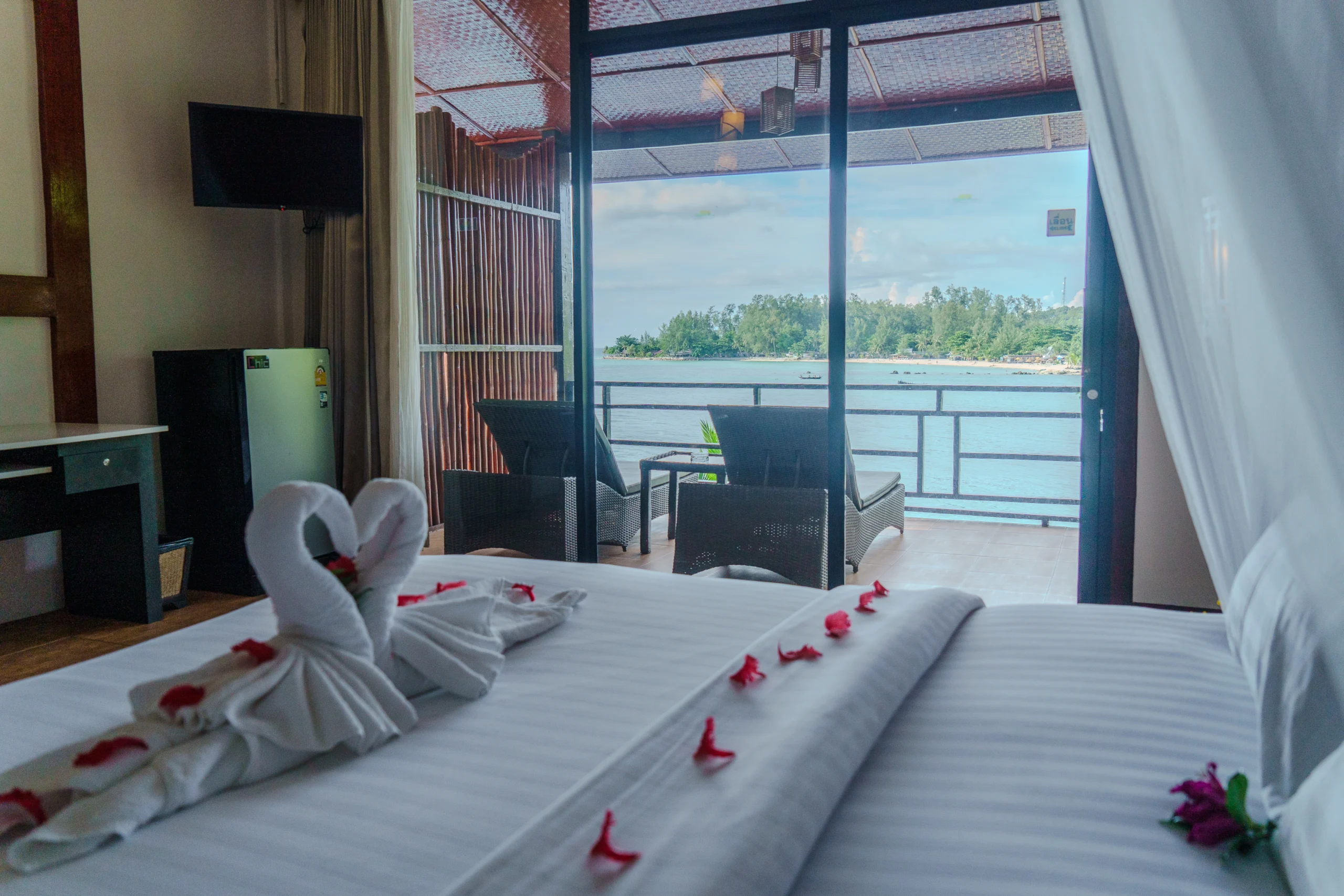
The tropical island setting of Koh Phangan creates distance from the pressures and triggers of everyday life — conditions that support the nervous-system regulation these trauma modalities depend on.
Clients benefit from private beach access, swimming pools, an on-site gym, and a calm environment that complements the clinical programme, without positioning trauma work as a wellness holiday.
Who Delivers Trauma Treatment at Holina Rehab?
Every modality on this page is delivered by a qualified member of our clinical team, working from the same treatment plan as your addiction recovery programme.




Licensed by the Thai Ministry of Public Health · Residential Rehab Licence #84-03-00294 · International Addiction Treatment Standards
“The staff didn’t just do their jobs – they really cared, listened, and supported me through every step.”
— Af. Sa., Recovery.com Review, 4 Sep 2025 · ★★★★★
Modalities for Healing Trauma: Frequently Asked Questions
Why does Holina Rehab treat trauma alongside addiction?
Because for many clients, trauma is what the addiction has been managing. Treating the substance use without addressing the trauma underneath it leaves the conditions for relapse in place. Our Dual Treatment programme treats both together, from day one of a client’s residential stay.
Do I choose one trauma modality, or are they combined?
They are combined according to your clinical assessment, not chosen from a menu. Most treatment plans draw on more than one modality — for example, breathwork or aquatic tuning to regulate the nervous system alongside psychotherapy or NARM to process the underlying trauma directly.
Is trauma treatment optional at Holina Rehab?
Trauma-specific modalities are built into your programme when your clinical assessment identifies trauma as a driver of your addiction. It is not a separate, optional retreat — it is part of the same residential Dual Treatment plan as your addiction recovery.
What is the difference between these modalities and a standalone trauma retreat?
These modalities are clinical treatments delivered inside a licensed residential addiction programme, by the same team — including our Clinical Director and trauma therapist — who manage your addiction treatment. They are not offered as a separate wellness retreat or stand-alone product.
Which trauma modality is right for me?
That is determined during your clinical assessment, not before it. Your assigned therapist reviews your history and current presentation, then builds the combination of modalities — from breathwork to trauma-focused psychotherapy — into your individual treatment plan.
Does insurance cover trauma therapy as part of rehab?
Trauma treatment is built into Holina’s residential programme rather than billed as a separate add-on. Coverage for the overall programme depends on your provider and policy — see rehab insurance and financing or contact our team to check your specific cover.
Ready to Begin Your Recovery?
Our admissions team responds the same day — seven days a week, in full confidence.
+66 (0) 82 113 0657 or contact us online ↓