
Trauma, Body & the Nervous System
Trauma doesn’t just live in memory — it reshapes the nervous system, keeping the body locked in fight, flight, or freeze long after the danger has passed. That same dysregulated nervous system also drives cravings and compulsive substance use, which is why Holina Rehab treats trauma and addiction together through evidence-based somatic therapy, not as separate problems.
- Licensed Facility
- Trauma-Informed Care
- Koh Phangan, Thailand
- 30–90 Day Programmes
How Does Trauma Change the Body and Nervous System?
Trauma is not only a psychological experience — it is stored in the body and the nervous system. A traumatic event triggers the body’s fight, flight, or freeze response, flooding the system with stress hormones and shifting the nervous system into a state of high alert. For many people, that state doesn’t fully switch off once the danger has passed.
This is why trauma so often shows up physically as much as emotionally — as chronic tension, fatigue, digestive issues, headaches, or a heightened sensitivity to touch, sound, and movement. The body stays braced for a threat that is no longer there, and the nervous system keeps producing the same survival responses long after the original event.
A dysregulated nervous system doesn’t only affect mood and physical health — it is also one of the clearest links between trauma and addiction. Substances are frequently used, consciously or not, as a way to self-regulate a nervous system that cannot find its own way back to calm. Treating the addiction without addressing that underlying dysregulation leaves the drivers of relapse in place, which is why Holina Rehab’s Dual Treatment programme treats trauma and addiction as one connected clinical picture, not two separate problems.
Childhood trauma is one of the strongest known predictors of adult substance use problems: the landmark CDC–Kaiser Permanente Adverse Childhood Experiences (ACE) Study found that adults reporting four or more categories of childhood trauma were several times more likely to report later alcohol or drug problems than those reporting none (Felitti et al., 1998, American Journal of Preventive Medicine). Chronic stress and trauma also affect the same brain stress-response and reward circuits disrupted by long-term substance use — part of why craving is increasingly understood by researchers as a nervous-system-level response, not simply a lack of willpower (National Institute on Drug Abuse, “Drugs, Brains, and Behavior: The Science of Addiction,” 2020).
Why Are Cravings and Addictive Behavior Also a Nervous System Response?
Trauma and addiction are frequently driven by the same nervous system mechanisms. Recognising these patterns is often the first step toward understanding why substance use developed in the first place — and why the two must be treated together.
Fight-or-Flight Overdrive
A nervous system stuck in high alert produces anxiety, irritability, and a constant sense of danger — a state many people try to numb or escape through substance use.
Freeze & Shutdown
Some trauma responses present as numbness, disconnection, or fatigue rather than anxiety — a shut-down nervous system state that substances are often used to override.
Chronic Physical Tension
Trauma stored in the body can surface as chronic pain, fatigue, digestive issues, and headaches — symptoms substance use is sometimes used to mask.
Sensory Hypersensitivity
Heightened sensitivity to touch, sound, or movement is the body staying braced for a threat that has already passed.
Cravings as a Nervous System Signal
Cravings frequently spike alongside stress-response activation, not from physical dependence alone — regulating the nervous system is part of reducing them.
Difficulty Feeling Calm Without Substances
When the nervous system cannot return to a baseline of calm on its own, substances can become the fastest available way to feel regulated.
How Does Somatic Therapy Treat Trauma as Part of Addiction Recovery?
At Holina Rehab, trauma and the nervous system are treated as part of addiction recovery, integrated into our Dual Treatment programme rather than delivered as a separate, stand-alone service.
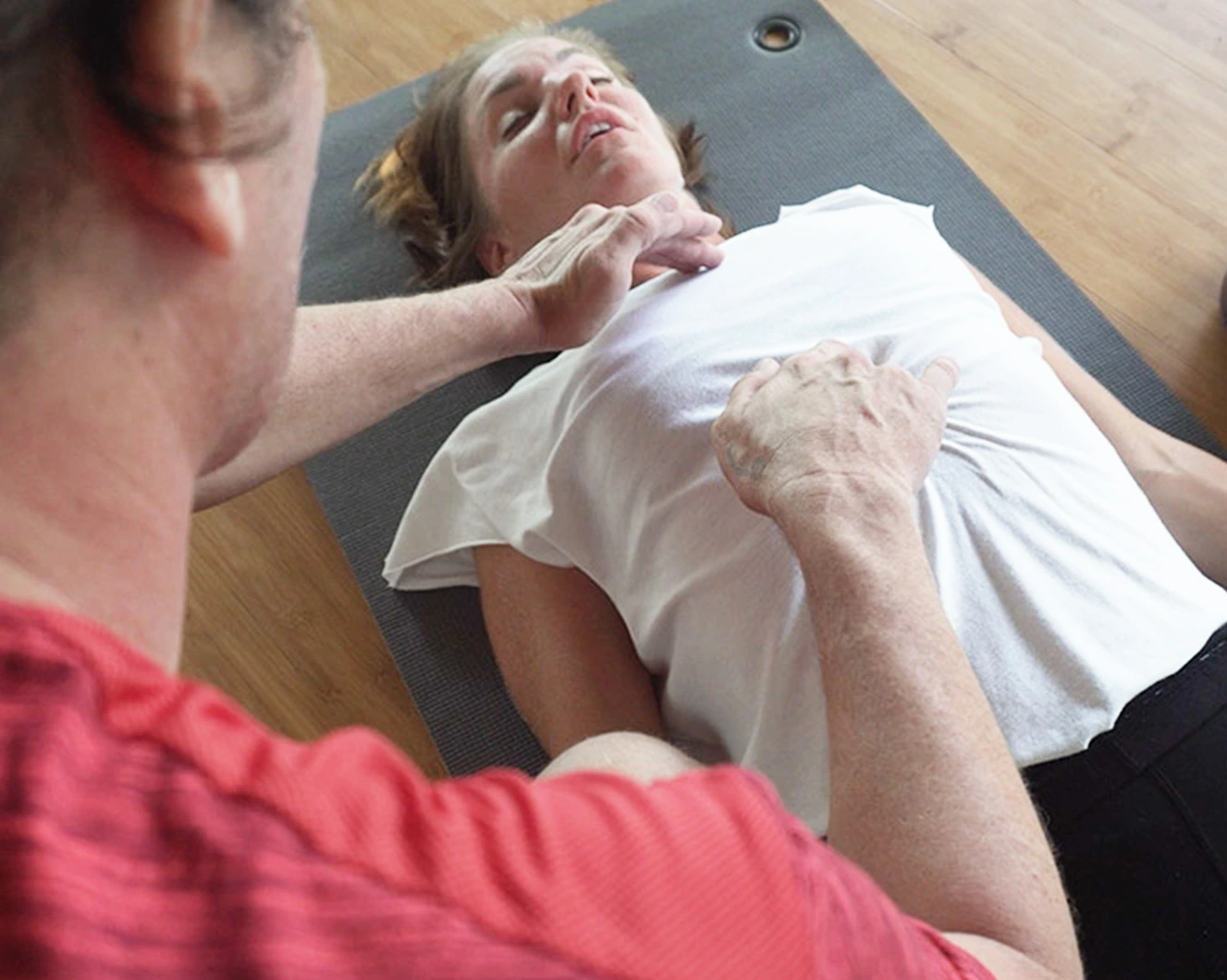
Somatic Experiencing
A body-based approach that helps clients notice and release the physical sensations connected to past trauma, rather than only discussing it.
Breathwork & Regulation
Structured breathwork helps activate the parasympathetic (“rest and digest”) nervous system, countering the fight-or-flight state that fuels cravings.
Yoga & Movement
Movement-based practices help clients reconnect safely with the body and release physical tension held from past trauma.
Mindfulness & Psychotherapy
Talk-based and mindfulness therapies process the emotional content of trauma alongside the body-based work.

Evidence-Informed. Individually Tailored.
-
Somatic Experiencing & TRE
Somatic Experiencing and Trauma Releasing Exercises (TRE) focus on bodily sensations and deep muscle tension to help clients process and release trauma stored in the nervous system, rather than only in memory.
-
Nervous System Regulation Techniques
Breathwork, yoga, and mindful movement help clients shift out of chronic fight-flight-freeze states and reduce the physiological drivers of craving.
-
Dual Treatment — Trauma & Addiction Together
Trauma-focused psychotherapy and addiction treatment are delivered as one integrated programme, not as sequential or separate services.
Trauma and Addiction, Treated as One Clinical Picture

Licensed Medical Facility, Trauma-Informed Throughout
Holina Rehab is fully licensed by the Thai Ministry of Public Health and operates under international addiction treatment standards. Every clinician working on trauma and the nervous system does so within a licensed clinical programme, not as a stand-alone service.
Somatic therapy, nervous system regulation, and Dual Treatment for addiction and trauma are delivered within a single integrated residential setting — no referrals, no gaps in care.

A Structured Environment Built for Nervous System Regulation
Regulating an overactive nervous system takes more than technique — it requires distance from the environments and triggers that keep the body in a state of high alert. Koh Phangan provides that distance within a licensed clinical setting.
Clients move through a consistent daily structure that supports the nervous system’s return to a baseline of calm, alongside the clinical and somatic work of the Dual Treatment programme.
Our Clinical Team
Treatment at Holina Rehab is led by qualified medical professionals and experienced addiction and trauma therapists. Every client is under active clinical supervision throughout their programme.




Licensed by the Thai Ministry of Public Health · Residential Rehab Licence #84-03-00294 · International Addiction Treatment Standards
“This was amazing and I did not want to go so I stayed for more than 100 days! It was really worth it.”
— Vallý Bergland Fjólmundsdóttir, Google Review, 22 Mar 2026 · ★★★★★
Trauma, Body & the Nervous System: Frequently Asked Questions
What happens in the body during and after trauma?
A traumatic event triggers the body’s fight, flight, or freeze response, flooding the nervous system with stress hormones. For many people that response doesn’t fully switch off, leaving the body braced for danger long after the event has passed — often showing up as chronic tension, fatigue, digestive issues, headaches, or heightened sensitivity to touch, sound, and movement.
Why do trauma and addiction so often occur together?
A dysregulated nervous system is one of the clearest links between the two. Substances are frequently used, consciously or not, to self-regulate a nervous system that cannot find its own way back to calm. The CDC–Kaiser Permanente Adverse Childhood Experiences (ACE) Study (Felitti et al., 1998) found that people who reported four or more categories of childhood trauma were considerably more likely to report later alcohol or drug problems than those who reported none.
What is somatic therapy and how is it different from talk therapy?
Somatic therapy for trauma focuses on the body’s sensations, movements, and emotions rather than only on discussion. Because the body holds onto tension and memory from past experience, techniques such as Somatic Experiencing and Trauma Releasing Exercises (TRE) help clients become aware of and release that stored tension, rather than only talking through it.
Can nervous system dysregulation cause cravings even after detox is complete?
Yes. Cravings frequently track with nervous system activation, not physical dependence alone. If the underlying dysregulation from trauma is left unaddressed after detox, it can continue to drive craving and relapse risk — which is why nervous system regulation is built into Holina’s Dual Treatment programme rather than treated as optional.
What nervous system regulation techniques does Holina Rehab use?
Our programme combines Somatic Experiencing, Trauma Releasing Exercises (TRE), breathwork to activate the parasympathetic nervous system, yoga and movement therapy, mindfulness practice, and trauma-focused psychotherapy — all delivered alongside clinical addiction treatment.
Is trauma treatment separate from addiction treatment at Holina Rehab?
No. Trauma and the nervous system are treated as part of addiction recovery through our Dual Treatment programme, which addresses the addiction and its underlying drivers — including trauma — at the same time, in one integrated residential setting.
Ready to Begin Your Recovery?
Our admissions team responds the same day — seven days a week, in full confidence.
+66 (0) 82 113 0657 or contact us online ↓