
Synthetic Drugs: The Hidden Risk of Man-Made Substances
Synthetic drugs are lab-made chemicals engineered to mimic cannabis, stimulants, or opioids — often altered specifically to dodge drug laws. Because their exact chemical makeup keeps changing, potency is unpredictable and users rarely know what they have actually taken, making overdose and severe psychiatric reactions far more likely than with the natural drugs they imitate.
- Licensed Facility
- Medical Detox Available
- Koh Phangan, Thailand
- 30–90 Day Programmes
What Are Synthetic Drugs and Why Are They So Unpredictable?
Synthetic drugs are chemicals produced in a laboratory to reproduce the effects of a natural or pharmaceutical drug — cannabis, amphetamines, or opioids — without necessarily sharing its chemical structure. Many were first developed as legitimate research chemicals or veterinary medicines before being diverted for recreational misuse.
What makes this drug class distinct is the deliberate, ongoing chemical modification behind it. When a government schedules a specific synthetic compound as illegal, clandestine manufacturers frequently respond by tweaking a side chain or functional group to create a new, technically unscheduled analogue with a similar effect. The U.S. Drug Enforcement Administration placed the first five synthetic cannabinoids into Schedule I in March 2011; by 2012, Congress passed the Synthetic Drug Abuse Prevention Act to add 26 more synthetic cannabinoids and cathinones to the same schedule — and manufacturers had already begun selling reformulated versions.
This cat-and-mouse dynamic is why synthetic drugs are considered uniquely dangerous. A product sold under the same street name from one week to the next can contain an entirely different chemical, at an entirely different strength, with no quality control, no dosing standard, and often no way for a treating physician to identify it on a standard toxicology screen.
Since global monitoring began in 2009, more than 1,100 individual new psychoactive substances (NPS) have been reported to the UN Office on Drugs and Crime’s Early Warning Advisory by more than 130 countries and territories (UNODC, 2022). In Southeast Asia, novel synthetic cocktails such as “happy water” and “k-powdered milk” — unregulated mixtures of ketamine, benzodiazepines, and other substances — have emerged in nightlife settings across the region, including Thailand (UNODC Global SMART Update, 2022). Holina’s Dual Treatment programme is built to assess and stabilise clients even when the exact substance taken is unknown.

Common Types of Synthetic Drugs
“Synthetic drugs” is an umbrella term covering several distinct chemical families. Each mimics a different natural drug class — and each carries its own specific dangers.
Synthetic Cannabinoids
Lab-made chemicals sprayed onto plant material and marketed as legal cannabis alternatives. They bind to the same brain receptors as THC but far more aggressively, and are not reliably detected by routine urine drug screens — making overdose, psychosis, and severe cardiovascular reactions common (DEA; NIDA).
Compare with cannabis addiction →Synthetic Cathinones
Human-made stimulants chemically related to cathinone, a compound found in the khat plant. Sold as cheap substitutes for cocaine or methamphetamine, they can cause life-threatening intoxication, and repeated use can lead to a diagnosable stimulant use disorder (NIDA).
Compare with stimulant detox →Synthetic Opioids & Fentanyl Analogues
Lab-made opioids, some originally developed for veterinary or research use, that are dramatically more potent than heroin or morphine — carfentanil is roughly 100 times more potent than fentanyl itself (DEA). Because of the scale and specific danger of this category, we cover it in full on our dedicated page.
Read our Fentanyl Crisis guide →Why This Matters for Treatment
Because synthetic drugs are so chemically inconsistent, many clients who arrive at Holina Rehab genuinely do not know the exact substance, dose, or combination they have taken. Our assessment and Dual Treatment model are built around that uncertainty from day one.

Assessment First, Assumptions Never
-
Medical Evaluation for Unknown Substances
Our on-site physician and nursing team treat the presenting symptoms — cardiac, neurological, psychiatric — rather than relying solely on a self-report of what was taken, since synthetic drug composition can vary batch to batch.
-
Dual Treatment for Drug-Induced Psychiatric Symptoms
Synthetic cannabinoids and cathinones are strongly associated with paranoia, panic, and psychosis. Our Dual Treatment programme addresses these symptoms alongside the addiction itself, rather than treating them as unrelated.
-
24-Hour Clinical Monitoring
Because the potency of a synthetic drug batch cannot be predicted from its appearance or street name, every resident is under continuous clinical observation during stabilisation and early recovery.
A Different Kind of Recovery

Licensed Medical Facility
Holina Rehab is fully licensed by the Thai Ministry of Public Health and operates under international addiction treatment standards. Our on-site physician, nursing staff, and experienced addiction therapists provide 24-hour clinical oversight — essential when the substance involved is unregulated and its exact composition is unknown.
Medical stabilisation, dual treatment for addiction and behavioural health, and evidence-based therapy are delivered within a single integrated residential setting — no referrals, no gaps in care.

The Koh Phangan Recovery Environment
The tropical island setting — sea air, natural surroundings, and distance from daily triggers — creates conditions for the psychological reset that recovery from unpredictable substance use requires. Koh Phangan is home to one of Asia’s largest healing communities.
Clients benefit from private beach access, swimming pools, on-site gym, a nutritious restaurant, and a range of holistic therapies that complement the clinical programme.
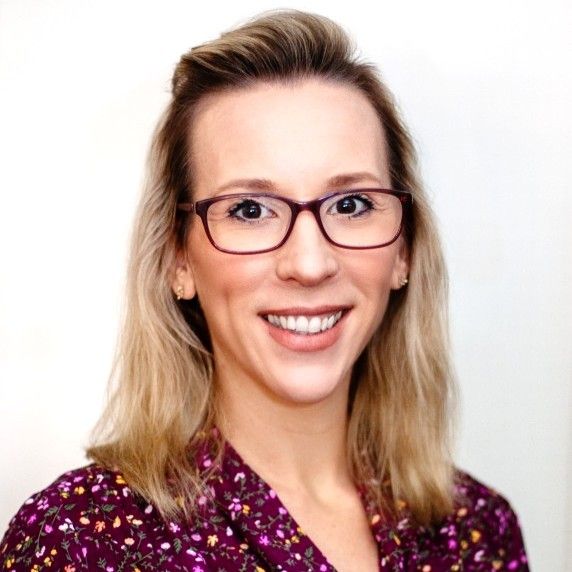
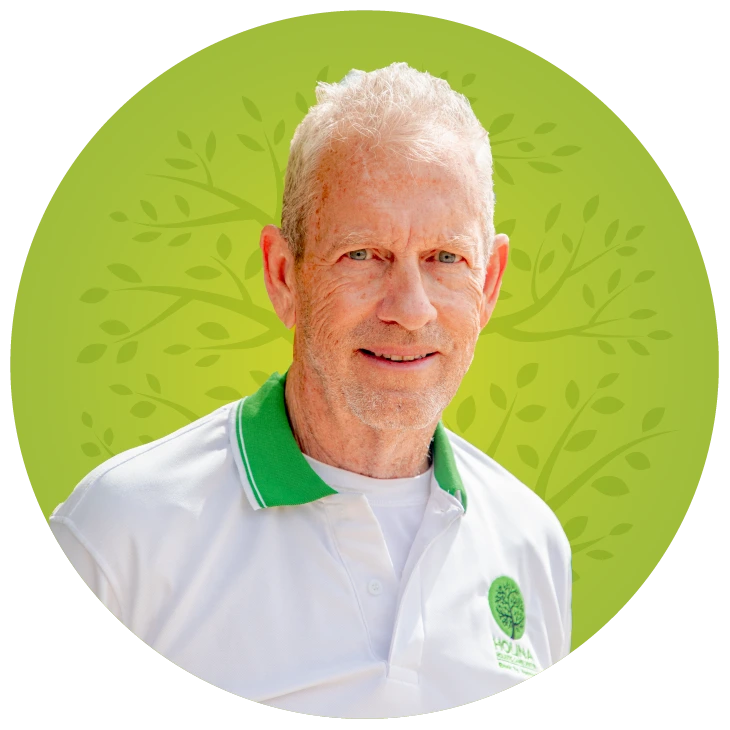
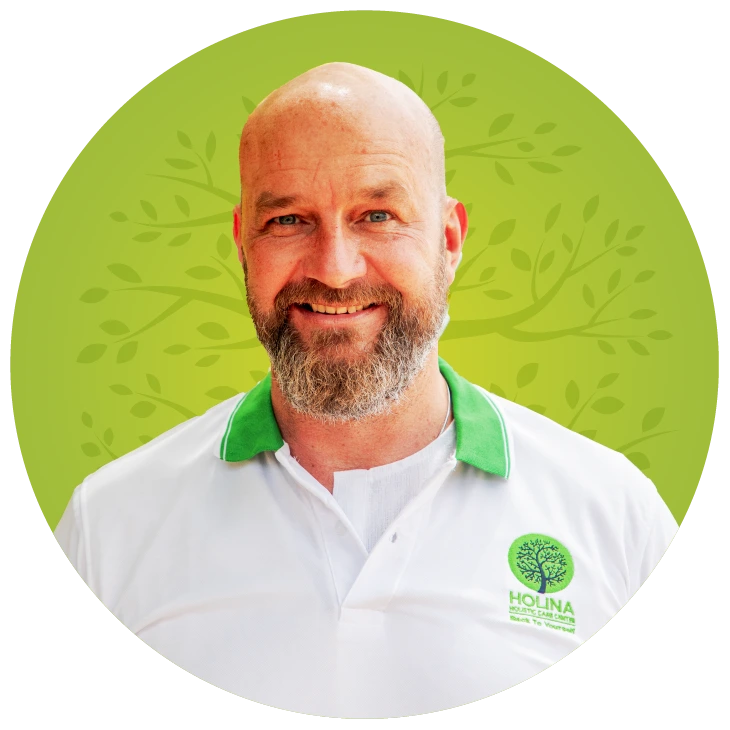
Our Clinical Team
Treatment at Holina Rehab is led by qualified medical professionals and experienced addiction therapists. Every client is under active clinical supervision throughout their programme.

Licensed by the Thai Ministry of Public Health · Residential Rehab Licence #84-03-00294 · International Addiction Treatment Standards
“The staff didn’t just do their jobs – they really cared, listened, and supported me through every step.”
— Af. Sa., Recovery.com Review, 4 Sep 2025 · ★★★★★
Synthetic Drugs: Frequently Asked Questions
What exactly is a synthetic drug?
A synthetic drug is a chemical produced in a laboratory to reproduce, mimic, or intensify the effect of a natural or pharmaceutical drug — such as cannabis, amphetamines, or opioids — without necessarily sharing its chemical structure. Common examples include synthetic cannabinoids (K2, Spice), synthetic cathinones (bath salts), and synthetic opioids such as fentanyl analogues.
Why are synthetic drugs considered more dangerous than the drugs they mimic?
Because they are produced with no quality control and no consistent formula, potency and composition vary from batch to batch. Manufacturers also regularly alter the chemical structure to stay ahead of drug scheduling laws, so the same street name can refer to a completely different, and sometimes far more dangerous, chemical over time. Users frequently do not know the true strength or contents of what they have taken.
Are synthetic cannabinoids and bath salts legal?
Many are not. The U.S. Drug Enforcement Administration placed the first synthetic cannabinoids into Schedule I in 2011, and the Synthetic Drug Abuse Prevention Act of 2012 added dozens more synthetic cannabinoids and cathinones to that schedule. However, manufacturers regularly release chemically tweaked versions designed to fall outside current legal definitions.
Can you overdose on a synthetic drug without knowing what you took?
Yes. Because synthetic drugs are illicitly manufactured with no dosing standard, even an experienced user cannot reliably judge the strength of a given batch, which is a leading cause of synthetic drug-related overdoses.
How is synthetic drug addiction treated differently at Holina Rehab?
We assess and stabilise clients based on presenting symptoms rather than assuming a single substance is involved. Our Dual Treatment programme then addresses the addiction alongside any drug-induced psychiatric symptoms within a medically supervised residential setting.
Is fentanyl a synthetic drug, and where can I learn more?
Yes — fentanyl and its analogues, such as carfentanil, are synthetic opioids and are among the most lethal substances in this drug class. This is covered in depth on our dedicated Fentanyl Crisis page.
Explore Related Guides
Ready to Begin Your Recovery?
Our admissions team responds the same day — seven days a week, in full confidence.
+66 (0) 82 113 0657 or contact us online ↓