The Canvas of Calm: A Definitive 2026 Guide to Art Therapy for Mental Health
05 min read
In the high-velocity, digital-first world of 2026, the human nervous system is facing an unprecedented challenge. We are bombarded by high-frequency noise, constant connectivity, and the residual biological impacts of global instability. As our internal landscapes become increasingly cluttered with stress, notification pings, and the “static” of modern life, thousands of individuals are seeking a more profound way to disconnect and recalibrate. For many, traditional talk therapy reaches a ceiling where intellectualizing a problem is no longer enough to solve it. This has led to a global surge in “bottom-up” somatic healing, with many asking: What is art therapy and how does it help mental health?
If you have been scouring the web for local art therapy groups in the UK for anxiety or trying to find affordable art therapy apps for stress relief, you are part of a growing movement of individuals looking to move beyond the limitations of verbal processing. While the UK offers several boutique studios and outpatient services, there is a fundamental limitation to city-based care. You do an hour of creative work and then immediately step back out into the roar of London traffic or the grey damp of a Manchester afternoon. The “shatter effect” of urban noise often undoes the delicate work performed in the session before it has a chance to take root.
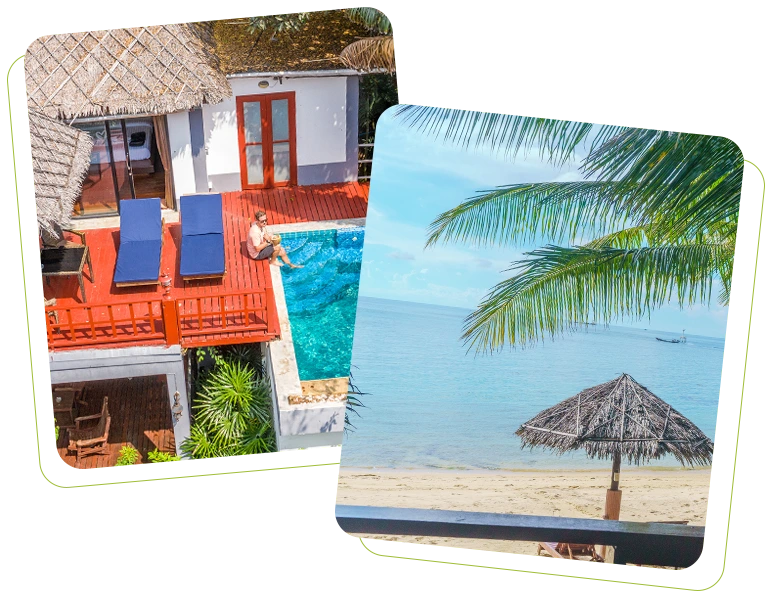
At Holina Rehab Koh Phangan, a Licensed Residential Rehab & Detox Clinic (#84-03-00294), we have pioneered a different approach. We believe that for a therapy as deep as creative expression to truly take hold, the environment must match the intervention. Located on the quiet, sun-drenched shores of Thailand’s most spiritual island, our facility provides the perfect “vagal safety” for total restoration. In this definitive guide, we will explore the benefits of incorporating creative expression into therapy, the specific art therapy techniques for managing stress and burnout, and why a residential sanctuary in the Gulf of Thailand is the ultimate environment to get Back to Yourself.
Beyond the Brush: What is Art Therapy and How Does it Help?
To understand why so many are looking for reputable training programmes for art therapy professionals, we must first define the practice. What is art therapy and how does it help mental health? Art therapy is an evidence-based clinical modality facilitated by a certified professional. It utilizes the creative process—making art—to improve a person’s physical, mental, and emotional well-being. Crucially, you do not need to be “good at art” to benefit. In fact, some of the most profound breakthroughs occur when a resident lets go of the “performance” mindset and allows their subconscious to lead.
The Neurobiology of Creativity
The benefits of incorporating creative expression into therapy are grounded in neurobiology. When we create, we activate multiple areas of the brain simultaneously. The tactile sensation of the medium (clay, paint, charcoal) grounds the body in the present moment, while the visual processing engages the right hemisphere of the brain—the side responsible for intuition, non-verbal memory, and emotional regulation.
This process allows individuals to “externalize” internal pain. For someone struggling with trauma or addiction, the feelings are often too big for words. Art provides a container for these feelings. By putting the pain on a canvas or shaping it in clay, the resident can view it from a distance, move it around, and eventually transform it. This shift from “I am my pain” to “This is something I created that represents my pain” is the first step toward reclaiming one’s narrative.
The Science of Creation: Managing Stress, Burnout, and Anxiety
In 2026, art therapy techniques for managing stress and burnout are being utilized by corporate leaders, high-performers, and those in recovery worldwide. The science behind this is compelling and involves three primary biological shifts:
1. Cortisol Regulation
Studies have shown that just 45 minutes of creative activity—regardless of the skill level—significantly lowers levels of cortisol, the body’s primary stress hormone. This shift moves the nervous system out of “Sympathetic Dominance” (the Fight or Flight state) and into “Rest and Repair” (the parasympathetic state).
2. Bilateral Stimulation
The rhythmic, repetitive motions involved in many art forms—such as shading, knitting, or throwing clay—act similarly to EMDR (Eye Movement Desensitization and Reprocessing). This bilateral stimulation helps the brain process and “file away” traumatic memories that have been stuck in the active, reactive centers of the mind.
3. Flow State and Dopamine
Engaging in art often leads to a “Flow State”—a mental state where a person is fully immersed in an activity, losing track of time and self-consciousness. This state triggers a natural surge in dopamine and serotonin, providing a “healthy high” that is particularly beneficial for those recovering from substance misuse or clinical depression. For those wondering how to choose a qualified art therapist, look for practitioners who understand how to guide residents into this restorative flow.
The UK Landscape: Costs, Waiting Lists, and Limitations
For many individuals in the UK, the journey begins with a search for art therapy services covered by UK mental health support schemes or individual art therapy sessions in the UK cost.
The Outpatient Challenge
While the UK has world-class practitioners, the outpatient model presents significant hurdles:
Cost of Individual Sessions: A private one-on-one session with a high-level specialist in London or Manchester can range from £100 to £180 per hour.
Waiting Lists: Within the NHS, access to specialized creative therapies for anxiety or depression often involves months—if not years—of waiting.
The Shatter Effect: In a city-based studio, you do profound, vulnerable work for 60 minutes and then immediately step back out into the noise, the commute, and the triggers of your daily life. This jarring transition often prevents the healing from “taking root” in the nervous system.
Digital and Virtual Options
Many turn to virtual art therapy classes for self-care or online platforms offering guided art therapy exercises. While art therapy apps that integrate mood tracking are excellent tools for maintenance, they lack the “vagal safety” and environmental reset required for total system restoration. You cannot achieve deep neurological “re-indexing” while sitting in the same room where you experience your stress.
The Holina Advantage: Why Koh Phangan is the Center of Excellence
This is why discerning individuals are looking beyond support groups for mental health incorporating creative arts in their hometowns and traveling to the island of Koh Phangan. At Holina Rehab, we provide more than just a therapy session; we provide a biological sanctuary.
1. Nature as a Co-Therapist
Located on the quiet side of Koh Phangan, our center leverages the island’s unique geology—including high quartz content—which many believe contributes to a unique “vibrational” energy. Environmental psychology proves that the patterns of nature and the sound of the ocean naturally lower systemic inflammation. You cannot achieve this level of nervous system “down-regulation” in a city clinic.
2. The Fusion with Regenerative Medical Tech
What makes Holina a global Center of Excellence is that we don’t view art therapy in isolation. We understand that a mind in crisis is often supported by a body with cellular damage. We support our creative work with:
Hyperbaric Oxygen Therapy (HBOT): Flooding the brain with oxygen to accelerate the repair of neural pathways.
NAD+ IV Infusions: Replenishing cellular energy (ATP) to give the system the power it needs for deep emotional work.
Somatic Release: Including Aqua Tuning and Breathwork, which prepare the body to express what the mind cannot yet speak.
The Healing Journey: What to Expect at Holina Rehab
If you are wondering how to book a virtual art therapy consultation or join an immersive program, imagine a day that is entirely dedicated to your restoration.
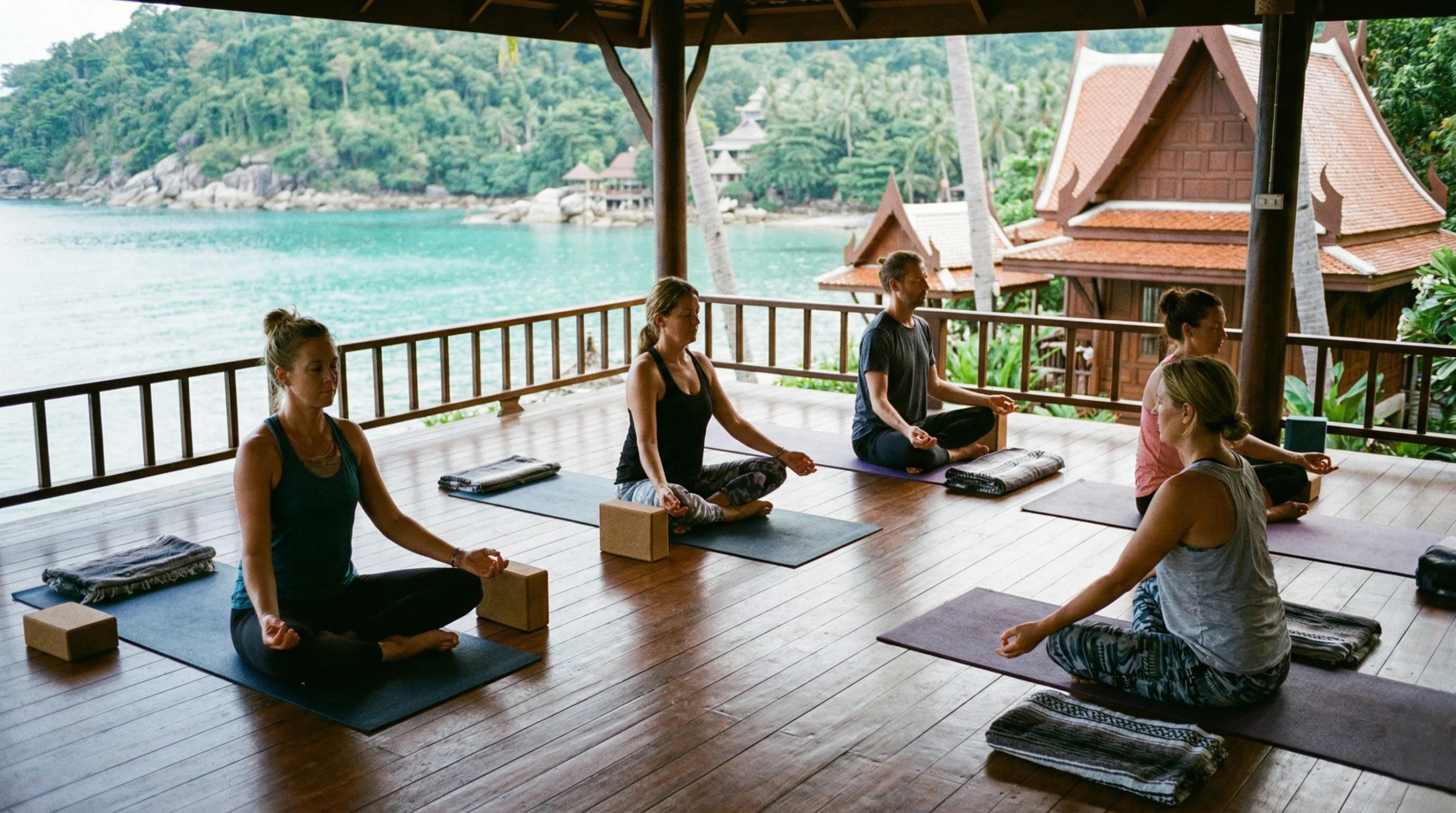
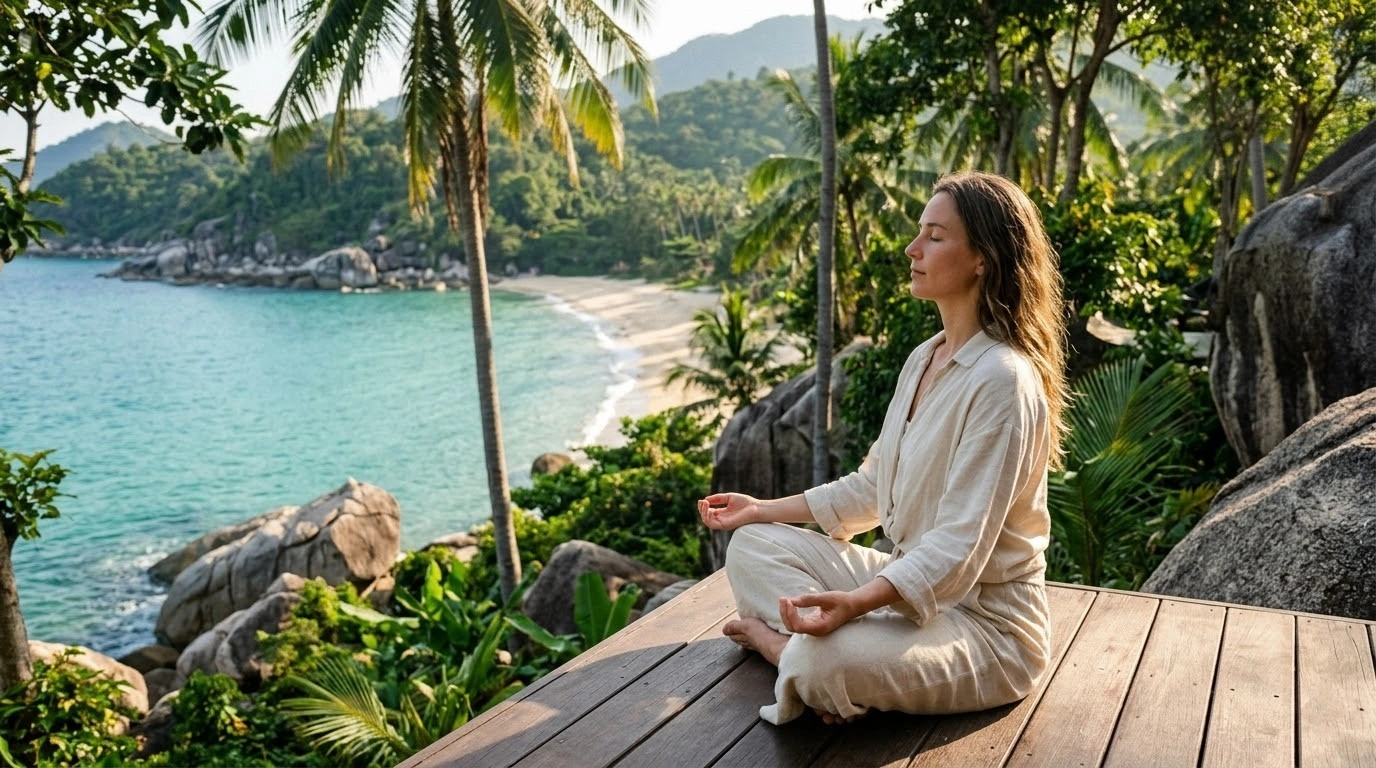
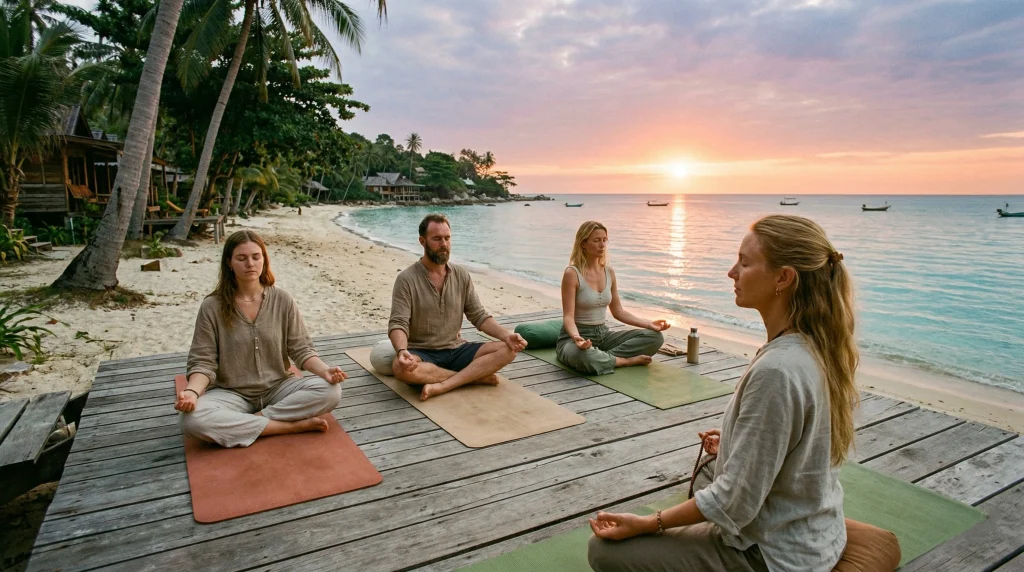
Sunrise Mindfulness: Guided meditation on our beachfront deck as the Gulf of Thailand wakes up.
Anti-Inflammatory Nutrition: Healthy and nutritious buffet-style meals designed to reduce neuro-inflammation.
The “Intention” Session: A one-on-one session with a qualified therapist using mixed media to map out the emotions of the day.
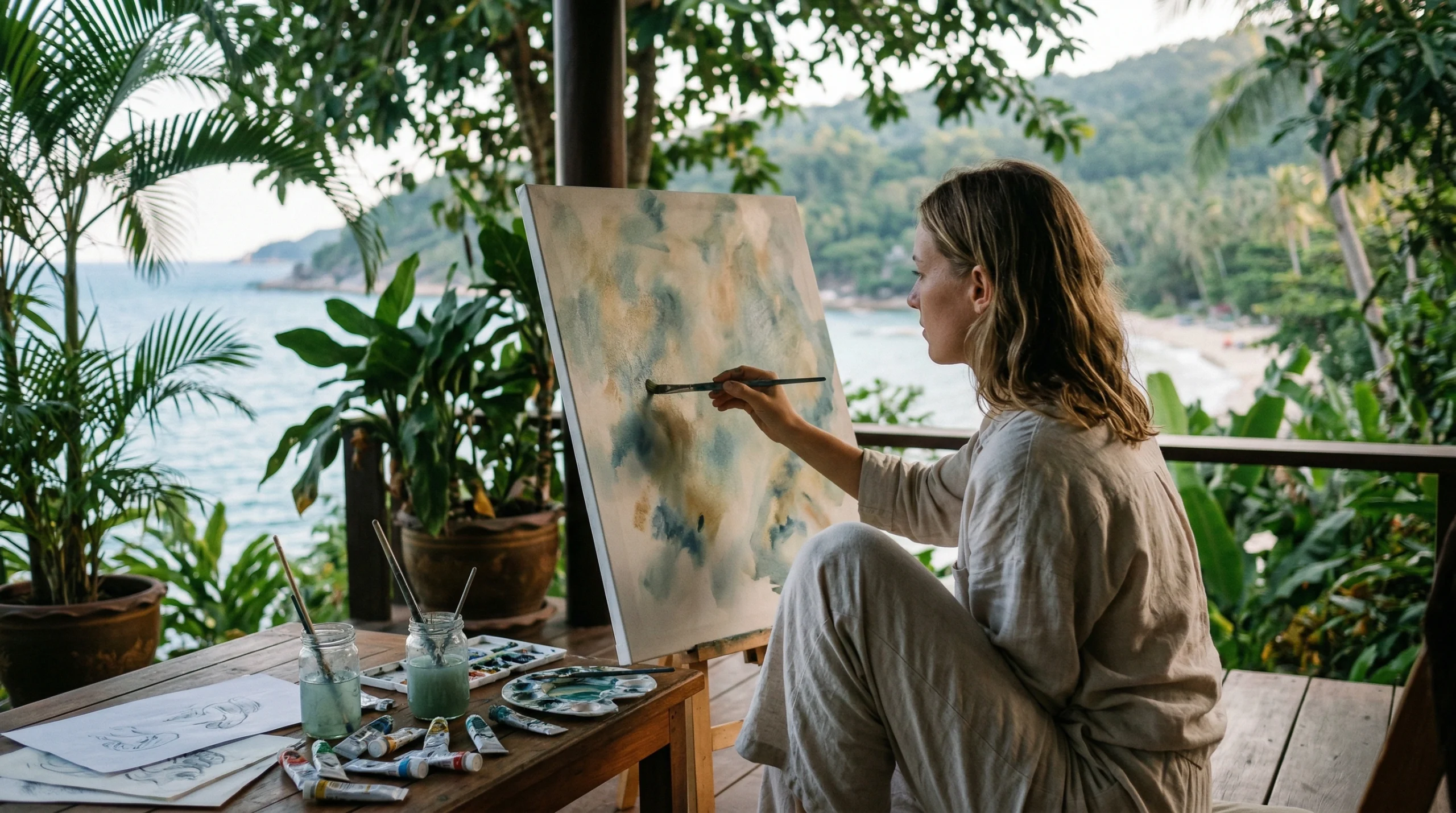
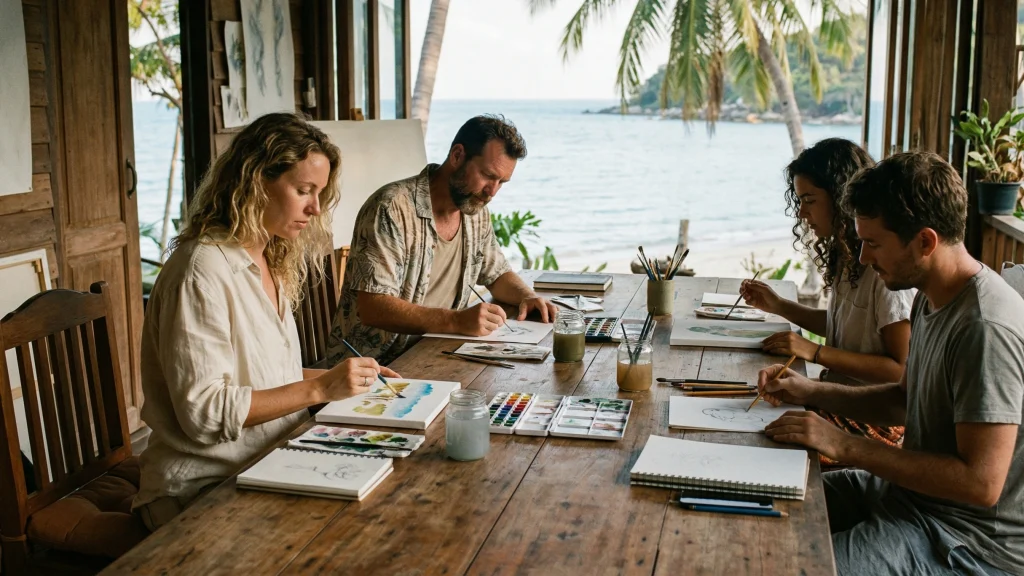
Somatic Studio Time: Large-scale mural painting or clay work to discharge physical tension.
Regenerative Tech: A session in the Hyperbaric Oxygen Chamber or an NAD+ infusion.
Sound Bowl Healing: Using vibrational frequency to lull the nervous system into a state of deep, restorative sleep.
Investing in Your Recovery: Transparent All-Inclusive Pricing
We believe that transparency is essential for peace of mind. Our residential packages are genuinely all-inclusive, covering your luxury accommodation, 24/7 care, and our full therapeutic curriculum.
Koh Phangan Resort Monthly Rates:
Standard Room: $9,700 per month. Perfect for those seeking a supportive community and shared healing.
Deluxe Room (Seaview): $12,700 per month. Featuring premium air-conditioned bedrooms with stunning ocean views.
Junior Suite (Seaview): $18,700 per month. Our most luxury private tropical sanctuary option.
Master Restorative Savings:
True biological and neurological rewiring takes time. We reward commitment to the long-term restorative process:
2-Month Program: Save approx. 8% (e.g., $34,700 for a Junior Suite).
3-Month Program (Master Restorative): Save approx. 17.5% (e.g., $47,700 for a Junior Suite).
Note: Discounts are only available when programs are paid in full prior to admission.
What is Included? Our rates cover everything: luxury accommodation, 24/7 clinical care, chef-prepared nutrition, all art therapy materials and sessions, airport transfers, and our complete range of holistic and Western therapies. There are no hidden fees or “add-on” costs.
Practicalities: How to Join Us
We understand that international travel for healing involves logistics. Our dedicated admissions team is here to make the process as seamless as your recovery.
The Steps to Admission:
Consultation: Speak to our Admissions team for the best way for you to get “Back to Yourself”.
Intake: Complete our Online Intake Form and book your preferred room.
Arrival: Fly to Koh Samui Airport (USM). We meet & greet you at the airport and bring you over to Holina on a private speedboat or catamaran.
Care: All-Inclusive full service care starts the moment you land.
Reclaiming Your Story: The Path Back to Yourself
Mental health struggles—whether it is the crushing weight of burnout or the sharp edges of anxiety—make your world feel small, static, and monochrome. They convince you that you are “broken” and that your best days are a memory. But your brain is a dynamic biological system, and its capacity for neuroplasticity is your greatest asset.
By choosing Art Therapy in Thailand—specifically in the serene, tech-supported sanctuary of Holina Rehab Koh Phangan—you are deciding to stop merely “surviving” your symptoms. You are choosing to move beyond the limitations of standard medicine and into a world where your biological potential and your creative spirit are the priorities.
You don’t have to settle for another year of feeling “half-alive.” You can choose the sun, the sea, the tropical mountains, and the world-class clinical expertise of Holina.
The “real you”—vibrant, creative, and fully alive—is still in there. Let us help you find your way back.
Start Your Journey to Restoration Today
Are you ready to stop the static and start the healing? Our friendly and helpful global admissions team is ready to listen to your story and help you plan your path to Thailand.
Explore the Sanctuary: See our magnificent tropical rooms and clinical facilities at www.holinarehab.com.
Clinical Insights: Read more about art therapy for burnout and neuro-rehab at www.holinarehab.com/blog.
Speak Directly to Admissions: Call or WhatsApp us today at +66 82 113 0657 or email info@holinarehab.com for a confidential, no-obligation assessment.
Holina Rehab: Your Journey into Healthy Recovery, Back to Yourself.
About Me
Ian Young
Ian Young is the Global Manager at Holina Care Centres in Koh Phangan, Thailand. Ian oversees the rehabilitation programs that blend the 12 Step model, Psychology, Counselling, Coaching, Somatic and many other therapeutic engagements, alongside various evidence-based therapies with holistic healing practices. Holina Rehab treats addictions, trauma, anxiety, depression, and other emotional challenges, offering comprehensive care in a serene resort environment. Ian, a charismatic speaker and author of “It’s Not About Me” leveraging his own recovery journey from addiction to inspire and guide others toward a fulfilling, addiction-free life.