
Physical movement has a real, well-documented place in addiction and trauma recovery. On Koh Phangan — and across Thailand — one of the most natural ways to build that movement into a day is Muay Thai, the country’s national sport, often called the “art of eight limbs.” At Holina Rehab, Muay Thai training is offered as one optional physical-activity element within a broader recovery programme. It is a way to build structure, discipline, fitness, and a healthy outlet for stress — not a sports-injury clinic or a performance camp.
It is worth being clear about that from the outset. Holina Rehab Koh Phangan is a licensed residential rehab and detox clinic (#84-03-00294) treating addiction, trauma, and co-occurring mental health conditions. Where we describe Muay Thai below, we mean supervised, appropriately scaled physical training as part of a holistic recovery routine — guided by the general evidence on exercise in recovery, not by claims specific to combat sports.
Why Exercise Belongs in Recovery
The evidence that structured physical activity supports recovery from substance use is now fairly strong. A 2024 systematic review of exercise in people with substance use disorders reported significant reductions in stress and depression and improvements in quality of life across multiple domains.1 An earlier meta-analysis similarly found that exercise interventions were associated with improved abstinence and reduced withdrawal and anxiety symptoms.2 A separate review of physical-activity programmes delivered during treatment found consistent improvements in mood, sleep, and fitness, which in turn support engagement with the rest of a treatment programme.3
None of these studies is about Muay Thai specifically, and we do not claim it has any special clinical property that other exercise lacks. What the research supports is the general principle: moving the body regularly, in a structured and supported way, helps mood, sleep, stress, and craving. Muay Thai is simply one engaging, culturally rooted way to do that here.
What Muay Thai Offers in Early Recovery
Beyond the physiological benefits of exercise, Muay Thai training tends to offer a few things that matter particularly in early recovery:
- Structure and routine. A regular training session gives shape to a day, which is grounding when so much else feels uncertain.
- A healthy outlet for stress and restlessness. Physical intensity can be a constructive channel for the agitation many people feel in early recovery.
- Focus and presence. Learning technique demands attention, offering a break from rumination — a simple, active form of mindfulness.
- Confidence and mastery. Small, visible improvements in fitness and skill rebuild a sense of capability that addiction often erodes.
- Connection. Training in a group builds the peer camaraderie that supports the wider recovery community.
Training Safely and Appropriately
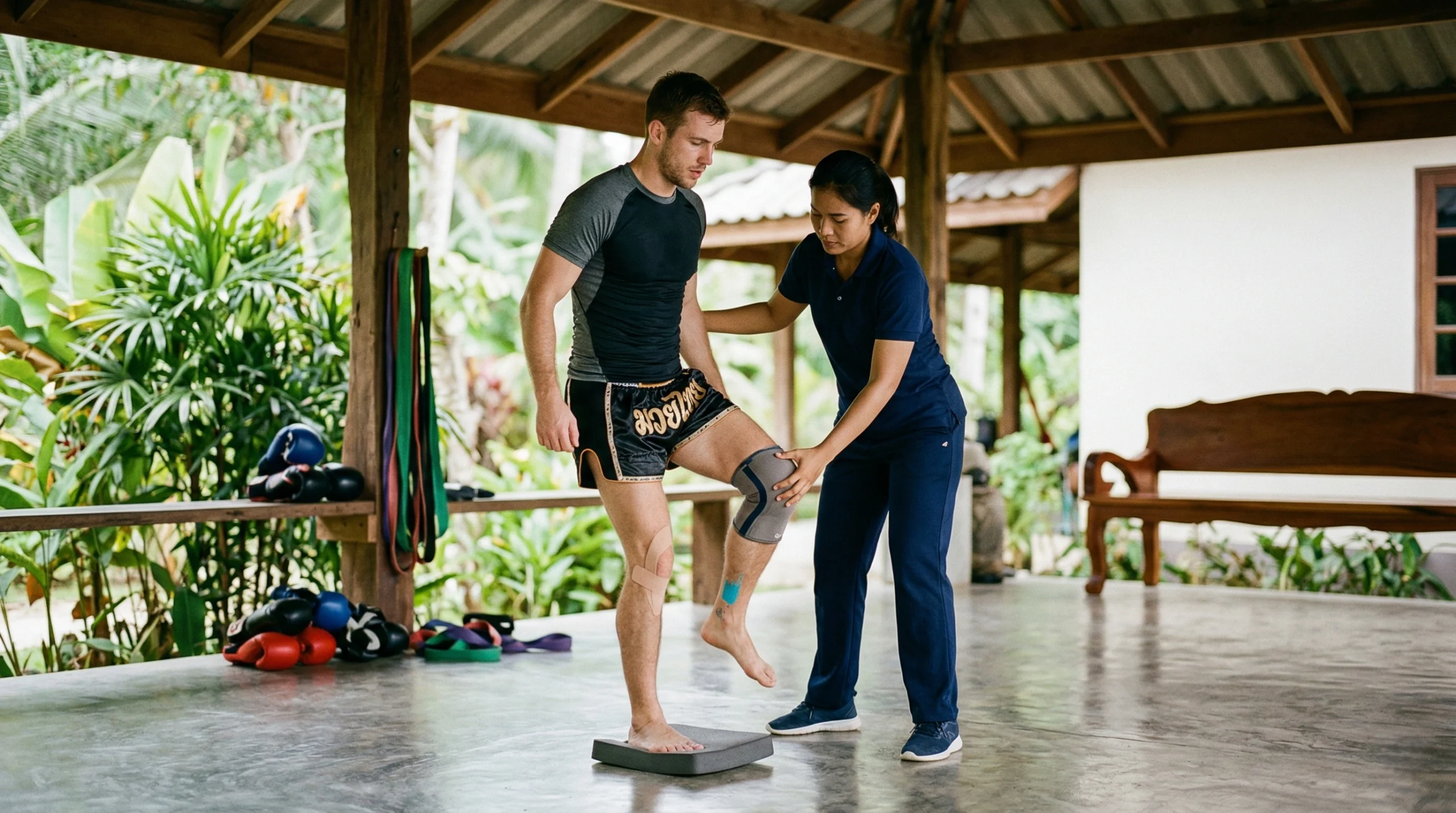
Because our residents are in treatment — sometimes early in detox, sometimes managing physical or mental health conditions — any physical training is scaled to the individual and cleared by the clinical team first. For many residents that means light, technique-focused, non-contact work rather than sparring: pad work, footwork, and conditioning at a level that supports recovery rather than risking injury. The goal is sustainable movement, not performance. Rest, sleep, and nutrition are treated as part of the same picture, because recovery — physical and psychological — happens between sessions as much as during them.
How Physical Activity Fits Into the Wider Programme
Muay Thai and other movement work are never the treatment in themselves — they support it. A resident’s week is built around clinical care: individual and group therapy, the 12-Step programme, and, where relevant, our Dual Treatment programme for co-occurring anxiety, depression, or trauma, all under 24/7 medical supervision. Physical activity sits alongside this as one strand of a balanced day. You can see more of the setting on our rehab facilities page and meet the practitioners on the rehab team page.
A Day That Supports Recovery
A typical day balances clinical work, rest, and movement — for example, morning mindful movement or stretching, a nutritious breakfast, individual or group therapy sessions through the day, and, for those cleared for it, a supervised Muay Thai or fitness session in the cooler part of the afternoon, followed by time to rest and recover. The rhythm itself — predictable, active, and supported — is part of what helps the nervous system settle.
Programmes and Pricing
Holina’s residential programmes are all-inclusive, covering accommodation, 24/7 clinical care, chef-prepared meals, all therapy and activity sessions, and airport transfers. Four-week all-inclusive programmes start from USD $9,700, with reduced rates for longer stays paid in full before admission. Because room options and rates are updated over time, current pricing is kept on our rehab prices page.
“Physical training like Muay Thai gives people in early recovery structure, discipline, and a healthy outlet for stress. We offer it as part of a broader treatment programme, not as a sports clinic, and always within our clinical care.”
“The program they deliver and can also tailor to meet our needs was thorough, intense and very rewarding.”
— Marlon Hulme, Recovery.com Review, 3 Oct 2025 · ★★★★★
A Closing Note
Recovery asks people to build a life that feels worth staying sober for. Regular, supported physical activity — whether that is Muay Thai, swimming, or a morning walk — is a genuine part of that, backed by solid evidence and, for many residents, simply enjoyable. Held within a proper clinical programme, movement helps. It is not a shortcut, and we would never present it as one. If you would like to talk through whether a residential programme is right for you or a loved one, our admissions team is available seven days a week.
Sources:
1. “A Systematic Review of the Benefits of Physical Exercise on Mental Health and Quality of Life in Patients With Substance Use Disorders,” PMC, 2024.
2. Wang, D. et al., “Impact of Physical Exercise on Substance Use Disorders: A Meta-Analysis,” PMC, 2014.
3. “Characteristics and impact of physical activity interventions during substance use disorder treatment: A systematic review,” PMC, 2023.
Related Reading
Ready to Start Your Recovery Journey?
Our clinical team is available to answer your questions and help you find the right programme for your needs.
Speak with Our Team →