
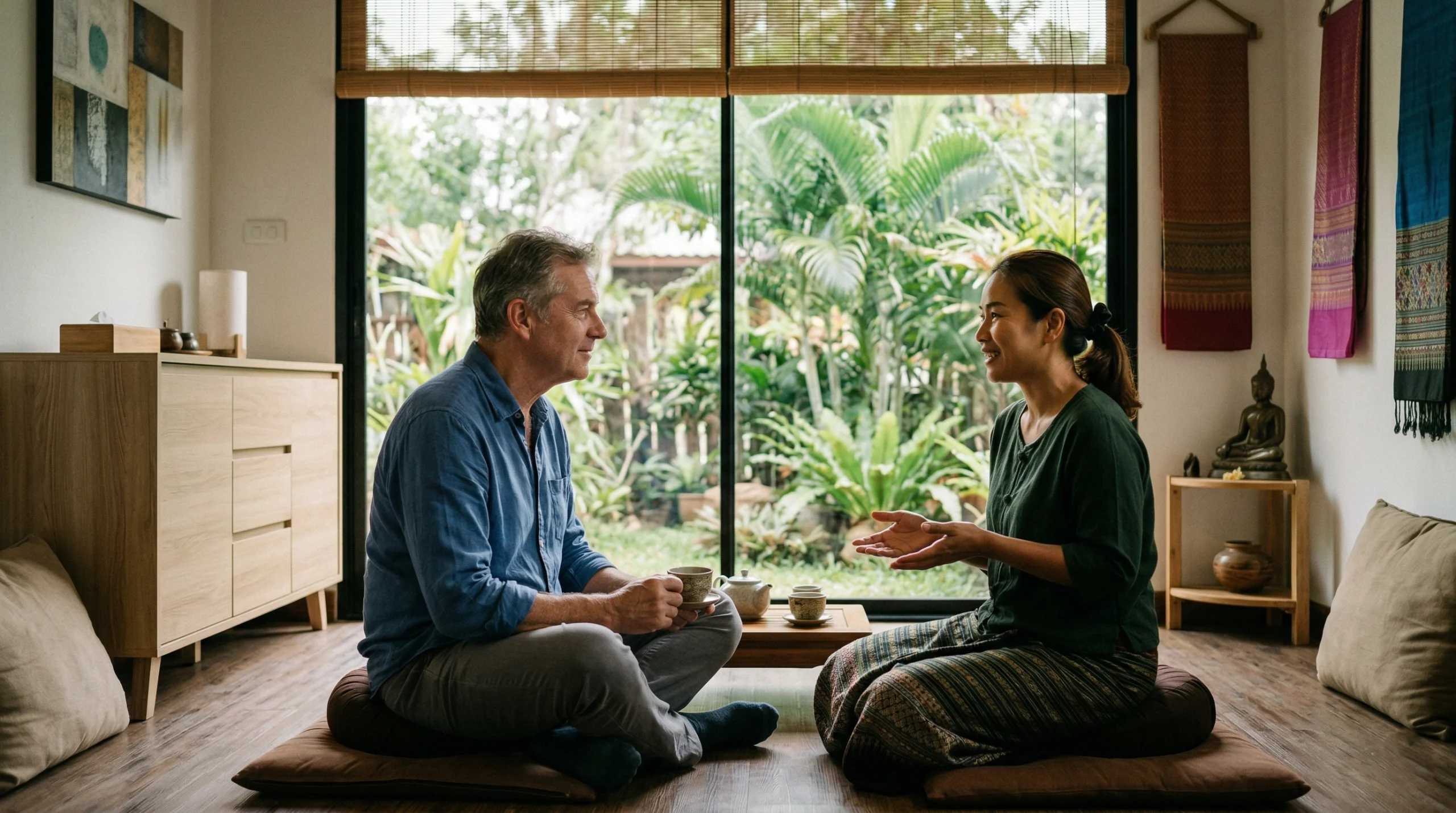
For a long time, the treatment of addiction and psychological distress was split into two camps: the clinical, evidence-based methods of Western medicine, and the contemplative practices — meditation, mindfulness, spiritual reflection — more associated with Eastern traditions. In practice, many people find that the two work best together. Western psychotherapy offers structured tools for working with thoughts and behaviour; contemplative practice helps steady the body and nervous system so that work can actually take hold.
At Holina Rehab Koh Phangan, a licensed residential rehab and detox clinic (#84-03-00294), this integration is a core part of how we work. This guide looks honestly at what the evidence does and does not show, and how the two approaches complement each other within a supervised clinical programme.
Two Approaches, One Nervous System
Western psychotherapy — particularly Cognitive Behavioural Therapy (CBT) and Dialectical Behaviour Therapy (DBT) — largely works “top-down.” It helps people notice distorted thinking patterns and build healthier responses, drawing on the reasoning parts of the brain. Trauma and addiction, however, often live lower down, in the body and the limbic system, below the easy reach of logic. This is where contemplative practices earn their place. Mindfulness and meditation are “bottom-up” tools that can calm the stress response and help a person stay present with difficult feelings rather than being overwhelmed by them.
What the Evidence Shows on Mindfulness
The evidence for mindfulness-based approaches in addiction is reasonably encouraging. A systematic review of mindfulness-based relapse prevention found that nearly all included studies produced positive effects on at least one addiction outcome, with the clearest benefits for reducing cravings and frequency of use and improving depressive symptoms.1 A broader review of mindfulness-based interventions for substance and behavioural addictions reached similar conclusions, while noting that study quality varies and more rigorous trials are needed.2 In other words: promising and worth using, but not a panacea.
Contemplative Psychotherapy
One useful bridge between the two worlds is contemplative psychotherapy — the integration of clinical psychological insight with mindfulness and compassion practices. Its aim is to help a person develop enough steadiness to observe their pain without being consumed by it, which in turn creates the psychological space for therapeutic tools to be applied. Rather than treating a person primarily as a set of symptoms to be corrected, it also works from their existing strengths and capacity for change.
Spirituality in Recovery: An Honest Look
Spirituality has a long-standing role in addiction recovery, most visibly through the 12-Step tradition. The research here is genuinely mixed and worth reporting honestly. Some studies find that spiritual growth during recovery is associated with better outcomes and higher quality of life; others, including controlled trials, have not found that measures of spirituality reliably predict or mediate substance-use outcomes.3 What seems clearest is that for many individuals, a sense of meaning, connection, and community — whether framed spiritually or not — supports the wider work of staying well. At Holina, our 12-Step programme is delivered in a secular, non-religious form, with the language of a “higher power” reframed around whatever meaning or connection works for each resident.
How Integration Works at Holina
Integration only helps if it is practical rather than decorative. In a typical programme, structured clinical therapy during the day sits alongside contemplative practice — meditation, breathwork, mindful movement, and reflective group work. The two are meant to reinforce each other: the calmer and more present a person is, the more they can engage with demanding psychotherapeutic work; and the more they understand their own patterns, the more meaningful the contemplative practice becomes.
- Western clinical work — one-to-one psychotherapy, CBT and DBT-informed approaches, and trauma-focused care through our trauma treatment programme.
- Contemplative practice — mindfulness and meditation, breathwork, and, for interested residents, the reflective and spiritual elements of our spiritual healing treatment.
- Integrated support — where co-occurring anxiety, depression, or trauma is present, our Dual Treatment programme brings these strands into one plan under 24/7 medical supervision.
Where residents also access adjunctive wellness supports, these are offered as complements to the core clinical work, never as replacements for it. You can meet the practitioners who deliver this on our rehab team page.
Programmes and Pricing
Holina’s residential programmes are all-inclusive, covering accommodation, 24/7 clinical care, chef-prepared meals, all therapeutic and contemplative sessions, and airport transfers. Four-week all-inclusive programmes start from USD $9,700, with reduced rates for longer stays paid in full before admission. Current room options and rates are kept on our rehab prices page.
“The most useful integration I see is practical, not mystical: evidence-based psychotherapy to work with the thinking mind, and contemplative practice to steady the nervous system, so that the therapeutic work can actually land.”
“I have continued my 12 step recovery journey and worked through trauma at Holina. This is a world class treatment centre, the team are incredibly caring and professional, experts in their field.”
— Angela, Recovery.com Review, 20 Mar 2026 · ★★★★★
A Closing Note
The old separation between Western therapy and Eastern contemplative practice is increasingly hard to justify. The most durable recoveries we see tend to draw on both: clinical rigour to understand and change patterns, and contemplative practice to steady the person doing the changing. Neither is magic, and both work best inside a supervised programme. If you would like to talk through whether a residential programme is right for you or a loved one, our admissions team is available seven days a week.
Sources:
1. Grant, S. et al., “Effectiveness of Mindfulness-Based Relapse Prevention in Individuals with Substance Use Disorders: A Systematic Review,” PMC, 2021.
2. Sancho, M. et al., “Mindfulness-Based Interventions for the Treatment of Substance and Behavioral Addictions: A Systematic Review,” PMC, 2018.
3. Zemore, S.E., “The Role of Twelve-Step-Related Spirituality in Addiction Recovery,” Journal of Religion and Health, 2015.
Related Reading
Ready to Start Your Recovery Journey?
Our clinical team is available to answer your questions and help you find the right programme for your needs.
Speak with Our Team →