chicky run descargar cialis super active fotune mouse apk fortune rabbit demo Tigrinho lexapro fortune rabbit app lexapro cialis augmentin online canadian pharmacy cialis cialis from canada prednisone cialis online lasix cialis online cialis for sale canadian pharmacy augmentin prednisone online lexapro clomid Prednisone

The Complete Guide to Sober Living and Secondary Care in Thailand

Avatar photo Ian Young
29 Jan, 2026
05 min read

Introduction: The “Cliff Edge” of Returning Home

You have done the hard part. You completed 28 days of primary rehab. You feel physically vibrant, your eyes are clear, and your motivation is high. You are ready to take on the world.

Then, the fear sets in.

You start thinking about your empty apartment, the stressful emails waiting in your inbox, and the old friends who only know how to connect over a pint. You realize that while you have changed, your environment has not.

In the addiction treatment industry, this moment is known as the “Cliff Edge”. It is the sudden, jarring drop from the 24/7 therapeutic cocoon of rehab to the zero-accountability reality of home. Statistics are brutal on this front: the highest rate of relapse occurs within the first 90 days of discharge. This isn’t because the rehab failed; it is because the transition was too fast.

Sober Living (Secondary Care) is the bridge that spans this gap. It is the “missing link” in long-term recovery. In Thailand, this sector has evolved into a world-leading model, offering a “middle way” where you can practice living sober in a safe, fun, and supportive environment before you face the real world.

This guide is the definitive resource on Sober Living in Thailand—how it works, what it costs, and why it might just be the most important investment you ever make.

Part 1: Defining “Sober Living” in Thailand

It is critical to distinguish what “Sober Living” means in Southeast Asia, as it differs significantly from the Western model.

The Western Model: The “Halfway House”

In the UK or US, a “Sober Living Home” or “Halfway House” is often a basic, functional necessity.

  • Structure: A shared house in a residential suburb.

  • Oversight: A live-in House Manager (often a peer).

  • Requirements: You pay rent, buy your own food, find a job immediately, and attend local AA meetings.

  • Therapy: Rarely included on-site.

  • Vibe: Often feels like a “holding pattern.”

The Thailand Model: “Secondary Care”

In Thailand, Sober Living is almost always “Secondary Care.” It is a therapeutic program, not just a rental agreement.

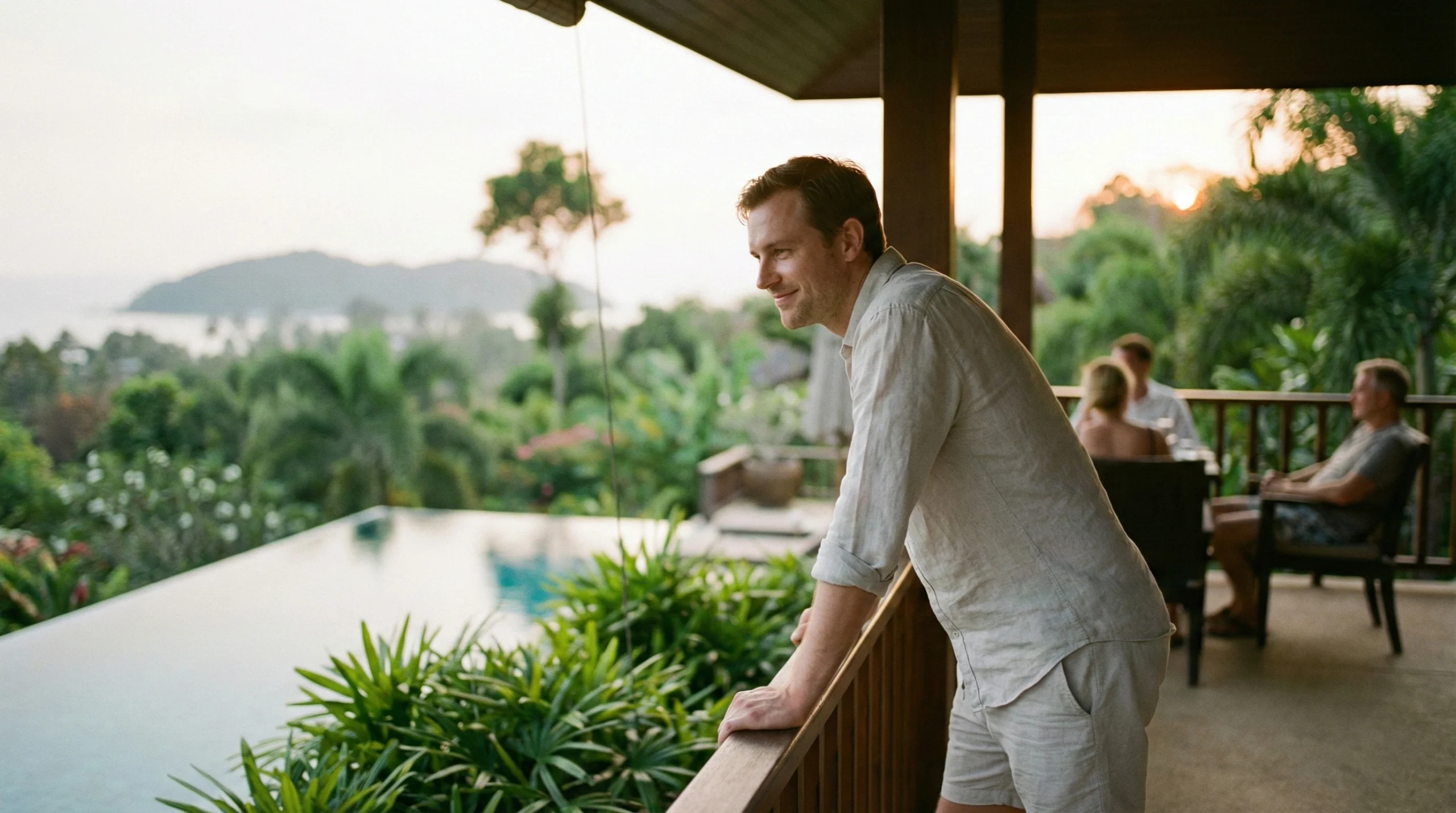
  • Structure: You live in a resort or a luxury villa complex.

  • Oversight: A clinical team (counselors, psychologists) is available, often with 24/7 support staff.

  • Requirements: You have freedom (phone, laptop, weekends off), but you follow a structured weekly schedule of groups and volunteering.

  • Therapy: Weekly one-on-one counseling is standard to help you process “real world” triggers as they happen.

  • Vibe: It feels like a “Recovery Lifestyle Incubator.” You are learning to enjoy life again.

The “Step Down” Philosophy

Recovery is not a light switch; it is a staircase.

  1. Detox (Level 1): Medical stabilization (The Hospital Phase).

  2. Primary Rehab (Level 2): Trauma work and tools (The Classroom Phase).

  3. Secondary Care (Level 3): Practicing those tools in the real world (The Lab Phase).

Skipping Level 3 is like studying for a driving test but never actually getting in the car. Secondary Care allows you to “drive” your new sober life with an instructor still sitting next to you.

Part 2: Who Is This For?

Sober Living in Thailand is not for everyone. It is specifically designed for:

  • The “Digital Nomad” / Professional: Someone who needs to return to work remotely but isn’t ready to return to the office culture that made them sick.

  • The Chronic Relapser: Someone who does well in rehab but always crashes within a month of returning home.

  • The “Failure to Launch”: Young adults (20s-30s) who need to build life skills—cooking, budgeting, routine—alongside their sobriety.

  • The Burnout Survivor: Executives who need a “Sabbatical” to restructure their relationship with stress and success.

Part 3: Location Guide – Where to Go?

Thailand offers three distinct “hubs” for Sober Living, each with a different energy.

1. Koh Phangan: The Wellness & Spiritual Hub

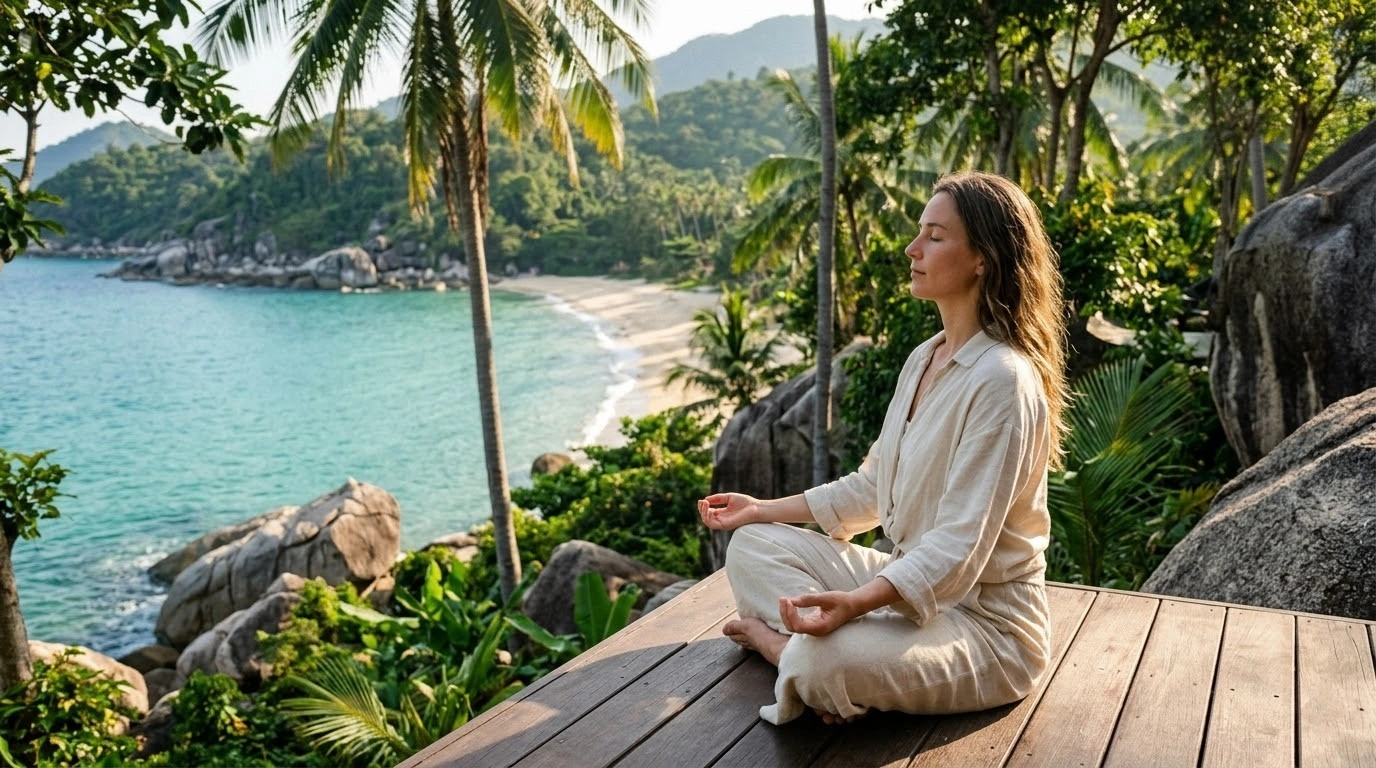
Located in the Gulf of Thailand, Koh Phangan (specifically the Srithanu area) is arguably the sober capital of Asia.

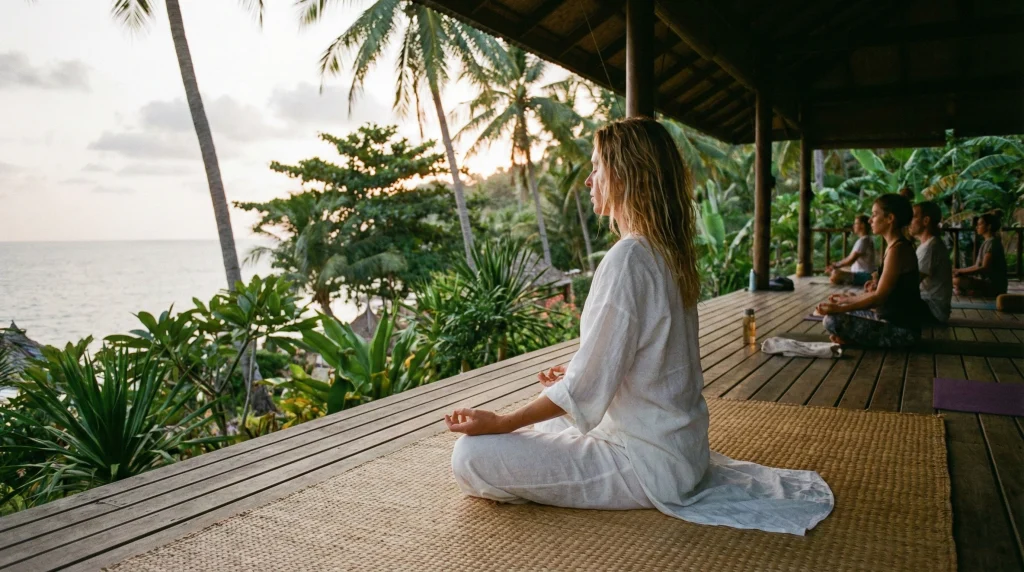
  • The Scene: This is “Conscious Community” central. You are surrounded by yoga schools, ecstatic dance floors, sauna centers, and vegan cafes.

  • Why it works: It is easy to be sober here because “health” is the dominant culture. You don’t feel like the odd one out for ordering a kombucha; everyone is doing it.

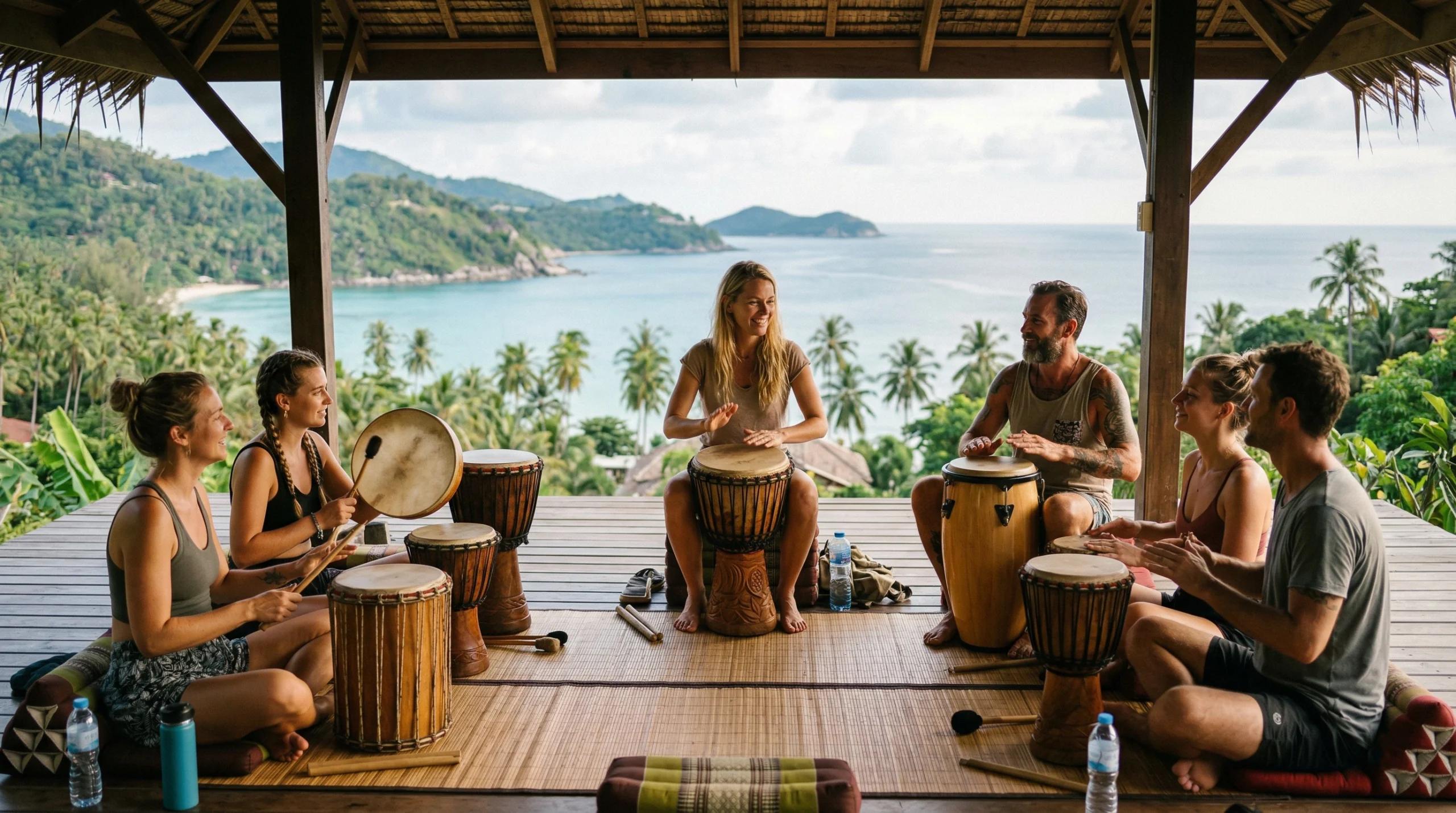
  • Activities: Sunset drumming, diving, kitesurfing, Tantra workshops, breathwork.

2. Chiang Mai: The Mountain & City Hub

The “Rose of the North” offers a mix of urban connectivity and mountain serenity.

  • The Scene: A bustling city with a massive Digital Nomad population, coffee culture, and endless temples.

  • Why it works: It offers a “real city” test. You can go to co-working spaces, malls, and cinemas. It is less “holiday bubble” and more “real life practice.”

  • Activities: Muay Thai camps, hiking, cooking schools, elephant sanctuaries.

3. Phuket / Samui: The Resort Hub

These islands offer a higher-end, more conventional resort experience.

  • The Scene: Luxury villas, high-end dining, and beaches.

  • Why it works: Ideal for older clients or those who want absolute privacy and high-thread-count comfort.

  • Activities: Sailing, golf, fine dining (sober), spa days.

Part 4: A Day in the Life (What Actually Happens?)

One of the biggest fears is boredom. “If I’m not drinking or using, what will I do all day?” In Thai Sober Living, the problem is usually having too much to do.

A Typical Schedule:

  • 07:30: Wake up and morning swim/yoga.

  • 08:30: Community Breakfast (eating together prevents isolation).

  • 09:30: Morning Process Group: A facilitated check-in. “How do I feel today? What is my goal? Am I resentful about anything?”

  • 10:30 – 13:00: Structured Freedom: This is time for remote work (laptops allowed), volunteering at an animal shelter, or a personal training session.

  • 13:00: Lunch.

  • 14:00: Therapeutic Activity: Art therapy, Thai language lesson, or a specialized workshop (e.g., “Non-Violent Communication”).

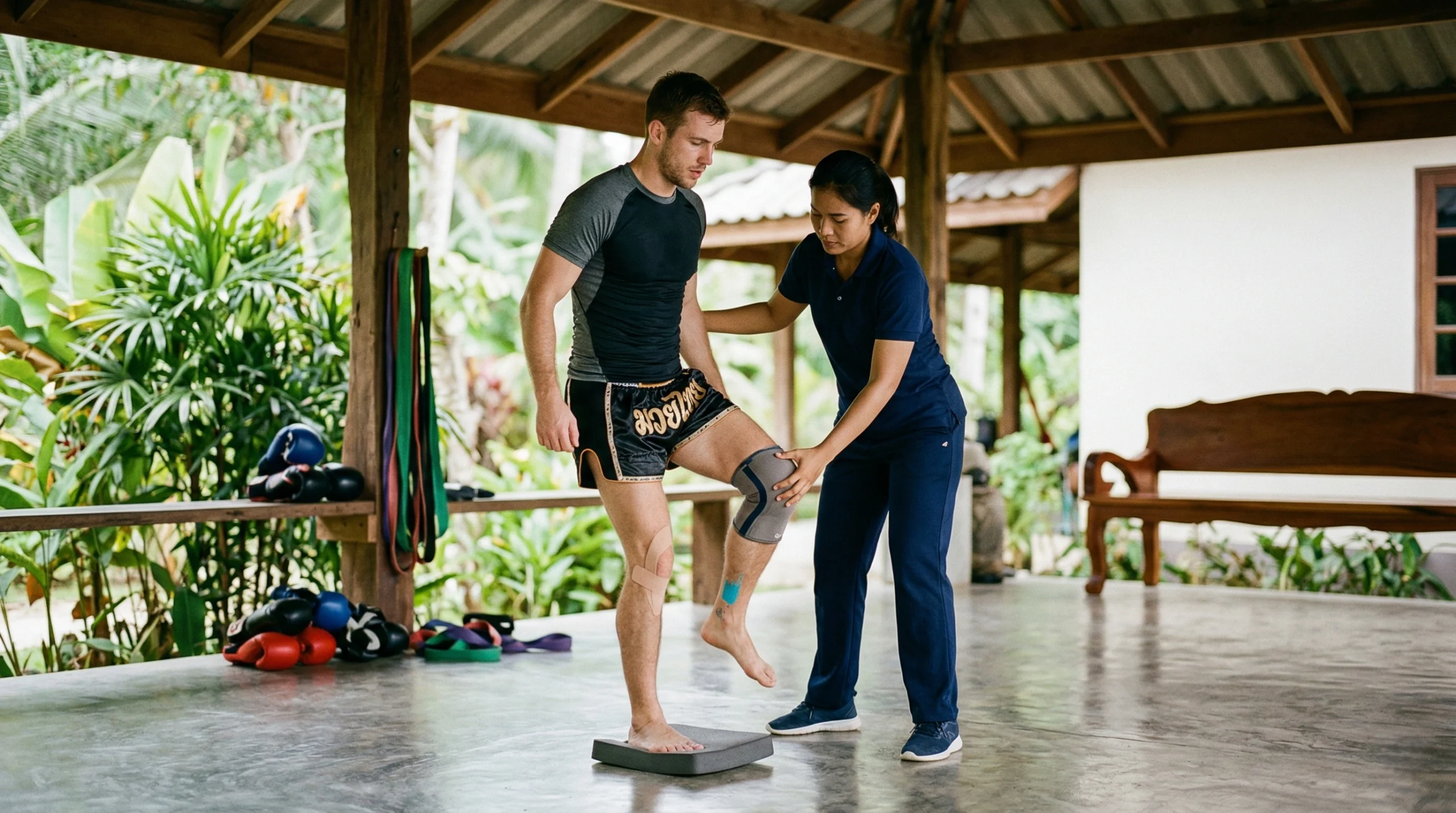
  • 16:00: Physical Activity: Muay Thai boxing class or a group hike to a waterfall.

  • 18:00: Dinner.

  • 19:30: Fellowship: Transport provided to a local AA/NA meeting (often held on the beach or in open-air salas).

  • 21:00: Free time / Movie night.

Part 5: The “Digital Nomad” Recovery

This is a unique feature of the Thailand model. In primary rehab, your phone and laptop are often confiscated to force a “Digital Detox.” In Sober Living, they are returned.

This is a critical test. For many, work stress was a primary trigger for addiction.

  • The “Work Re-Entry” Protocol: Counselors help you re-engage with work slowly. You might start with 1 hour a day, then 3, then 5.

  • Trigger Management: When you get a stressful email and your instinct is to reach for a drink, you are in a safe environment. You can walk out of your room and say to a counselor, “I just got triggered. Help me process this.”

  • Co-Working: Many facilities have dedicated fiber-optic WiFi zones or partnerships with local co-working spaces, allowing you to build a “sober work routine.”

Part 6: Rules, Sex, and Dating

Sober Living offers freedom, but it is not a free-for-all. Boundaries are essential for safety.

  • Drug Testing: Random urine/breath tests are standard. This isn’t about mistrust; it’s about safety. Knowing you will be tested is a powerful deterrent against a spontaneous relapse.

  • Curfews: Usually relaxed (e.g., 11:00 PM weekdays, 12:00 AM weekends). This ensures you get proper sleep—a key pillar of mental health.

  • Relationships: “Rehab Romances” are famously dangerous. Most facilities have a “no exclusive dating” rule within the house to prevent residents from using sex or romance as a new addiction (process addiction). However, you are usually free to date casually outside the facility, provided you discuss it with your counselor.

Part 7: The Financials – Cost & Value

Cost is the single biggest driver of “Recovery Tourism.”

The “Geo-Arbitrage” Advantage

Because the cost of living in Thailand is lower, facilities can offer premium services for a fraction of Western prices.

  • USA (California/Florida): A structured Secondary Care program often costs $15,000 – $30,000 per month.

  • UK (London): £8,000 – £15,000 per month.

  • Thailand: $3,500 – $8,000 USD per month.

What Do You Get for $5,000 in Thailand?

  • A private en-suite bungalow (not a shared bunk bed).

  • 3 nutritious meals a day (no cooking required).

  • Weekly 1-on-1 psychotherapy.

  • Gym membership / Pool access.

  • Scooter rental.

  • Weekend excursions (boat trips, safaris).

Hidden Value: The “Therapeutic Community.” You are paying for immediate access to a tribe of people who are on the same journey. You are paying for not being lonely.

Part 8: Logistics – Visas and Travel

How do you stay in Thailand for 3–6 months legally?

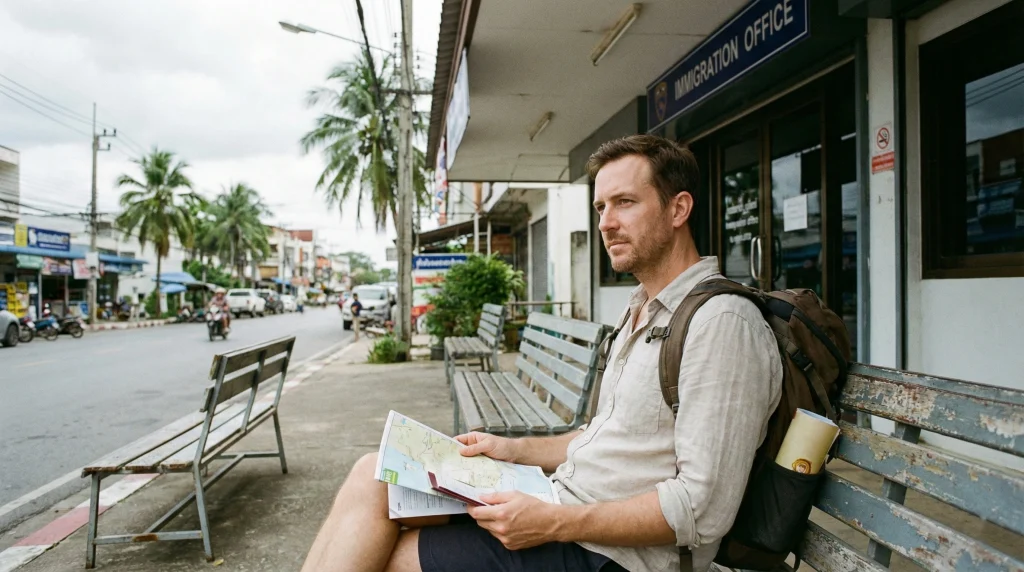
  • 60-Day Tourist Visa (TR): The standard option. Apply at the Thai Embassy in your home country. It gives you 60 days on entry, which can be extended for 30 days at a local immigration office. Total: 90 Days.

  • Non-Immigrant “O” (Medical): Some facilities can sponsor a medical visa if you are in active treatment.

  • Education Visa (ED): This is the “secret weapon” for long-term recovery. Many clients enroll in a specialized “Hand-to-Hand Combat” (Muay Thai) or Thai Language course. This grants a 6-month to 1-year visa, allowing you to focus entirely on your recovery without doing “visa runs.”

Part 9: What Happens if I Relapse?

This is the question nobody wants to ask, but everyone needs to know. In a Western halfway house, a relapse often means immediate eviction to the street. In Thailand, the approach is usually more compassionate but firm.

  • The Safety Protocol: If you use, you are removed from the house immediately to protect the sobriety of others.

  • The Re-Assessment: You are not kicked to the curb. You are usually transferred back to Primary Care or a Medical Detox unit for stabilization (at your own cost).

  • The Learning: The relapse is treated as a “data point”—a lesson to be analyzed, not a moral failure. Once stable, you may be allowed to return, often with stricter boundaries.

Conclusion: Buying Time to Heal

Recovery is a marathon, not a sprint. The brain takes 12–18 months to fully rebalance its dopamine receptors after chronic addiction. A 28-day rehab breaks the chains, but it doesn’t teach you how to walk.

Sober Living in Thailand gives you the luxury of time. Time to heal, time to learn who you are, and time to build a life so good that you no longer want to escape from it.

Extend Your Recovery Journey with Holina Sober Living

At Holina Rehab, we recognize that for many clients, 28 days is simply not enough to rewrite decades of behavior. That is why we have developed one of Thailand’s most comprehensive On-Site Sober Living Programs.

Unlike other facilities where you must transfer to a different location, Holina allows you to graduate seamlessly from Primary Care into our Secondary Care community, staying in the same beautiful resort but with newfound freedoms.

We offer two distinct tracks to suit your stage of recovery:

1. Standard Sober Living (The “Community” Track)

Designed for clients who are stable and ready to practice autonomy.

  • Access: Full use of resort amenities (Gym, Pools, Ice Baths, Co-Working Zones).

  • Support: Daily morning “Intention Setting” groups and weekly focal counseling.

  • Lifestyle: You have the freedom to explore the island, work remotely, and attend local 12-Step meetings, while returning to the safety of the resort at night.

  • Requirement: Ideal for those with 2+ months of sobriety or Holina graduates.

2. Enhanced Sober Living (The “Therapeutic” Track)

Designed for clients who need more robust support while reintegrating.

  • Includes: Everything in the Standard track, PLUS

  • Intensive Therapy: 4 x One-on-One sessions per week (Psychotherapy, Trauma/EMDR, Somatic Experiencing).

  • Coaching: Dedicated “Life Coaching” sessions to help with CV writing, career planning, and relationship rebuilding.

  • Structure: A more guided schedule to ensure you don’t isolate.

Why Holina Sober Living?

  • No “Cliff Edge”: You keep your therapist. You keep your friends. You keep your routine.

  • Island Integration: We help you build a life on Koh Phangan—connecting you with local sober communities, ecstatic dance events, and volunteering opportunities.

  • Safety Net: You have 24/7 access to our clinical team if you hit a bump in the road.

Give yourself the best chance of forever. Visit www.holinarehab.com to discuss our Secondary Care packages with our admissions team.

About Me

Avatar photo

Ian Young

Ian Young is the Global Manager at Holina Care Centres in Koh Phangan, Thailand. Ian oversees the rehabilitation programs that blend the 12 Step model, Psychology, Counselling, Coaching, Somatic and many other therapeutic engagements, alongside various evidence-based therapies with holistic healing practices. Holina Rehab treats addictions, trauma, anxiety, depression, and other emotional challenges, offering comprehensive care in a serene resort environment. Ian, a charismatic speaker and author of “It’s Not About Me” leveraging his own recovery journey from addiction to inspire and guide others toward a fulfilling, addiction-free life.
Tags

Newsletter

Have a Question?