The Role of Gratitude in Sustaining Long-Term Recovery
05 min read
The Quiet Strength of Thankfulness
Gratitude isn’t just a feeling — it’s a way of seeing.
It’s the gentle shift from what’s missing to what’s here, from what’s broken to what’s healing.
In the early stages of recovery, life can feel fragile. The focus is often on surviving cravings, managing emotions, and learning new habits. Yet, as healing deepens, something more subtle begins to matter — perspective.
At Holina Rehab Thailand, we teach that gratitude isn’t a quick fix or a positive-thinking exercise.
It’s a spiritual and psychological practice that rewires the brain, softens the heart, and strengthens recovery.
Because when you learn to see life through the lens of appreciation, you protect the peace you fought so hard to find.
Why Gratitude Matters in Recovery
Addiction thrives on disconnection — from others, from self, and from the present moment.
Gratitude does the opposite: it reconnects. It reawakens awareness to the beauty, support, and possibility that were always there.
From a psychological perspective, gratitude helps shift the brain from a survival state to a creative one.
It calms the amygdala (the brain’s threat detector) and activates the prefrontal cortex (responsible for reflection and empathy).
The result? Greater emotional balance, less reactivity, and a stronger sense of purpose.
From a spiritual perspective, gratitude opens the heart.
It invites humility, surrender, and grace — essential ingredients for long-term recovery.
As one Holina graduate shared:
“When I stopped asking, ‘Why me?’ and started asking, ‘What can I learn?’ everything changed.”
The Science of Gratitude and the Brain
Gratitude doesn’t just feel good — it’s biologically transformative.
Research shows that regular gratitude practice:
Increases dopamine and serotonin — the brain’s “happiness” neurotransmitters
Strengthens neural pathways associated with calm and joy
Lowers cortisol, the stress hormone
Improves sleep, mood, and immune function
In short: gratitude rewires the brain for resilience.
And resilience is the foundation of long-term recovery.
At Holina, we use this understanding to help clients turn gratitude from a concept into a daily embodied experience — one that anchors them even when life gets hard.
Gratitude as an Antidote to Shame
Shame is one of addiction’s most powerful drivers.
It whispers, “You’re not enough. You’ll never change.”
Gratitude interrupts that voice.
It reminds clients of what is working, what has been overcome, and what is worth loving.
When someone learns to say, “I’m grateful for my effort,” instead of “I should be doing better,” healing accelerates.
Gratitude gently replaces judgment with compassion, and criticism with acceptance.
It doesn’t deny pain — it reframes it.
Pain becomes a teacher, not a punishment.
The Holina Gratitude Practice: From Concept to Experience
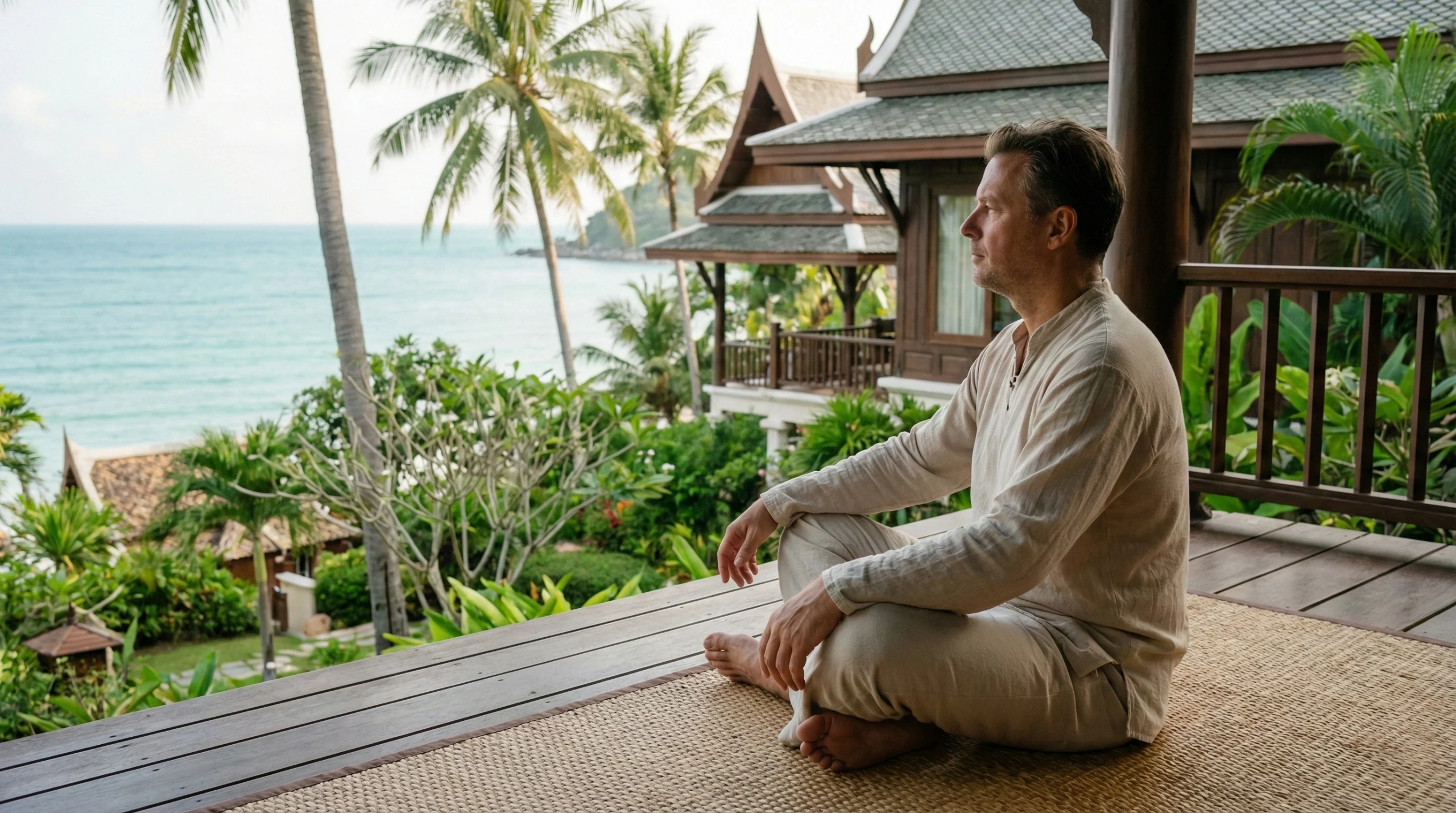
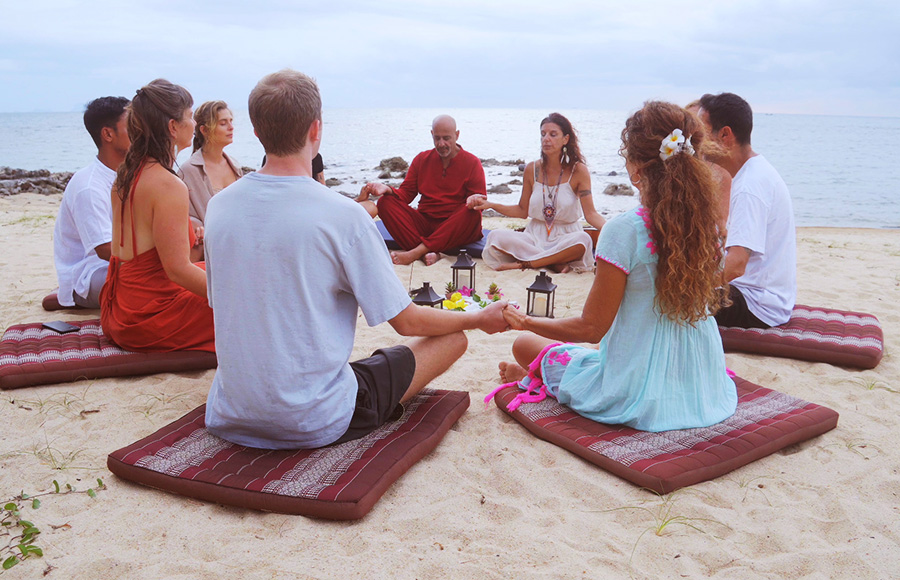
At Holina Rehab Thailand, gratitude is woven into every part of the recovery journey — from morning reflections to evening circles under the palm trees.
We teach gratitude not as an idea, but as a living practice that grows stronger through repetition and sincerity.
Our daily gratitude rituals include:
Morning Reflection Journals
Clients begin each day by listing three things they appreciate — no matter how small.
Over time, this shifts focus from anxiety to awareness.Evening Gratitude Circles
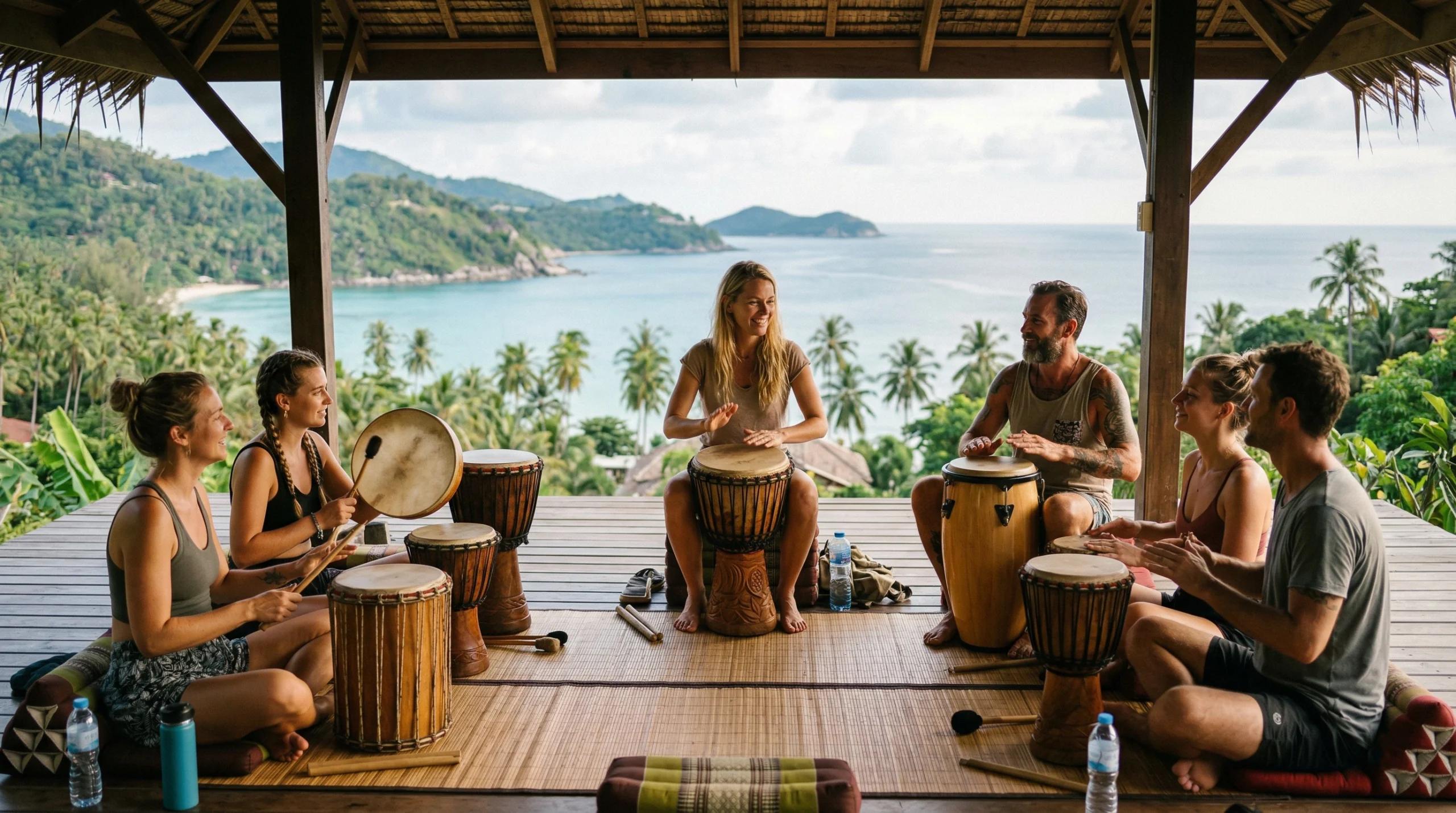
Before dinner or bedtime, the community gathers to share moments of thankfulness — a smile, a breakthrough, a calm breath.Gratitude in Group Therapy
Clients are invited to express appreciation for peers’ honesty and support, building mutual respect and connection.Nature Gratitude Walks
Surrounded by Koh Phangan’s tropical beauty, clients practice mindful walking — noticing colors, sounds, and sensations as gifts of presence.
These simple acts create a profound emotional recalibration — one that gently transforms outlook and energy.
How Gratitude Supports Sobriety
Long-term recovery isn’t maintained by fear of relapse — it’s sustained by joy in living.
Gratitude helps clients build a mindset that supports both.
Here’s how:
Shifts focus from craving to contentment
Increases emotional resilience during stress
Encourages humility and perspective in moments of ego or anger
Reinforces community connection by appreciating others
Supports daily mindfulness, reducing impulsive behaviors
When life feels overwhelming, gratitude acts like an inner compass — guiding attention back to what’s real, right, and present.
Gratitude and Spiritual Awakening
Addiction often leaves people spiritually numb — disconnected from meaning, purpose, or faith.
Gratitude is one of the first ways back to spiritual connection.
At Holina, spirituality isn’t defined by religion — it’s defined by awareness and love.
Gratitude opens the door to both.
Through meditation, journaling, and group reflection, clients rediscover awe in the ordinary — the color of the ocean, the kindness of a stranger, the strength it takes to begin again.
“Gratitude made me realize that recovery wasn’t just about stopping something. It was about starting life again.”
— Holina client, Australia
This awakening is subtle yet powerful.
It’s the moment where survival turns into serenity.
Transforming Pain into Purpose
One of the most remarkable aspects of gratitude is its ability to transform suffering into strength.
When clients look back with gratitude — not for what happened, but for what they’ve learned — pain becomes purposeful.
Therapists at Holina often invite clients to reflect:
What did this experience teach you about resilience?
Who have you become because of what you’ve endured?
What do you now have compassion for in others?
This reframing doesn’t minimize the past; it honors the growth it inspired.
And that shift — from “Why me?” to “What now?” — is one of recovery’s greatest milestones.
Gratitude in Relationships
Addiction can fracture relationships through resentment and blame. Gratitude helps repair them by softening defenses and inviting appreciation.
In family therapy, we often ask both clients and loved ones to express one genuine appreciation for the other — not about achievements, but about character or effort.
This small act can melt months of silence or tension.
Gratitude opens the heart faster than apology alone.
It teaches everyone involved that healing relationships isn’t about fixing the past — it’s about recognizing the good that still exists between people, even amid pain.
The Role of Gratitude in Preventing Relapse
In long-term recovery, stress and emotional triggers are common.
Gratitude acts as emotional grounding — a reminder of how far one has come, and what’s worth protecting.
When practiced daily, gratitude helps:
Reduce impulsive thinking
Increase motivation to maintain sobriety
Balance negative self-talk
Cultivate hope during difficult times
Holina’s aftercare team encourages graduates to keep gratitude journals or audio reflections.
These tools become emotional anchors — reminders of progress and possibility when life outside treatment becomes challenging.
Gratitude and the Body: The Mind–Body Connection
Gratitude doesn’t just change mood — it changes biology.
Studies show that consistent gratitude practice lowers blood pressure, improves heart health, and supports immune resilience.
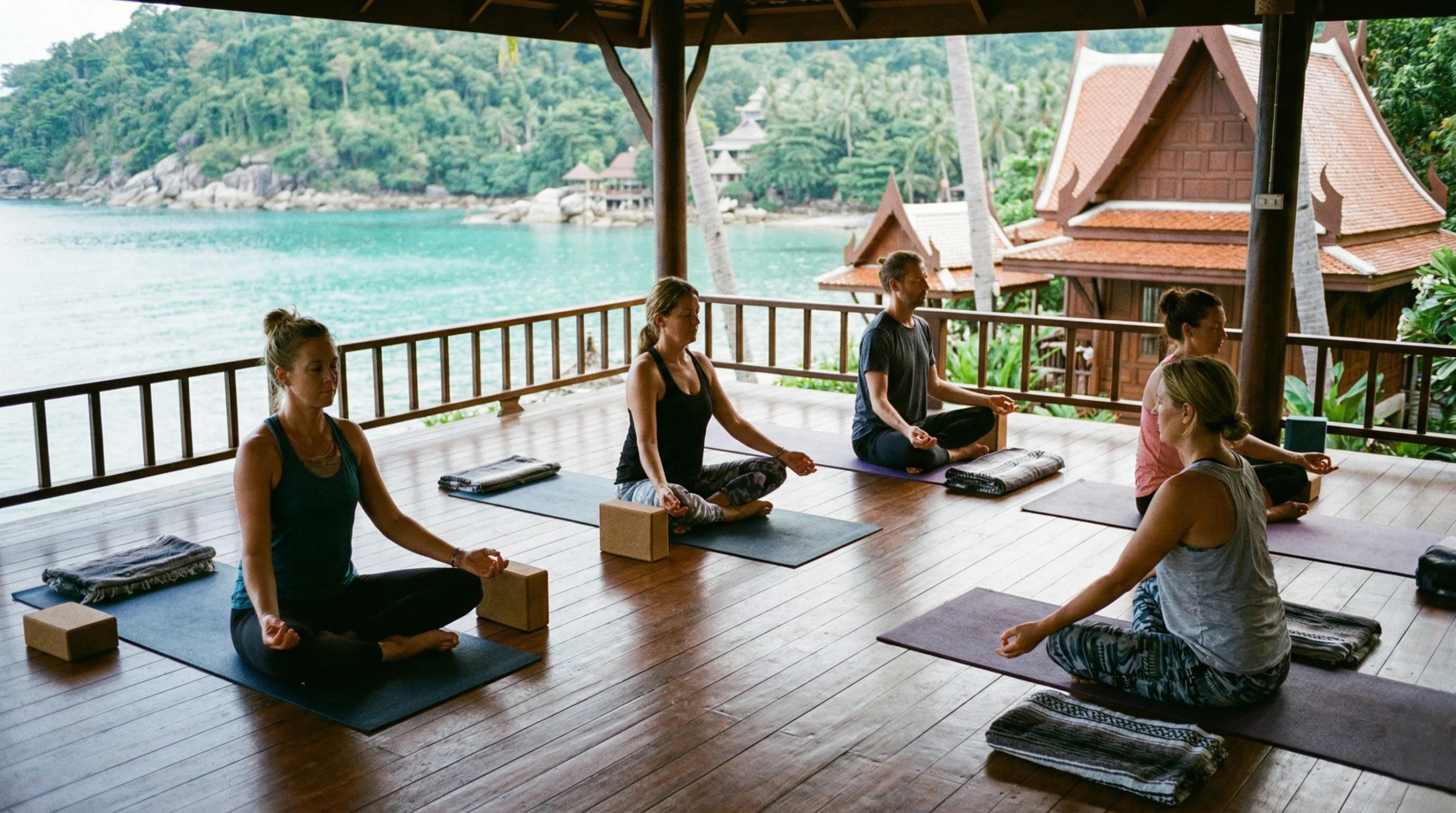
At Holina, we pair gratitude with body-based practices like yoga, breathwork, and somatic awareness.
This integration allows clients to feel gratitude, not just think it — experiencing it as warmth, ease, or expansion in the body.
By uniting mind and body, gratitude becomes more than thought — it becomes embodiment.
Gratitude and Community Healing
In the Holina community, gratitude is collective.
Clients, staff, and therapists alike share appreciation openly — for honesty, laughter, effort, and compassion.
This culture of gratitude creates an emotional ecosystem where people thrive.
When one person expresses thankfulness, it lifts the entire group’s energy — reinforcing the idea that healing is relational, not individual.
In community, gratitude multiplies.
It becomes the shared heartbeat of recovery.
Cultivating Gratitude in Daily Life
Once clients leave Holina, maintaining gratitude in the “real world” can feel challenging.
We teach practical ways to keep it alive amid everyday stress.
Daily Gratitude Habits:
Morning Check-In — name three things you’re thankful for before checking your phone.
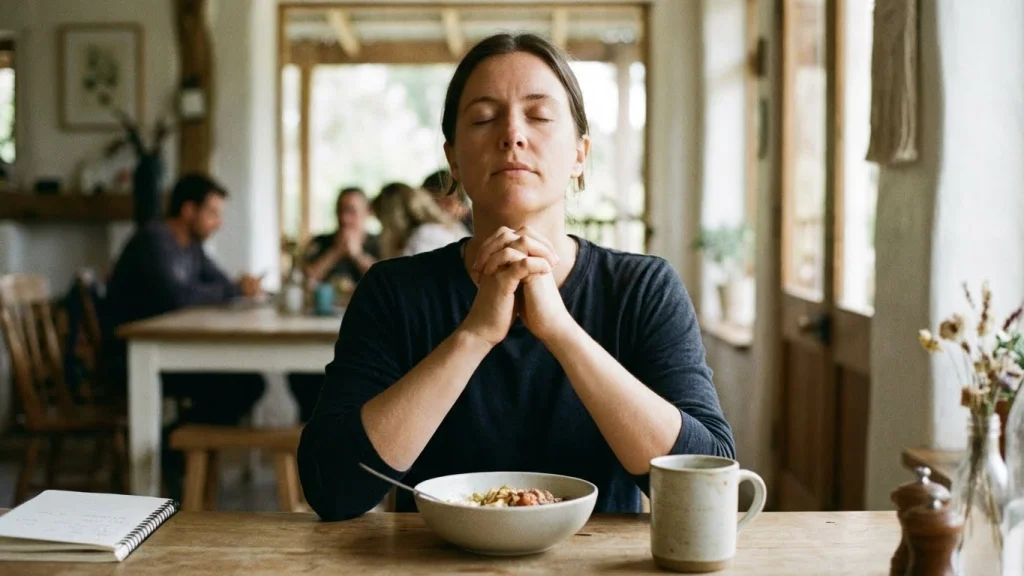
Gratitude Pause — take one deep breath of appreciation before meals or meetings.
Evening Reflection — write one sentence about something beautiful that happened that day.
Gratitude Letters — occasionally write to someone who impacted your journey — even if you never send it.
Mindful Walks — notice small details that bring peace: sunlight, birdsong, laughter.
These simple rituals keep the nervous system regulated and the spirit nourished — even on hard days.
The Role of Gratitude in Self-Compassion
True gratitude begins with the self.
In recovery, many people struggle to appreciate their own courage — to see how far they’ve come.
Holina therapists gently guide clients to practice self-gratitude, such as:
“I’m grateful for my resilience.”
“I’m proud of how I showed up today.”
“I’m thankful for the chance to grow.”
These affirmations rewire self-worth, allowing clients to experience love inwardly — not just seek it externally.
It’s not ego — it’s empowerment.
Stories of Transformation Through Gratitude
“I used to wake up angry at myself for surviving another day. Now, I wake up grateful that I get another chance to live it.”
— Holina graduate, UK
“Gratitude taught me to stop chasing happiness. It’s not something I find — it’s something I notice.”
— Holina client, Germany
“The moment I started thanking my body for carrying me through addiction, I began to heal from shame.”
— Holina alumni, Australia
These stories echo the same truth: gratitude doesn’t change the past. It changes the relationship to the past — and that changes everything.
FAQs About Gratitude in Recovery
Q1: What if I don’t feel grateful yet?
That’s okay. Gratitude grows through practice, not perfection. Even noticing one good thing a day is enough to begin shifting perspective.
Q2: How can I be grateful when I still feel pain?
Gratitude doesn’t erase pain — it helps you hold it with compassion. It reminds you that even in difficulty, growth is happening.
Q3: Does gratitude replace therapy or spiritual work?
No. It complements them. Gratitude enhances emotional regulation and spiritual awareness, deepening all other recovery tools.
Q4: How does gratitude affect relapse prevention?
It strengthens emotional balance, helps regulate stress, and keeps the focus on what’s worth preserving — your peace.
Q5: Can I teach gratitude to my family too?
Absolutely. Gratitude is contagious. Sharing daily appreciations can transform family dynamics and create mutual healing.
Conclusion: Gratitude Is the Grace That Sustains
Gratitude doesn’t deny life’s challenges — it transforms how we meet them.
It turns ordinary days into sacred ones and moments of struggle into milestones of growth.
At Holina Rehab Thailand, we believe that recovery isn’t about perfection — it’s about perspective.
When you lead with gratitude, every sunrise becomes a promise, every setback a lesson, every breath a reminder that you’re still here, healing, evolving, and free.
Because gratitude doesn’t just sustain recovery — it becomes recovery.
It’s the quiet strength that keeps the heart open, even after the storm.
Begin your healing journey with Holina today.
Get back to yourself — body, mind, and spirit.
About Me
Ian Young
Ian Young is the Global Manager at Holina Care Centres in Koh Phangan, Thailand. Ian oversees the rehabilitation programs that blend the 12 Step model, Psychology, Counselling, Coaching, Somatic and many other therapeutic engagements, alongside various evidence-based therapies with holistic healing practices. Holina Rehab treats addictions, trauma, anxiety, depression, and other emotional challenges, offering comprehensive care in a serene resort environment. Ian, a charismatic speaker and author of “It’s Not About Me” leveraging his own recovery journey from addiction to inspire and guide others toward a fulfilling, addiction-free life.
Recent Blogs
-
29 Nov, 2025
The Power of Community in Addiction Recovery