The Power of Community in Addiction Recovery
05 min read
Why We Heal Together
Addiction thrives in isolation. Recovery, however, flourishes in connection.
Behind every story of healing is a network of support — people who listen, understand, and remind us that we are not alone.
At Holina Rehab Thailand, community is not an optional add-on. It is the beating heart of everything we do.
Healing isn’t a solo journey; it’s a shared awakening.
Because when we feel seen, accepted, and supported, the walls that addiction built begin to fall.
In the stillness of the island, surrounded by nature and compassion, something beautiful happens: people begin to rediscover the power of belonging.
The Isolation of Addiction
Addiction separates — not just from loved ones, but from self.
It creates walls of shame, secrecy, and self-protection. For many, years of substance use or emotional struggle were attempts to numb the loneliness that comes from disconnection.
Clients often describe arriving at Holina feeling lost and unseen. They may have withdrawn from friends and family, struggled to maintain relationships, or felt like no one could understand them.
The truth is, addiction is often less about the substance and more about the pain of isolation it tries to soothe.
Community, then, becomes the antidote — the medicine that helps rebuild connection, safety, and meaning.
Why Connection Heals
Humans are wired for connection. It’s how we regulate emotions, build resilience, and find belonging.
When isolation takes hold, the nervous system goes into survival mode — hypervigilance, anxiety, depression, or numbness. Community restores safety. It tells the brain and body, You’re not alone anymore.
In neuroscience, this is called co-regulation — the process of calming our nervous system through safe relationships.
When someone looks at us with kindness, listens without judgment, or shares their own vulnerability, our physiology shifts. Stress hormones drop. Oxytocin — the bonding hormone — rises.
At Holina, these micro-moments of safety add up to deep, cellular healing.
In the presence of others, the body learns to relax. And when the body relaxes, the heart can open.
Community as a Therapeutic Tool
Holina’s approach to community healing is both intentional and structured.
Every part of the program — from shared meals to therapy circles — is designed to foster trust, communication, and belonging.
We don’t just teach recovery; we model it together.
Clients witness vulnerability, honesty, and empathy in action — not as theory, but as daily practice.
Holina’s community model includes:
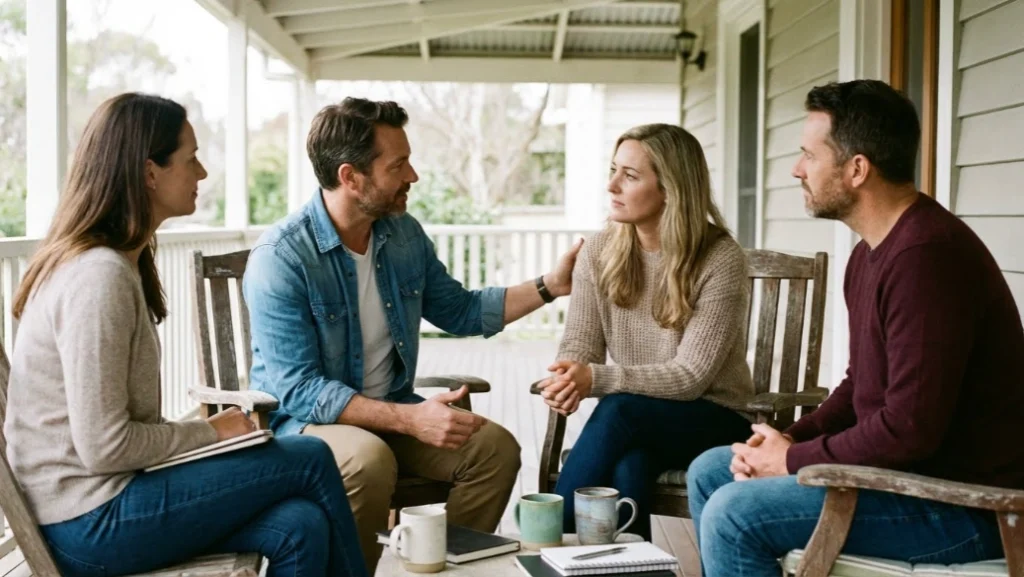
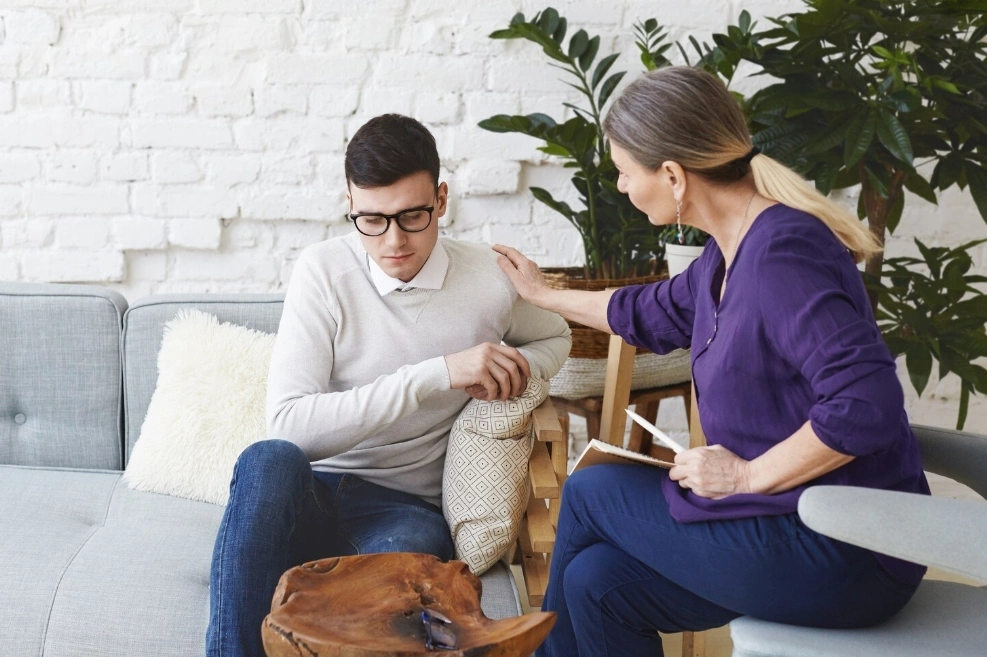
Group Therapy and Sharing Circles — creating a safe space for expression and empathy.
12-Step and Fellowship Meetings — building accountability and connection through shared experience.
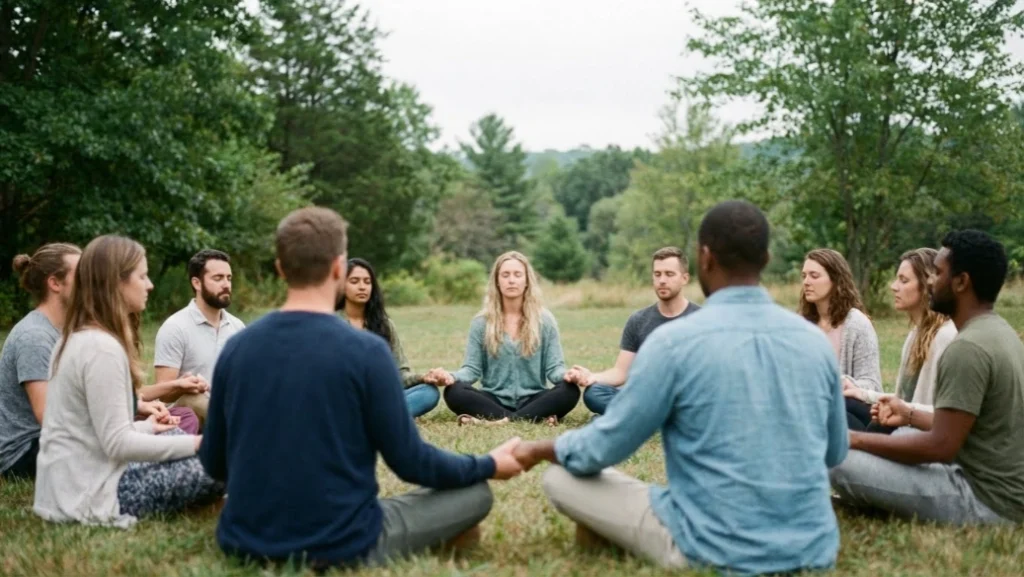
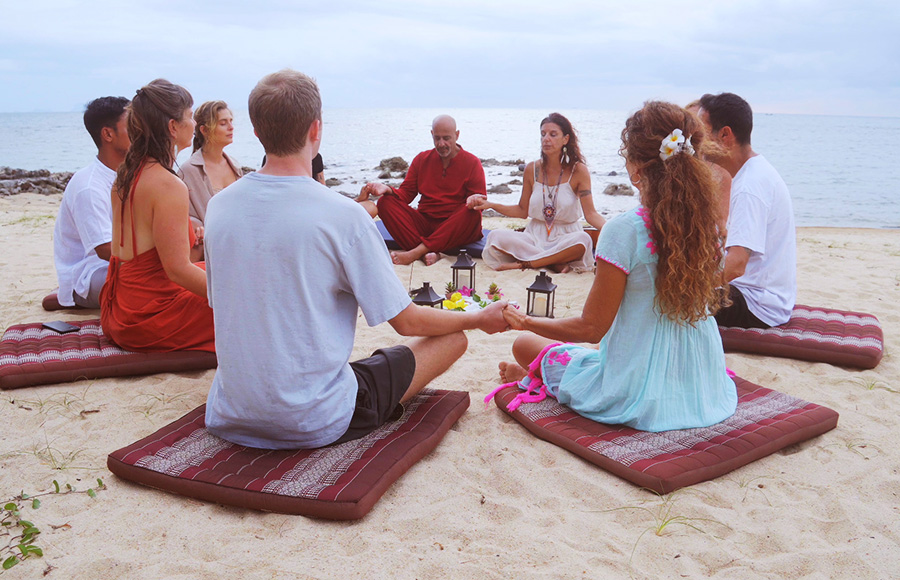
Mindfulness and Gratitude Circles — grounding emotions in collective calm.
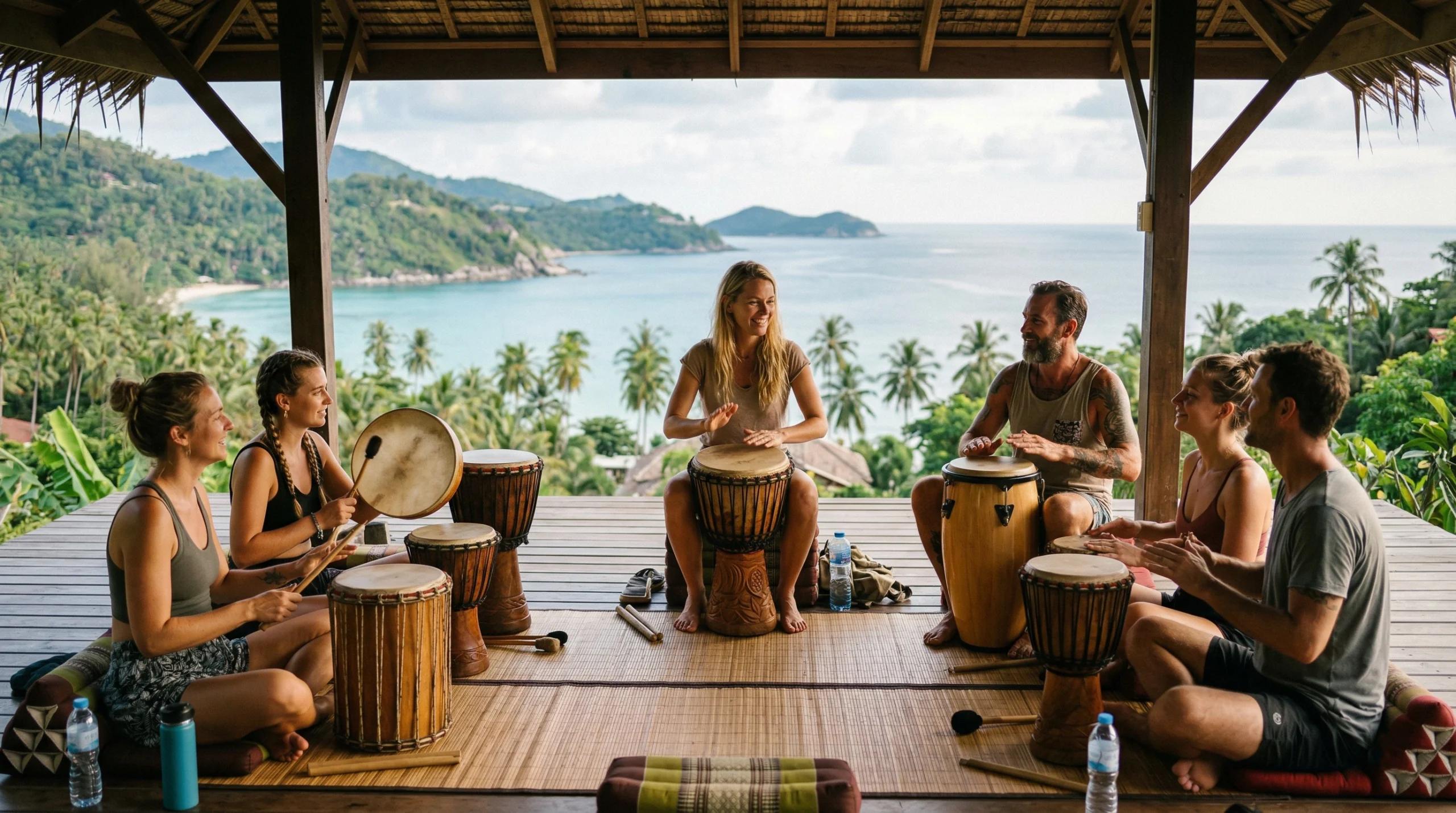
Team-Building and Recreational Activities — reminding clients that joy and laughter are also healing.
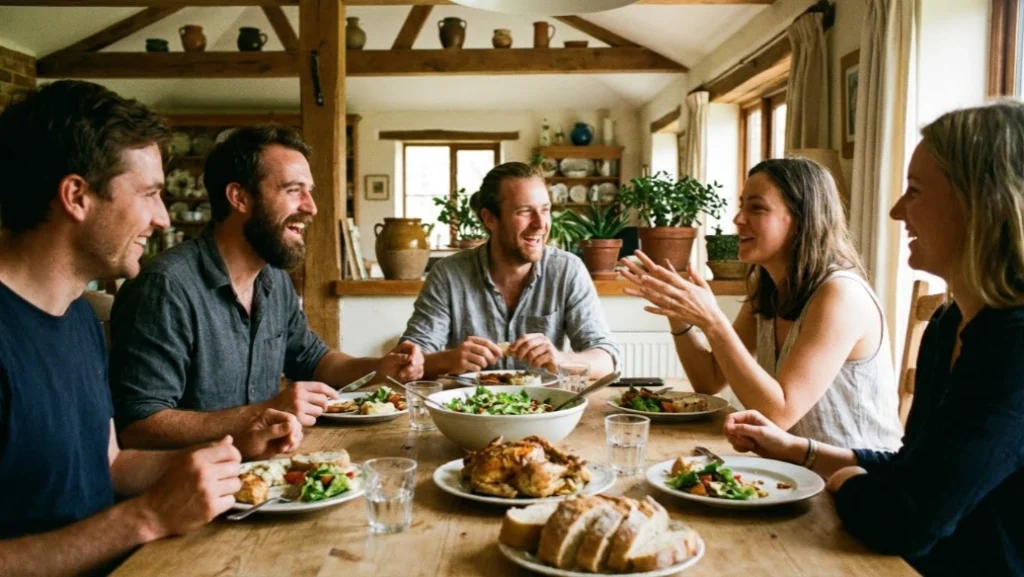
Community Meals — where everyone gathers not as patients, but as equals.
Through these shared experiences, clients move from isolation to belonging — from “me” to “we.”
The Holina Philosophy: Healing Through Relationship
At its core, Holina’s therapeutic philosophy recognizes that addiction isn’t the opposite of sobriety — it’s the opposite of connection.
Our job isn’t to fix people, but to help them feel safe enough to connect again — with themselves, others, and life.
Every therapist, counselor, and team member is part of that healing community.
Whether it’s a doctor offering reassurance during detox, a chef serving a nourishing meal, or a peer offering a hug after group therapy, every act of care communicates one truth: you matter.
This relational safety becomes the soil where recovery takes root.
Group Therapy: Shared Stories, Shared Healing
Group therapy is one of the most powerful expressions of community healing at Holina.
In these circles, clients discover that what once felt like shameful secrets are actually shared human experiences.
Through open dialogue and guided facilitation, group therapy helps:
Build empathy and trust
Strengthen emotional communication
Normalize struggle and celebrate progress
Practice vulnerability in a safe, supportive space
Clients often say that hearing others’ stories helps them find their own voice.
And speaking their truth — often for the first time — becomes a profound act of liberation.
“I realized I wasn’t the only one who felt broken. And that realization saved my life.”
— Holina graduate, UK
The Role of Peer Support
Peer support is recovery’s lifeline.
At Holina, every client is surrounded by others walking the same path — each at different stages of their healing journey. This creates a dynamic of mutual learning and compassion.
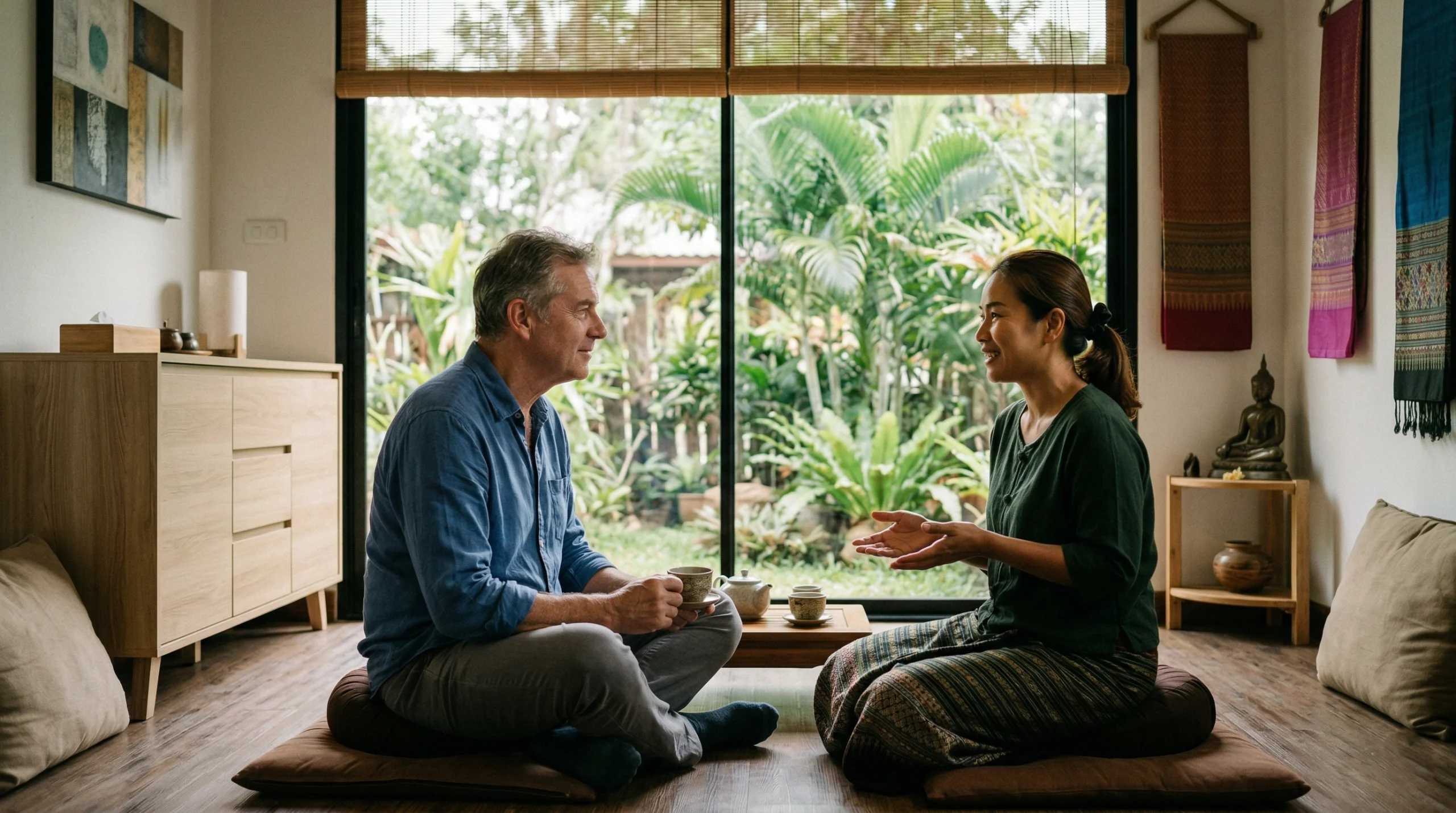
Unlike clinical therapy, peer connection feels organic. It’s laughter over coffee, tears after meditation, or encouragement during challenging days.
This authenticity builds resilience — because when someone else believes in you, you start to believe in yourself again.
Holina’s peer community extends beyond the island through alumni networks and online support groups.
Clients who once needed guidance often return later as mentors — living proof that recovery is possible and worth it.
The Power of Vulnerability
Healing begins where honesty lives.
In addiction, most people learn to hide — their feelings, their fears, their true selves. In recovery, they learn to reveal.
Vulnerability is the bridge between isolation and intimacy.
When someone says, “I’m struggling,” and is met with empathy instead of judgment, healing accelerates.
At Holina, every group session is built on that foundation of trust.
Clients learn that strength isn’t in hiding pain — it’s in sharing it.
Community and Accountability
Community healing isn’t just about comfort — it’s also about responsibility.
At Holina, peers gently hold each other accountable through honesty and compassion.
This sense of mutual responsibility mirrors real life: showing up, keeping commitments, learning to navigate conflict with integrity.
Accountability becomes a form of love — a reminder that recovery isn’t something we do to ourselves, but with others.
The Role of Joy and Play in Recovery
While therapy and reflection are essential, healing also needs joy.
Playfulness reawakens creativity and innocence — the parts of self addiction once numbed.
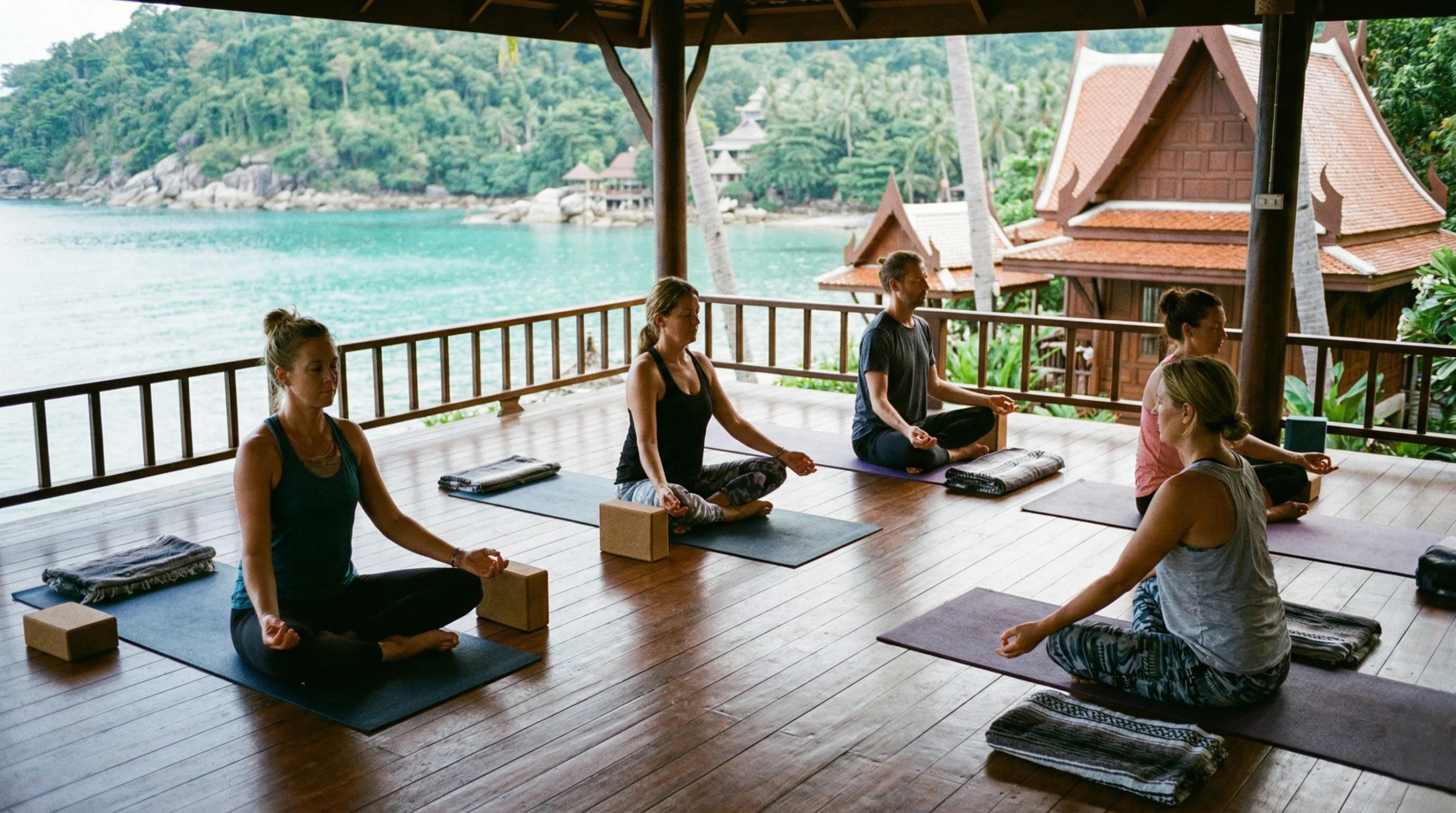
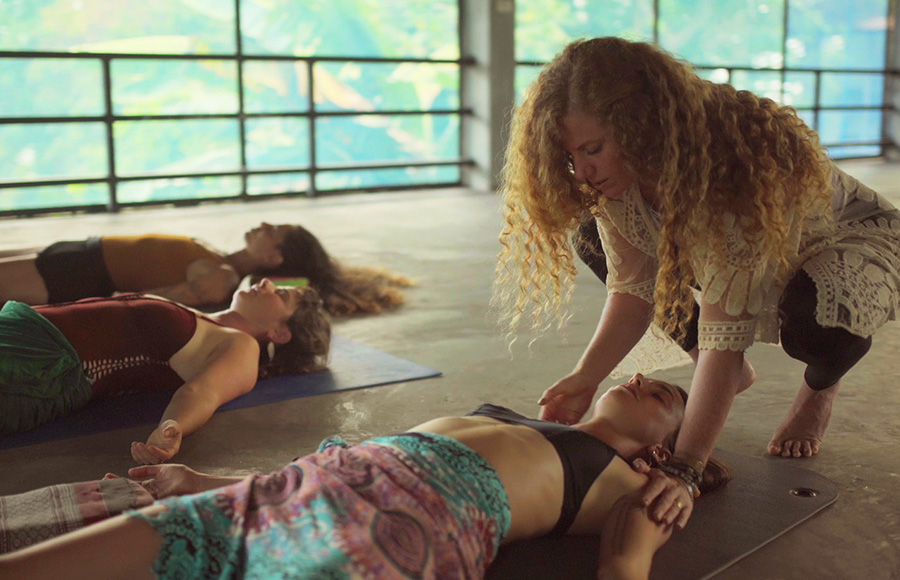
Holina’s community often gathers for beach walks, yoga sessions, art therapy, or shared meals. These moments of laughter and lightness are not distractions — they are medicine.
Joy re-teaches the body what safety feels like.
When clients laugh again for the first time, it’s not just happiness — it’s healing in motion.
Community as a Mirror
Community doesn’t just comfort; it reflects.
Within the group, clients begin to see patterns — how they relate, withdraw, or seek approval. These reflections become powerful mirrors for self-awareness.
Through guided feedback and compassion, clients learn to communicate authentically and to build boundaries that honor both self and others.
What once caused relational conflict becomes an opportunity for emotional growth.
In this way, the community becomes both classroom and sanctuary — a living laboratory for real-world recovery.
The Extended Holina Family: Alumni and Aftercare
Recovery doesn’t end when clients leave the island.
Holina’s alumni community keeps the connection alive through weekly online groups, mentorship, and check-ins.
Many former clients describe this network as their “lifeline” after leaving treatment. It offers continuity, accountability, and belonging — wherever they are in the world.
Some return to Thailand for alumni retreats; others stay in touch through virtual meditation sessions or online step meetings.
Once you’ve been part of the Holina family, you’re never alone on your path again.
The Science Behind Belonging
Community healing isn’t just emotional — it’s biological.
When we connect, our bodies produce oxytocin, dopamine, and serotonin — chemicals that regulate mood, motivation, and emotional safety.
These neurochemicals help repair the very imbalances that addiction once distorted.
In essence, belonging is medicine.
It lowers stress, strengthens immunity, and improves cognitive clarity.
The body heals faster when it feels held.
At Holina, this isn’t theory. It’s lived every day through kindness, eye contact, shared meals, and laughter that fills the open-air dining hall at sunset.
A Day in Community at Holina
A typical day at Holina blends introspection with connection:
Morning meditation invites quiet reflection in stillness.
Group therapy opens space for honesty and empathy.
Lunch is shared family-style, with laughter and conversation.
Afternoon workshops explore communication, boundaries, and trust.
Evening gratitude circle closes the day with collective mindfulness.
Every activity reinforces one message: healing happens together.
Even silence, when shared in community, feels like belonging.
Stories of Connection and Renewal
“For years, I thought no one could understand me. But at Holina, I found my people. They became my family.”
— Holina graduate, Australia
“Community saved me. It wasn’t therapy alone — it was the people beside me who helped me heal.”
— Holina client, Canada
“The laughter, the honesty, the support — it’s what keeps me grounded months after leaving.”
— Holina alumni, UK
These voices remind us that while recovery begins with self-awareness, it’s sustained by human connection.
FAQs About Community at Holina Rehab
Q1: What if I’m shy or anxious about group therapy?
That’s completely okay. Many people feel nervous at first. Our facilitators create a safe, non-judgmental space where you can share at your own pace.
Q2: Is the community environment structured?
Yes. Every group, meal, and activity is facilitated to ensure emotional safety and inclusion.
Q3: Can community healing really prevent relapse?
Yes. Connection and accountability are among the strongest predictors of long-term recovery success.
Q4: What happens after I leave Holina?
You’ll join our alumni network and receive aftercare support through virtual groups, check-ins, and mentorship.
Q5: What if I struggle to connect with others?
Our therapists and peers will gently support you. Connection takes time — and we honor your pace.
Conclusion: We Heal in Connection
Addiction isolates. Community reconnects.
At Holina Rehab Thailand, we witness the power of belonging every day — how simple acts of kindness and shared truth can rebuild lives once broken by loneliness.
Healing in community reminds us that recovery isn’t just about sobriety. It’s about humanity — rediscovering the part of ourselves that longs to love and be loved.
When we walk together, healing is not only possible — it’s inevitable.
Begin your healing journey with Holina today.
Get back to yourself — body, mind, and spirit.
About Me
Ian Young
Ian Young is the Global Manager at Holina Care Centres in Koh Phangan, Thailand. Ian oversees the rehabilitation programs that blend the 12 Step model, Psychology, Counselling, Coaching, Somatic and many other therapeutic engagements, alongside various evidence-based therapies with holistic healing practices. Holina Rehab treats addictions, trauma, anxiety, depression, and other emotional challenges, offering comprehensive care in a serene resort environment. Ian, a charismatic speaker and author of “It’s Not About Me” leveraging his own recovery journey from addiction to inspire and guide others toward a fulfilling, addiction-free life.
Recent Blogs
-
29 Nov, 2025
The Power of Community in Addiction Recovery