

You have already rehearsed the conversation in your head. You have rehearsed it in the car, in the shower, in the half-hour after they have gone to bed and the house is finally quiet enough to think. You have a version where you stay calm, and a version where you cry, and a version where you finally tell them the thing you have been holding back for two years. None of these versions feel right. None of them feel safe. And so the conversation, again, does not happen.
The families who eventually call Holina describe this dynamic in almost identical language. The drinking, or the pills, or the disappearance into a phone for hours at a time — these have become the obvious problem. But the harder problem, the one that keeps a household frozen, is the question of how to speak about it. Speaking too soon feels like an attack. Speaking too late feels like complicity. And every conversation that ends in defensiveness or denial seems to make the next one harder to start.
This piece is not about scripting a perfect intervention. It is about understanding what actually shifts a person from refusal to acceptance, and what families can do — without losing the relationship — to support that shift. The premise of residential treatment abroad is not abandonment. It is the creation of a setting where, for the first time in years, recovery is the only thing being asked.
Why the First Conversation Almost Never Lands
The scale of the conversation is significant. According to the World Health Organization, around 400 million people worldwide live with alcohol use disorders, and a further 209 million live with alcohol dependence specifically — yet only a small fraction ever receive specialised treatment. In the United States alone, 2024 federal survey data reported by the National Association of Counties, citing SAMHSA, found that of the 52.6 million people who needed treatment for a substance use disorder, only around 10.2 million received it.
Most addictions are sustained by a nervous system that has learned to brace before threat arrives. When you raise the topic of treatment, you are not, in the listener’s experience, suggesting an option. You are confirming a fear they have been managing for months — that they have lost control, that they have disappointed you, that the part of themselves they cannot bear to look at is now visible. The body responds before the words do. Shoulders rise. Voice tightens. The room narrows.
What you observe as denial is often something closer to flooding. The conversation has triggered a survival response, and survival responses are not designed for nuance. They are designed to end the threat — by leaving the room, by changing the subject, by accusing you of overreacting, or by promising a change that everyone present already knows will not arrive.
This is why the families who succeed do not lead with a confrontation. They lead with a different kind of opening — one that lowers the temperature rather than raising it.
What Actually Lowers the Defensiveness
The conversations that move someone closer to treatment share a small number of features. They happen in private, when the person is sober or as close to sober as their pattern allows. They begin with observation rather than accusation. They use the word “I” more than the word “you.” And they almost never end with a demand.
“The conversation that works is never the one you’ve rehearsed to perfection — it’s the one where you finally stop performing certainty and let them see you’re scared too. That’s when the door opens.”
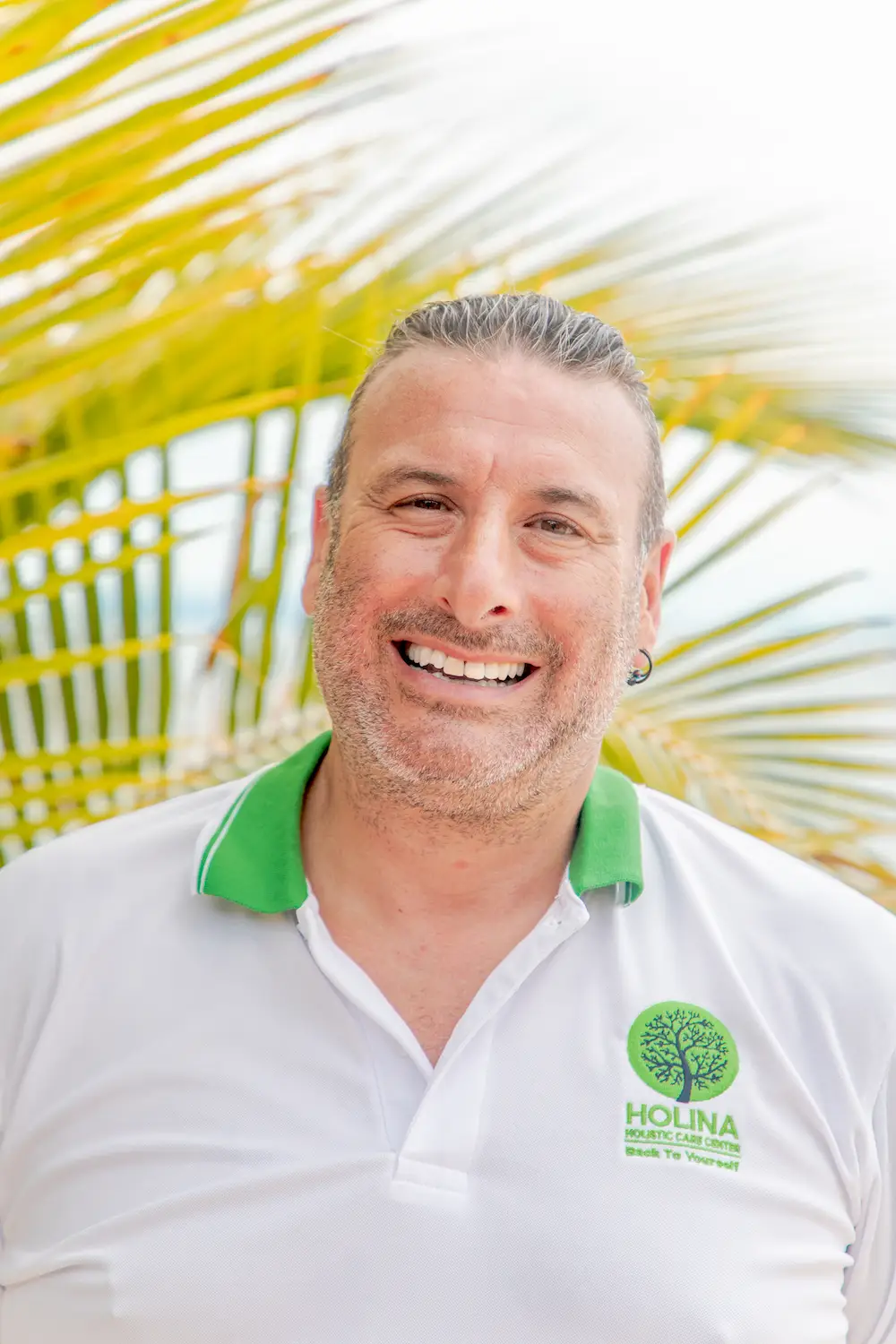
Ian Young, Managing Director
A version that has worked for many Holina families: “I have noticed that the last few months have been heavier for you. I am not asking you to defend anything. I am telling you that I love you, and I am scared, and I want to know what you are carrying.” There is no rehab in that sentence. There is no ultimatum. There is only the presence of a person who is not going to look away.
This approach has an evidence base behind it. A controlled trial of Community Reinforcement and Family Training (CRAFT) — a method that coaches family members in exactly this kind of non-confrontational engagement — found that 62 to 63 percent of previously unmotivated substance users entered treatment after their family received the training, compared with 37 percent in a comparison condition. The families who engage this way are not being naive about denial. They are using a documented route through it.
The acceptance of treatment, when it comes, often arrives several conversations later. Not because the first one failed, but because the first one made the second one possible.
When Treatment Abroad Becomes the Right Frame
For a meaningful number of families, rehab in the home country has already been tried. There is a discharge summary in a drawer. There is a sponsor whose number has gone unanswered. The cycle of treatment-and-return has, for them, become its own pattern, and the environment that produced the addiction is the environment that keeps producing relapse.
This is the point at which abroad starts to make sense — not as escape, but as separation. A residential program in Thailand removes the proximity to dealers, to drinking partners, to the routine of a life organised around use. It does not solve the underlying trauma, but it creates the conditions in which the underlying trauma can finally be addressed. For people who have relapsed two, three, or more times locally, that separation is often the single largest variable in their next outcome.
A long-distance setting also reframes the experience itself. A rehab in the same city is a building one has to be admitted into. A rehab on Koh Phangan is a place one travels to, with a flight, with a passport, with a measurable distance from the life that was no longer working. That sense of journey is not cosmetic. It is part of what makes the work stick.
“Ian was absolutely game changing in helping our family with an intervention, without which we were in an endless spiral of pain and suffering.”
— Stephen Lewin, Google Review, 20 May 2026 · ★★★★★
What to Say About the Cost, the Distance, and the Time
These are the three objections that surface most often, in roughly this order. Cost is rarely the deepest fear; it is usually the most acceptable one to say aloud. Behind it sits the longer fear of being away from work, away from children, away from a routine that has been keeping a fragile life held together.
It helps to have honest answers ready. Cost at Holina ranges from US$9,700 to US$18,700 for a 28-day program, which is meaningfully less than equivalent licensed care in the UK, US, or Australia, before the savings of being far from one’s usual triggers are accounted for — see our full Thailand cost breakdown for a side-by-side comparison, and our insurance and financing guide if a family is planning around a self-pay budget. Distance is real, and the first week is harder for it; this is also why families are invited into structured calls and, where appropriate, on-site weeks later in the program. Time away from work is often less than people fear — most professionals return more functional, not less, and the alternative is a slower-burning version of the same exit.
You do not have to have every answer before the conversation begins. You only have to be willing to find them together.
The Role of the Family Once They Say Yes
Acceptance is not the end of the family’s work. It is, in many ways, the beginning of a different kind of work. The weeks before admission are when boundaries get set — about who handles their phone, who takes the dog, who manages the email auto-responder, who tells the in-laws, who does not. The weeks during admission are when the family learns, often for the first time, what their own patterns of enabling, control, or anxiety look like when removed from daily contact with the person they have been managing.
Holina runs structured family work throughout treatment, by video where geography requires it and in person where families choose to come. The aim is not to assign blame. It is to make sure that the home returning to itself is not the home that produced the original wound.
A Closing Note on the Conversation You Are About to Have
If you are reading this in advance of speaking, the most important thing to know is that the conversation does not have to be perfect. It only has to be honest, soft, and unwilling to disappear. Most loved ones do not say yes the first time they are asked. They say yes the third or fourth time, after they have had room to feel rather than react, and after they have understood that the relationship will hold whether they say yes immediately or not.
When you are ready, Holina’s admissions team is reachable directly. We will speak with you, and with your loved one when they are ready, without pressure and without obligation. The first step is not booking a flight. It is letting someone know you are no longer carrying this alone.
— Ian Young
Related Reading
Ready to Start Your Recovery Journey?
Our clinical team is available to answer your questions and help you find the right programme for your needs.
Speak with Our Team →