

Why Talking Is Only the Beginning
Recovery is often described as a conversation — between therapist and client, between past and present, between pain and potential. But true healing requires more than words.
It requires connection, understanding, and the courage to go beneath the story into the emotions that shaped it.
At Holina Rehab Thailand, therapy is not just about what you say — it’s about what you feel, what you release, and what you become.
Our therapeutic model combines evidence-based psychology with mindfulness, bodywork, and creativity to reach every level of a person’s being — not just the mind.
Because addiction doesn’t start as a talking problem. It starts as a feeling problem — one therapy alone, without depth, can’t always reach.
That’s why at Holina, therapy goes beyond talk. It becomes transformation.
Understanding the Purpose of Therapy in Recovery
Addiction is often described as a disease of disconnection — from oneself, from others, and from life.
Therapy is how reconnection begins.
Through therapy, clients explore the emotional roots of their addiction: grief, trauma, shame, perfectionism, or loneliness.
By naming and feeling these truths in a safe space, they begin to loosen addiction’s hold.
The goal of therapy isn’t to “fix” anyone — it’s to understand what pain once needed soothing. When that understanding arises, healing follows naturally.
Why Traditional Therapy Alone Isn’t Enough
Traditional talk therapy can be profoundly helpful — but for many in addiction recovery, it only addresses one part of the puzzle.
Talking about trauma doesn’t always heal it. The body, nervous system, and subconscious hold onto experiences that words can’t easily access.
At Holina, we use therapy as the foundation — but not the boundary — of recovery.
We expand it through holistic modalities that engage the full self: body, breath, and spirit.
This integrative model bridges modern psychology with ancient healing wisdom, creating an experience that is both scientifically grounded and deeply human.

The Holina Therapeutic Model: An Integrated Path to Healing
Holina’s clinical and holistic teams work together to design individualized treatment plans that meet each client where they are.
Our therapy program combines psychological precision with emotional safety, ensuring that every layer of healing is supported.
Our Core Therapeutic Components Include:
Cognitive Behavioral Therapy (CBT)
Helps clients recognize and change unhelpful thought patterns that lead to destructive behaviors.
Clients learn to challenge the inner critic, reframe beliefs, and cultivate emotional awareness.Dialectical Behavioral Therapy (DBT)
Teaches mindfulness, distress tolerance, and emotion regulation — essential tools for managing cravings and triggers.Trauma-Informed Psychotherapy
Recognizes that unresolved trauma is often the root cause of addiction. Therapists help clients process experiences safely and slowly, ensuring that healing feels empowering, not re-traumatizing.EMDR (Eye Movement Desensitization and Reprocessing)
A cutting-edge method for releasing trauma by reprogramming how the brain stores distressing memories.Somatic Therapy
Engages the body directly, helping release emotional pain through movement, breath, and awareness. Clients learn to feel safe inside their bodies again.Inner Child and Parts Work
Helps clients reconnect with vulnerable, neglected parts of themselves — learning to nurture instead of reject them.Family Therapy
Rebuilds trust, communication, and boundaries between loved ones affected by addiction. Healing becomes a shared journey, not a solo struggle.Creative and Experiential Therapy
Includes art, music, sound, and movement — helping clients express feelings beyond language.
Each of these therapies serves a different purpose, yet together they create one unified process: helping the person remember who they are beneath the pain.
Beyond the Couch: Healing Through Experience
At Holina, therapy doesn’t end when the session does. It extends into every part of the day.
Mindfulness, yoga, group reflection, and community activities all act as living forms of therapy — reinforcing the emotional insights gained in one-on-one work.
A client may explore their fear of vulnerability in a morning session, then find the courage to share honestly during group therapy that same afternoon.
Another may uncover grief in a trauma session, then release it through movement or art.
These experiences make healing tangible. Clients don’t just talk about change — they live it.
The Therapist-Client Relationship: A Safe Space for Transformation
The relationship between therapist and client is sacred — it’s where healing begins.
Many people enter rehab with deep mistrust. They’ve been judged, misunderstood, or unseen for years. The therapeutic alliance at Holina is built to change that narrative.
Our therapists offer unconditional positive regard — meaning no judgment, no labels, no shame.
Instead, clients are met with compassion, curiosity, and respect. This emotional safety allows the walls of defense to fall, revealing what truly needs attention.
As one client beautifully put it:
“It wasn’t just therapy — it was being witnessed without judgment for the first time in my life.”
Group Therapy: Healing Through Connection
Addiction isolates, but group therapy reconnects.
In group settings, clients learn to share openly, listen deeply, and offer empathy.
It’s often in these moments — surrounded by peers who understand — that the greatest breakthroughs occur.
Group therapy at Holina includes:
Process groups — open sharing about emotions and challenges
Psychoeducation groups — understanding addiction, trauma, and recovery tools
Gender-specific groups — safe spaces for men and women to explore identity and trust
12-Step meetings and spiritual groups — for reflection and community connection
Hearing “me too” from someone who’s lived the same struggle can be profoundly healing.
Connection dissolves shame — and where shame dissolves, growth begins.
Family Therapy: Healing Relationships, Rebuilding Trust
Addiction doesn’t happen in isolation — it affects entire systems of relationship.
Holina’s family therapy helps repair the emotional bridges strained or broken by addiction.
Through facilitated sessions (in person or virtual), families learn to:
Communicate without blame or defensiveness
Understand addiction as a condition, not a choice
Re-establish boundaries that support both sides
Rebuild trust through honesty and consistency
For many clients, family healing becomes a turning point — the moment when they realize they’re not beyond forgiveness, and that love can be rebuilt one conversation at a time.
Therapy for Trauma: Healing the Root, Not the Symptom
Trauma is one of the most common underlying causes of addiction.
At Holina, therapy gently addresses trauma in stages — first ensuring safety, then processing, and finally integration.
Our trauma-informed framework acknowledges that healing cannot be forced.
Clients are guided to reconnect with emotions and memories at a pace that feels manageable.
This slow, compassionate approach helps rebuild trust in the body and mind — teaching clients that it’s safe to feel again.
Techniques like EMDR, somatic therapy, and breathwork complement talk therapy by engaging the nervous system directly.
The result is not just insight, but embodied relief.
The Role of Creativity in Therapy
Words can only go so far. Art, movement, and music reach the places language cannot.
That’s why Holina includes creative therapy as a vital part of emotional recovery.
Art Therapy allows clients to express complex emotions through imagery.
Sound Healing uses vibration to regulate energy and calm the mind.
Movement Therapy invites release through dance, stretch, and flow.
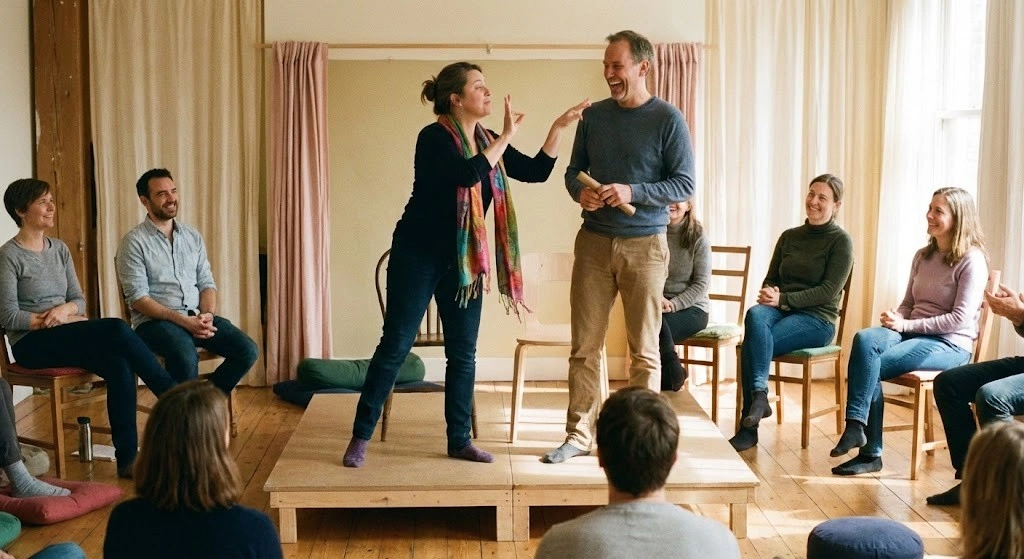
Drama and Role-Play Therapy help clients reframe their stories and experiment with new ways of being.
Creativity bypasses the rational mind, allowing healing to arise organically.
In these sessions, tears and laughter often coexist — both are forms of release.
Therapy as Reconnection with Self
Addiction is often described as the loss of self — the numbing of pain, passion, and purpose. Therapy is the way back.
Through honest exploration and emotional awareness, clients rediscover parts of themselves that addiction once silenced.
They remember what joy feels like. They reconnect with their values, dreams, and capacity for love.
Therapy becomes more than recovery — it becomes rediscovery.
The Holina Therapist Team
Holina’s therapeutic team represents a diverse blend of expertise — psychologists, trauma specialists, bodyworkers, and mindfulness teachers from around the world.
Each therapist brings not only professional skill but also deep personal compassion.
Our team members share one core belief: healing happens through relationship, not authority.
Therapists walk beside clients as allies, not above them as experts.
This human approach — honest, humble, and heart-led — is what makes therapy at Holina so deeply transformative.
The Role of Aftercare in Continued Therapy
Healing doesn’t end when clients leave the island.
Holina’s aftercare program ensures that therapy continues wherever life leads next.
Aftercare includes:
Virtual therapy sessions for continued emotional support
Weekly alumni meetings to sustain community connection
Relapse prevention coaching focused on real-life integration
Many clients choose to maintain long-term relationships with their Holina therapists, creating continuity and trust that supports long-lasting recovery.

A Day in the Life: Therapy in Motion
A typical therapeutic day at Holina might include:
Morning meditation to ground awareness
One-on-one therapy to process emotions
Group sessions to practice vulnerability and connection
Afternoon yoga or somatic therapy to integrate insights into the body
Evening reflection circles to close the day with gratitude
Each element reinforces the others. Therapy becomes not just an appointment, but a rhythm — one that teaches balance, self-awareness, and self-compassion.
Stories of Transformation
“I’d done therapy before, but always felt stuck in my head. At Holina, I learned to feel again — and that’s when real healing began.”
— Holina graduate, Australia
“The therapists here didn’t just listen. They saw me. That’s what changed everything.”
— Holina client, UK
These stories capture the essence of Holina’s therapeutic philosophy: healing through presence, empathy, and embodiment.
FAQs About Therapy at Holina Rehab
Q1: What kind of therapy will I receive at Holina?
You’ll receive a personalized blend of clinical and holistic therapies — including CBT, trauma work, somatic sessions, and mindfulness.
Q2: How often are therapy sessions held?
Clients receive daily therapeutic engagement, including multiple one-on-one and group sessions each week.
Q3: Do I have to talk about my past?
Only when you’re ready. Healing begins with safety, not pressure.
Q4: Are the therapists licensed and experienced?
Yes. Our team includes licensed psychologists, trauma specialists, and holistic practitioners from across the world.
Q5: Can therapy really change how I feel physically?
Yes. Emotional healing often relieves physical tension, insomnia, and anxiety by calming the nervous system.
Conclusion: Therapy Is Where Healing Becomes Real
Therapy is not about being analyzed — it’s about being understood.
It’s a mirror, a refuge, and a bridge back to self.
At Holina Rehab Thailand, therapy goes beyond words to reach the deepest layers of human experience.
Through talk, movement, mindfulness, and community, clients rediscover what it means to feel alive — not just sober, but whole.
Healing begins in conversation.
But it’s the courage to feel, to release, and to reconnect that turns therapy into transformation.
Begin your healing journey with Holina today.
Get back to yourself — body, mind, and spirit.
Ready to Start Your Recovery Journey?
Our clinical team is available to answer your questions and help you find the right programme for your needs.
Speak with Our Team →