
When we talk about trauma — whether it stems from a single catastrophic event or years of accumulated emotional wounds — we tend to focus on what we can see: the nightmares, the hypervigilance, the fractured relationships, the reach for substances that temporarily quiet the noise. What we talk about far less is what is happening inside the brain at a cellular level, and why that biological reality matters so profoundly for healing.
Emerging research into HBOT trauma inflammation is reshaping how progressive treatment centres understand and address conditions like PTSD, complex trauma, and the co-occurring addiction that so frequently accompanies them. Hyperbaric oxygen therapy — the delivery of pure, pressurised oxygen in a controlled chamber — is not a new concept in medicine. It has been used for decades in wound healing, decompression sickness, and post-surgical recovery. What is newer, and genuinely encouraging, is the growing body of evidence suggesting that hyperbaric oxygen PTSD applications may offer measurable neurological benefit for individuals whose nervous systems remain locked in a state of chronic inflammatory response long after the original trauma has passed.
The connection between trauma and brain inflammation is more concrete than many people realise. Prolonged psychological stress activates the body’s immune response in ways that share overlapping pathways with physical injury. Research has documented elevated inflammatory markers — including interleukin-6 (IL-6), tumour necrosis factor-alpha (TNF-α), interferon-gamma, and C-reactive protein (CRP) — in individuals with PTSD compared with trauma-exposed individuals who do not develop PTSD, and IL-6 in particular has been one of the most consistently studied proinflammatory cytokines in human PTSD research.1 This is trauma brain inflammation in measurable, physiological terms, not metaphor.
For individuals seeking trauma inflammation rehab in Thailand, understanding this neurobiological dimension opens a more complete picture of recovery. When HBOT is integrated thoughtfully within a physician-supervised, holistic residential programme, it addresses not just the psychological symptoms of trauma but the underlying inflammatory environment that sustains them. For those whose trauma has been compounded by substance use — where HBOT PTSD addiction intersects — this approach becomes even more clinically relevant, since both conditions share overlapping inflammatory pathways that conventional therapy alone may leave unaddressed.
This article explores what the current science tells us about hyperbaric oxygen and trauma-related inflammation, and why an increasing number of individuals are travelling to specialist residential centres in Southeast Asia to access this integrated, evidence-based approach to lasting recovery.
How Trauma Leaves an Inflammatory Signature in the Brain and Body
When most people think about trauma, they think about memory, emotion, and behaviour — the nightmares, the hypervigilance, the relationships that become impossible to sustain. What receives far less attention is what trauma does at a cellular and physiological level. Beneath the psychological symptoms that bring people to seek help lies a measurable, biological process: chronic neuroinflammation. Understanding this process is not simply an academic exercise. It is the foundation for appreciating why emerging therapies like hyperbaric oxygen therapy (HBOT) are drawing serious interest from researchers and clinicians working in trauma and addiction recovery.
Trauma — whether it originates from childhood adverse experiences, combat exposure, accidents, loss, or prolonged emotional abuse — activates the body’s stress response systems in ways that can become self-perpetuating. The hypothalamic-pituitary-adrenal (HPA) axis, which governs the release of cortisol and other stress hormones, becomes dysregulated. Simultaneously, the immune system shifts into a state of low-grade, persistent activation. Microglia, the resident immune cells of the central nervous system, remain in an alert, pro-inflammatory state long after the original threat has passed. This is not a malfunction — it is the nervous system doing precisely what it was designed to do. The problem is that it was designed for acute, time-limited threats, not for the sustained, complex stressors that many trauma survivors have endured.
The consequences of this chronic inflammatory state are wide-ranging and clinically significant. As noted above, research has linked elevated inflammatory markers with post-traumatic stress disorder (PTSD), major depressive disorder, and substance use disorders.1 In combat-exposed veterans, one study found that a specific inflammatory marker — soluble tumour necrosis factor receptor II (sTNF-RII) — was associated with reduced hippocampal volume and with more severe PTSD symptoms, suggesting that inflammation may track with symptom severity even where it does not fully explain a diagnosis.2 Inflammation of this kind can disrupt neurotransmitter metabolism, impair prefrontal cortex function, and interfere with the very processes that govern emotional regulation, decision-making, and the ability to form new, healthier memories and patterns of behaviour.
- Disrupted sleep architecture: Inflammatory cytokines interfere with restorative deep sleep, compounding emotional dysregulation and cognitive impairment.
- Altered pain sensitivity: Central sensitisation driven by neuroinflammation makes trauma survivors more vulnerable to chronic physical pain, which frequently co-occurs with PTSD and addiction.
- Impaired gut-brain communication: Systemic inflammation affects the vagus nerve and the gut microbiome, and research increasingly links this axis to anxiety, mood instability, and cravings.
- Reduced neuroplasticity: Elevated inflammatory signalling is understood to suppress brain-derived neurotrophic factor (BDNF), a protein important to the brain’s ability to rewire itself through therapy and new experience.
This is why addressing trauma effectively requires more than talk therapy alone. A genuinely comprehensive, evidence-based approach must consider the biological terrain in which psychological healing either takes root or fails to hold. At a residential level, this means offering adjunctive therapies that work alongside personalised psychotherapeutic treatment to help reduce the inflammatory burden — supporting conditions in which the brain and body may be more physiologically receptive to change. Hyperbaric oxygen therapy is one of the more scientifically interesting tools currently being studied for this purpose.
How Hyperbaric Oxygen Therapy Targets the Neuroinflammatory Cascade
When trauma — whether physical, psychological, or both — takes hold in the body, it triggers a neuroinflammatory response that extends far beyond the initial injury. Microglia, the brain’s resident immune cells, become chronically activated. Pro-inflammatory cytokines circulate in neural tissue. Oxidative stress accumulates in regions already implicated in trauma exposure, including the prefrontal cortex, hippocampus, and amygdala — structures central to memory, emotional regulation, and the stress response.1 This is not simply a metaphor for feeling unwell. It is a measurable, studied biological process, and one that hyperbaric oxygen therapy (HBOT) is increasingly being examined against at a cellular level.
During an HBOT session, a person breathes very high concentrations of oxygen inside a pressurised chamber, typically at pressures between 1.5 and 3 atmospheres absolute (ATA). Under these conditions, oxygen dissolves directly into plasma, cerebrospinal fluid, and lymphatic tissue at levels well beyond what breathing normal air can achieve. This increases the oxygen concentration reaching inflamed, hypoxic tissue, including areas of the brain where blood flow may be compromised.
The clinical significance of this mechanism becomes clearer when you examine what oxygen-deprived neural tissue actually does. Hypoxic cells shift toward anaerobic metabolism, producing lactic acid, generating reactive oxygen species, and triggering further inflammatory signalling. A recent review of HBOT as a neuromodulatory technique summarises evidence that the therapy can help interrupt this cycle by supporting aerobic metabolism, encouraging angiogenesis, and promoting neuroplasticity in the central nervous system.3
Some of the more striking findings come from research on veterans with treatment-resistant, combat-related PTSD. A prospective, randomised, controlled trial conducted at Israel’s Sagol Center for Hyperbaric Medicine and Research found that a structured HBOT protocol was associated with measurable improvements in brain microstructure — including increased white-matter integrity on diffusion tensor imaging — alongside clinically significant reductions in PTSD symptom scores that were not seen in the control group.4 These are not the only findings in this field, and HBOT research in trauma and psychiatric populations remains an active, evolving area — but they represent some of the more rigorously controlled evidence available to date.
“In many of the residents we treat, the nervous system is still behaving as though the danger never ended. What hyperbaric oxygen offers us clinically is a way to support the brain’s own repair processes while the psychological work of trauma therapy is happening — it doesn’t replace that work, but it can help make the brain more receptive to it.”
- Modulation of microglial activation: Research suggests HBOT can help down-regulate the chronic immune response in neural tissue over a course of treatment
- Support for mitochondrial function: Oxygen-rich conditions are thought to support energy production within neurons, which may benefit cognitive clarity and emotional stability
- Encouragement of neuroplasticity: Increased oxygen availability is associated with the growth of new neural connections in some studies, supporting the brain’s capacity to reorganise and heal
- Vascular support: The therapy is understood to promote the development of new capillaries in areas where circulation has been restricted
- Regulation of oxidative stress: Controlled, monitored hyperoxygenation at therapeutic pressures is thought to activate the body’s own antioxidant enzyme systems rather than simply increasing free-radical exposure
It is important to note that HBOT is not a standalone answer, and research in this specific application is still developing. Its value within trauma recovery lies in how it is integrated — as one carefully calibrated component within a broader, physician-supervised treatment programme. When combined with evidence-based psychological therapies and personalised medical care, the physiological groundwork HBOT may help lay can make other therapeutic interventions more effective and more lasting.
Hyperbaric Oxygen Therapy at Holina: Integrated Into a Personalised Recovery Pathway
Understanding the science behind hyperbaric oxygen therapy is one thing — experiencing it within a carefully structured, physician-supervised programme is another entirely. At Holina Rehab on Koh Phangan, HBOT is never offered as a standalone intervention or a wellness add-on. It is integrated thoughtfully into each resident’s personalised treatment plan, positioned alongside evidence-based trauma therapies, nutritional support, and somatic healing modalities to address the biological and psychological dimensions of trauma-related inflammation.
For residents arriving with a history of PTSD, complex trauma, or co-occurring addiction and trauma, the inflammatory burden on the nervous system is often significant and long-standing. Our treating physicians conduct a thorough clinical assessment during the admissions process, reviewing trauma history, current symptom presentation, and any relevant physical health factors before determining whether HBOT is appropriate and at what stage of treatment it should be introduced. This level of clinical precision matters — the timing and sequencing of therapeutic interventions can influence outcomes.
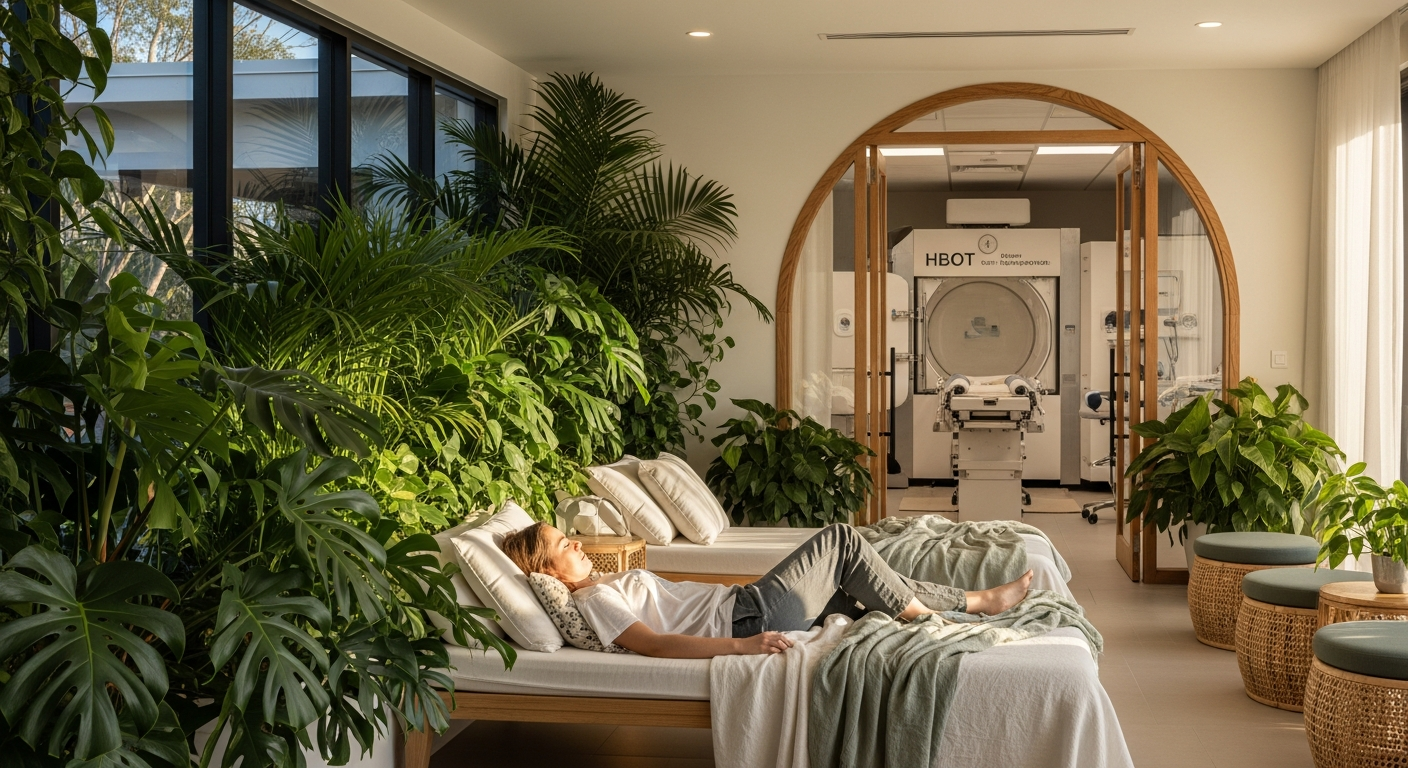
In practice, HBOT sessions at Holina typically take place in our on-site hyperbaric chamber under medical supervision. Sessions are structured to complement — not compete with — the resident’s broader daily therapeutic schedule. This might include:
- Individual trauma-focused psychotherapy, including EMDR or somatic experiencing, which residents often describe as more accessible as inflammation reduces and the nervous system settles
- Group therapy and relational healing work, which can benefit from the mood stability and reduced hyperarousal that some residents report during HBOT integration
- Nutritional medicine and gut-brain axis support, recognising that systemic inflammation responds to multiple simultaneous inputs
- Mindfulness-based stress reduction and breathwork practices that reinforce parasympathetic nervous system regulation between HBOT sessions
- Physical movement and gentle exercise, which further supports circulation and overall wellbeing
“This is a world class treatment centre, the team are incredibly caring and professional, experts in their field.”
— Angela, Recovery.com Review, 20 Mar 2026 · ★★★★★
Residents frequently describe a gradual but tangible shift — a quietening of the nervous system, improved sleep quality, greater emotional availability in therapy sessions, and a reduction in the physical tension and fatigue that so often accompany chronic trauma. These are not dramatic or immediate changes, but steady improvements that many residents connect to the underlying neurological repair thought to be taking place.
If you are exploring residential trauma treatment for yourself or someone you love, and you want to understand how hyperbaric oxygen therapy might form part of a comprehensive, luxury recovery experience in Thailand, we warmly invite you to reach out to our clinical admissions team. At Holina, every element of your care is chosen with intention — and with you at the centre of it. Families are welcome to be part of that conversation too; our family support programme runs alongside each resident’s individual treatment plan.
The relationship between trauma, neuroinflammation, and long-term psychological suffering is more complex than was understood even a decade ago. What emerging research continues to explore is whether healing the mind requires, in many cases, first addressing the physiological environment in which the brain is attempting to recover. Hyperbaric oxygen therapy offers a genuinely interesting, evidence-informed avenue for doing exactly that — supporting a reduction in inflammatory cytokine activity, encouraging mitochondrial repair and angiogenesis, and helping create the neurological conditions in which trauma-focused psychotherapy can more readily take hold. When applied within a structured, physician-supervised treatment programme, HBOT is not a standalone intervention but a meaningful component of a layered, personalised healing strategy.
For individuals carrying the weight of unresolved trauma, PTSD, or co-occurring addiction and emotional dysregulation, the integration of advanced somatic and physiological therapies alongside evidence-based psychological care can represent a genuine turning point. Recovery is rarely linear, but the right environment — one that honours both the biology and the humanity of each person — makes sustainable progress far more achievable.
At Holina Rehab in Koh Phangan, Thailand, our multidisciplinary clinical team brings together holistic, luxury residential care with current evidence-based approaches to trauma and addiction recovery. If you or someone you love is ready to begin a genuinely comprehensive healing journey, we warmly invite you to reach out and speak with our team today.
Sources:
1. Chen et al., “Inflammation in Post-Traumatic Stress Disorder (PTSD): A Review of Potential Correlates of PTSD with a Neurological Perspective,” PMC.
2. “Altered inflammatory activity associated with reduced hippocampal volume and more severe posttraumatic stress symptoms in Gulf War veterans,” PMC.
3. “Hyperbaric oxygen therapy as a neuromodulatory technique: a review of the recent evidence,” Frontiers in Neurology, 2024.
4. Doenyas-Barak et al., “Hyperbaric oxygen therapy improves symptoms, brain’s microstructure and functionality in veterans with treatment resistant post-traumatic stress disorder: A prospective, randomized, controlled trial,” PLOS ONE, 2022.
Ready to Start Your Recovery Journey?
Our clinical team is available to answer your questions and help you find the right programme for your needs.
Speak with Our Team →