
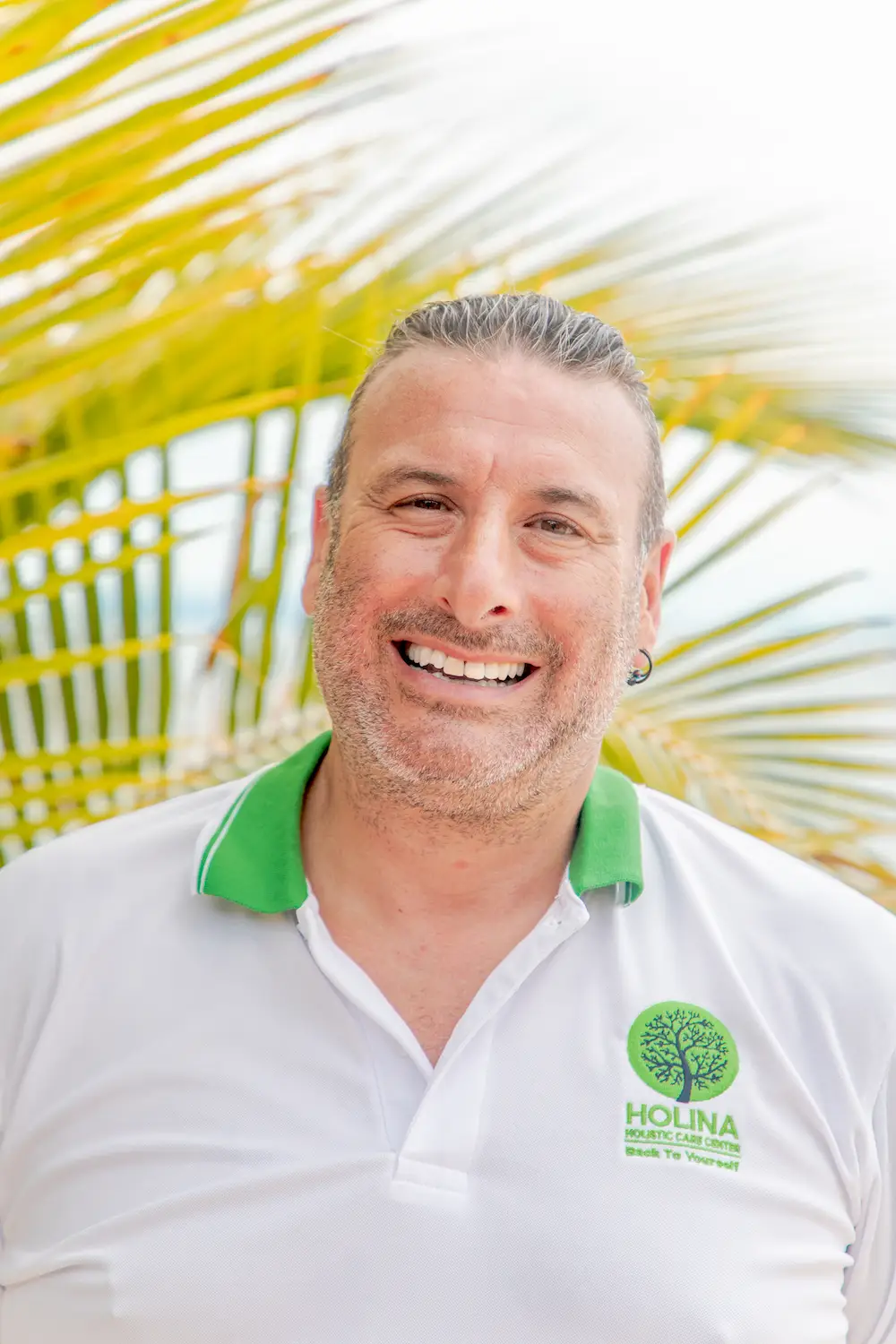

Clinically reviewed by William Morgan, Aqua Tuning Therapist, Holina Rehab. Review pending final sign-off.
For many people, addiction does not begin with a substance. It begins with trauma. Unresolved trauma keeps the body’s stress response switched on, leaving the nervous system dysregulated, and alcohol or drugs can become a way to quiet that constant sense of alarm. Talk therapy can help you understand what happened to you, but trauma also lives in the body, and that physical dimension often goes unaddressed. This is where body-based approaches such as Somatic Experiencing can play a supporting role in recovery.
At Holina Rehab in Koh Phangan, Somatic Experiencing is never offered as a standalone wellness experience. It is used within a structured, residential addiction-recovery programme, because treating substance use without addressing the trauma underneath it rarely holds. In this article we look at what Somatic Experiencing is, what the evidence does and does not show, and how it fits into trauma-informed addiction treatment at Holina. For more information, contact us on +66 82 113 0657 (international) or +66 61 936 8047 (Thai).
The Link Between Trauma and Addiction
Recovery starts with understanding why trauma and addiction so often travel together. Under the self-medication model, which has strong empirical support, people use substances to relieve distressing trauma-related symptoms; each use briefly dulls the distress, reinforcing the behaviour until it develops into a substance use disorder. The overlap is substantial: studies report that roughly 30 to 60 percent of people in addiction treatment also meet criteria for post-traumatic stress disorder, and up to half of people with PTSD have a co-occurring alcohol or drug use disorder. This bidirectional relationship is a well-documented clinical challenge, not a marketing claim.
This is the clinical foundation of Holina’s Dual Treatment programme, which addresses addiction and its underlying psychological drivers, including trauma, at the same time rather than one after the other.
What Is Somatic Experiencing?
Somatic Experiencing (SE) is a body-oriented therapeutic approach developed by Dr Peter Levine. Levine drew on observations of animals in the wild, who routinely face life-threatening situations yet rarely appear chronically traumatised, and proposed that they discharge the physiological arousal of a threat through instinctive movement. His theory is that humans often override these natural responses, leaving the nervous system stuck in a heightened state that can show up as anxiety, chronic tension, or difficulty regulating emotion.
Rather than asking you to recount a traumatic event in detail, SE gently guides you to notice bodily sensations and the nervous system’s responses, with the aim of helping it settle. The idea that trauma is “stored” or “trapped” in the body is best understood as SE’s working model of how the nervous system holds stress, rather than as an established anatomical fact. What matters clinically is whether the approach helps, and here it is important to be honest about the evidence.

What the Evidence Shows
Somatic Experiencing has a growing but still modest research base. The first randomised controlled trial, by Brom and colleagues in 2017 (published in Psychological Trauma: Theory, Research, Practice, and Policy), found that SE produced significant reductions in PTSD symptoms compared with a waitlist control, with gains maintained at follow-up. A separate randomised controlled trial found SE helpful for people with chronic low back pain and co-occurring post-traumatic stress symptoms. These are encouraging findings, but the overall evidence base remains smaller than that for more established trauma treatments such as EMDR and trauma-focused cognitive behavioural therapy. For this reason, Holina treats SE as one evidence-informed component of a broader, clinically led programme, not as a replacement for first-line care.
Somatic Experiencing at Holina Rehab
Because trauma is such a common driver of substance use, addressing it carefully can support more durable recovery. At Holina, Somatic Experiencing sessions are tailored to the individual and delivered by trained therapists within a safe, supportive environment. That safety is important: trauma often leaves people feeling disconnected from their bodies, and reconnecting can feel intimidating.
In practice, you and your therapist work at your own pace to notice areas of tension or activation in the body and to let the nervous system gradually settle. The process is intended to be gentle and non-invasive, part of a wider plan that also includes somatic therapies and structured clinical care for the addiction itself.
What to Expect in a Session
If Somatic Experiencing is part of your treatment plan, your therapist will usually begin by helping you feel grounded and safe, sometimes with simple breathing or orientation exercises. You will then be invited to notice physical sensations, whether tension, discomfort, or numbness, without judgement, and to stay present with whatever arises.
A central principle is staying within your “window of tolerance”, the range in which you can feel sensations without becoming overwhelmed. Working inside this window allows the nervous system to process arousal at a manageable pace and reduces the risk of re-traumatisation, which is especially important for people in early addiction recovery whose systems are already under strain.

How It Supports Addiction Recovery
When trauma keeps the nervous system in a state of alarm, the urge to self-soothe with substances can be relentless. By helping the nervous system re-regulate, trauma-focused work can reduce that underlying distress and give people more capacity to engage with the rest of their recovery. Reported benefits that clients commonly describe include:
- Reduced anxiety and stress: a calmer baseline can ease some of the distress that fuels substance use.
- Improved emotional regulation: a stronger mind-body connection can make difficult feelings easier to manage without reaching for a substance.
- Greater resilience: more tools for facing triggers and setbacks in recovery.
- Enhanced body awareness: better recognition of early warning signs of stress or craving.
- Better sleep and relaxation: improvements many clients notice as the nervous system settles.
These are individual experiences rather than guaranteed outcomes, and they work best alongside the structured elements of drug addiction treatment and ongoing trauma treatment.
Why Choose Holina Rehab
Holina Rehab in Koh Phangan provides trauma-informed addiction treatment delivered by an experienced clinical team. Somatic Experiencing sits alongside other therapies within a holistic, individualised plan, so that the addiction and the trauma driving it are treated together rather than in isolation. Our setting on Koh Phangan offers a calm environment for recovery, and every treatment plan is built around the person, not a one-size-fits-all template.
“I had an incredible experience here at Holina, really feel my time here was truly transformative. All staff from front of house to management were so caring understanding and supportive. The scenery, surroundings, rooms, group spaces meetings, restaurants, gym all 5*. The program they deliver and can also tailor to meet our needs was thorough, intense and very rewarding. I will carry so much from my stay on to the new chapter of my life. Thank you Holina.”
— Marlon Hulme, 3 Oct 2025
If you or someone you love is struggling with addiction and unresolved trauma, Holina’s team can talk you through the options. Contact us on +66 82 113 0657 (international) or +66 61 936 8047 (Thai) to learn more about our Dual Treatment programme.
Ready to Start Your Recovery Journey?
Our clinical team is available to answer your questions and help you find the right programme for your needs.
Speak with Our Team →