There is a moment in early recovery that many people describe in almost identical terms — a kind of fog that refuses to lift. Thoughts move slowly. Emotions feel blunted or, conversely, overwhelming. Sleep is fractured. Motivation, once imagined to return the moment drinking or drug use stopped, remains elusive. This is not weakness, and it is not a character flaw. It is the measurable, physiological aftermath of prolonged substance use on the human brain — and it is far more significant than most conventional treatment programmes acknowledge.
What chronic alcohol and drug use actually does to the brain is only now being understood in its full complexity. Years of heavy alcohol consumption are associated with widespread reductions in grey matter volume, damage to the white matter pathways that allow different brain regions to communicate efficiently, and significant impairment to the prefrontal cortex — the very area responsible for decision-making, impulse regulation, and emotional intelligence. Opioids, stimulants, and benzodiazepines each leave their own neurological fingerprints: disrupted dopamine signalling, mitochondrial dysfunction within neurons, chronic neuroinflammation, and critically reduced cerebral blood flow that can persist for months or even years after the last use. The brain, in short, does not simply reset the moment sobriety begins.
This is where hyperbaric oxygen therapy for addiction recovery enters the conversation as one of the more actively researched adjunctive treatments in addiction medicine today. Hyperbaric oxygen therapy — or HBOT — involves breathing pure, medical-grade oxygen inside a pressurised chamber at levels above normal atmospheric pressure. This process dramatically increases the amount of dissolved oxygen delivered to the body’s tissues, including, crucially, the brain. At two to three times normal atmospheric pressure, oxygen saturates the plasma independently of red blood cells, reaching areas of compromised circulation that conventional oxygen delivery simply cannot access.
The implications for HBOT brain healing in addiction recovery are promising, though the evidence base is still developing. Peer-reviewed research in traumatic brain injury patients has demonstrated that hyperbaric oxygen therapy can stimulate cerebral angiogenesis — the formation of new blood vessels — and measurable improvement in white and grey matter microstructure in oxygen-deprived neural tissue. Separately, research in patients recovering from chronic anoxic brain injury has shown HBOT can meaningfully improve cognitive function and induce measurable neuroplastic change — the brain’s innate capacity to reorganise itself, form new connections, and functionally recover from injury — even years after the original injury. These findings come primarily from hypoxic and traumatic brain injury populations rather than addiction-specific trials, but the underlying mechanism is directly relevant to the oxygen-starved neural tissue seen after years of heavy alcohol or drug use.
For individuals recovering from brain damage caused by alcohol or long-term drug use, this is not a peripheral luxury — it is an opportunity to address the biological substrate of their condition. When the brain begins to heal at a cellular and vascular level, the entire recovery experience changes. Cognitive clarity returns more quickly. Emotional regulation improves. Sleep architecture normalises. Cravings, which are significantly driven by disrupted dopamine pathways and prefrontal underactivity, begin to lose some of their intensity. Therapy becomes more accessible and more effective when the brain is physically capable of engaging with it.
At Holina Rehab, set within the natural beauty of Koh Phangan, Thailand, HBOT is integrated into a physician-supervised, evidence-informed residential treatment programme designed around each individual’s neurological and psychological profile. The decision to incorporate hyperbaric oxygen therapy reflects a fundamental philosophy: that lasting recovery requires healing the whole person — body, brain, and mind — rather than simply addressing behaviour in isolation. For those exploring HBOT rehab in Thailand, Holina represents a rare convergence of clinical rigour, genuine luxury, and deeply personalised care in one of the world’s most restorative natural environments.
What follows in this article is an honest, evidence-informed exploration of what hyperbaric oxygen therapy is, what the current research tells us about its role in neuroplasticity and addiction treatment, and why an increasing number of physicians and recovery specialists consider it a meaningful advance in the treatment of substance-related brain injury. Whether you are researching options for yourself or for someone you love, understanding this therapy — and the science behind it — may fundamentally change how you think about what recovery is capable of achieving.
What Alcohol and Drugs Actually Do to the Brain — And Why Recovery Is More Than Willpower
When someone decides to stop using alcohol or drugs, the decision itself is monumental. But the biology that follows that decision is often where recovery quietly struggles or stalls. Long-term substance use doesn’t simply create bad habits — it creates measurable, structural changes in the brain. Understanding what those changes are, and why they make early recovery so physically difficult, is the first step toward choosing treatment that genuinely addresses the root of the problem rather than just its surface symptoms.
Alcohol, opioids, stimulants like cocaine and methamphetamine, and even prolonged benzodiazepine use all share a common biological legacy: they reduce oxygen delivery to brain tissue, trigger neuroinflammation, and accelerate the death of neurons in regions responsible for decision-making, impulse control, emotional regulation, and memory. This isn’t metaphor — it’s visible on neuroimaging scans. Studies using MRI and PET technology consistently show that individuals with alcohol use disorder and stimulant dependence demonstrate measurable reductions in prefrontal cortex volume and significant disruption to white matter integrity — alcohol interferes with the brain’s communication pathways and can affect the way the brain looks and works, altering the neural “wiring” that connects different brain regions and allows them to communicate efficiently.
Alcohol is particularly damaging because it acts as both a direct neurotoxin and a circulatory suppressant. Heavy, chronic drinking reduces cerebral blood flow, which means less oxygen reaching the neurons that govern your capacity for rational thought, emotional stability, and self-regulation. Over time, this hypoperfusion — literally, insufficient blood flow to the brain — creates a state of chronic low-grade oxygen deprivation. Neurons under prolonged oxygen stress don’t simply die outright; many enter a dysfunctional state where they are alive but performing poorly, contributing to the mental fog, mood instability, and intense cravings that make the first weeks and months of sobriety so genuinely hard.
Stimulant drugs operate through a different but equally damaging mechanism. Methamphetamine and cocaine flood the brain with dopamine while simultaneously causing oxidative stress — a process in which reactive molecules damage cell membranes, DNA, and mitochondria within neurons. The dopamine system, already depleted after years of artificial stimulation, becomes sluggish and under-responsive. This is why people in early recovery from stimulant use so often describe a profound emotional flatness, an inability to feel pleasure, motivation, or connection. Clinically this is known as anhedonia, and it is one of the primary drivers of relapse in the weeks following cessation.
The neurological damage caused by substance use affects several critical brain regions:
- Prefrontal cortex: Responsible for impulse control, planning, and rational decision-making — consistently shown to have reduced volume and activity in individuals with alcohol and stimulant use disorders
- Hippocampus: Central to memory formation and emotional processing — alcohol neurotoxicity specifically targets hippocampal cells, contributing to memory gaps and emotional dysregulation in recovery
- Amygdala: The brain’s threat-detection centre — dysregulated by prolonged substance use, leading to heightened anxiety, hypervigilance, and stress reactivity
- White matter tracts: The connective pathways between brain regions — shown to deteriorate with heavy alcohol and opioid use, slowing cognitive processing and emotional integration
- Nucleus accumbens: The core of the brain’s reward circuitry — structurally and functionally altered by repeated drug exposure, resulting in diminished natural reward response
What this means practically is that the person sitting across from a counsellor in early recovery is often doing so with a brain that is inflamed, oxygen-depleted, neurochemically depleted, and structurally compromised. Expecting lasting behavioural change from therapy alone — without also addressing the underlying neurological environment — is a little like asking someone to run a marathon on a broken leg. The motivation may be genuine, but the physical substrate simply isn’t ready. This is where emerging adjunctive treatments, supported by a growing body of peer-reviewed research, are beginning to change what comprehensive addiction recovery looks like in a clinical setting. In a pair of randomised controlled trials on hyperbaric oxygen therapy conducted with adults in opioid treatment programmes, researchers at Washington State University found that participants who received HBOT achieved significantly larger reductions in their methadone dose and reported roughly half the withdrawal symptoms, along with lower pain and cravings, compared with participants who received room-air placebo sessions.
How Alcohol and Drug Use Damages the Brain — and Why Oxygen Matters
To understand why hyperbaric oxygen therapy is generating genuine clinical interest in addiction medicine, it helps to first appreciate the scale of neurological damage that prolonged substance use can cause. This is not abstract science. For many people arriving at residential treatment after years of heavy alcohol or drug use, the brain they are working with has been measurably, structurally altered — and that damage has real consequences for mood, memory, decision-making, and the capacity to engage meaningfully in therapy.
Alcohol is among the most neurotoxic substances in common use. Chronic heavy drinking reduces the volume of grey matter in the prefrontal cortex — the region responsible for impulse control, planning, and emotional regulation — and causes widespread white matter degradation, disrupting the communication pathways between brain regions. Thiamine deficiency, common in people with alcohol use disorder, can trigger Wernicke-Korsakoff syndrome, a serious neurological condition characterised by memory impairment and cognitive decline. Even without reaching that threshold, most people with moderate-to-severe alcohol use disorder show measurable deficits in executive function, verbal memory, and processing speed by the time they enter treatment.
Stimulants such as methamphetamine and cocaine inflict a different but equally serious pattern of damage. These substances trigger surges of dopamine and norepinephrine that, over time, damage the neurons responsible for producing and receiving those neurotransmitters. Methamphetamine use in particular has been associated with significant reductions in dopamine transporter density and grey matter volume in regions including the caudate nucleus, accumbens, and cingulate cortex. The result is a brain that struggles to experience normal pleasure, regulate stress responses, or sustain attention — a neurological substrate that makes early recovery genuinely difficult, not simply a matter of willpower.
Opioids present their own constellation of concerns. Chronic opioid use has been linked to white matter abnormalities, impaired decision-making circuitry, and dysregulation of the brain’s endogenous stress and reward systems. Hypoxic brain injury — oxygen deprivation caused by respiratory depression during overdose — is an additional and serious concern for many people with opioid use histories, creating focal or diffuse neurological damage that may not be fully apparent on standard clinical assessment.
At the physiological centre of much of this damage is a phenomenon called cerebral hypoperfusion — reduced blood flow to brain tissue. Multiple neuroimaging studies using SPECT and fMRI have documented significantly diminished cerebral blood flow in people with active or recently ceased alcohol and drug use. This matters because the brain is extraordinarily oxygen-dependent. While it represents only about two percent of body weight, it consumes approximately twenty percent of the body’s oxygen supply. When blood flow is chronically reduced, neurons receive insufficient oxygen and glucose, impairing their ability to repair, regenerate, and function.
This is precisely where hyperbaric oxygen therapy enters the picture. By delivering pure oxygen at pressures significantly higher than atmospheric, HBOT dramatically increases the amount of oxygen dissolved directly into the blood plasma — bypassing the normal haemoglobin-dependent transport system. This oxygen-rich plasma can reach compromised, poorly perfused brain tissue that normal circulation struggles to supply, creating the conditions in which neurological healing becomes physiologically possible.
- Reduced cerebral blood flow is consistently documented in imaging studies of people with alcohol and substance use disorders, even weeks after cessation.
- Neuroinflammation — chronic low-grade inflammation of brain tissue — is a hallmark of prolonged substance use and a significant barrier to cognitive recovery.
- Oxidative stress caused by substance use depletes the brain’s natural antioxidant defences, leaving neurons vulnerable to ongoing damage.
- Disrupted neuroplasticity — the brain’s capacity to form new connections and reorganise — is impaired in addiction, making it harder to build new thought patterns and behaviours in early recovery.
- Mitochondrial dysfunction in neurons reduces the brain cells’ ability to produce the energy required for repair and healthy signalling.
Understanding this biological landscape is not about creating hopelessness — quite the opposite. The same neuroplasticity that addiction disrupts is also the mechanism through which recovery and healing occur. The brain retains a remarkable capacity for repair when given the right conditions. Evidence-based adjunct therapies like HBOT are designed precisely to support and accelerate that process, working alongside personalised psychological treatment rather than replacing it.
How Hyperbaric Oxygen Therapy Works to Repair the Addicted Brain
To understand why hyperbaric oxygen therapy (HBOT) is generating serious clinical interest in addiction medicine, it helps to first understand what chronic substance use actually does to the brain at a physiological level — and why conventional approaches alone often fall short of addressing this damage directly.
Prolonged alcohol and drug use creates a cascade of neurological harm. Chronic alcohol exposure, for example, reduces cerebral blood flow, depletes thiamine stores essential for neuronal function, and accelerates the death of neurons in regions governing memory, impulse control, and emotional regulation. Methamphetamine and cocaine cause oxidative stress — essentially a kind of cellular burning — that damages the dopaminergic pathways responsible for motivation, pleasure, and decision-making. Opioids alter the brain’s natural pain and reward circuitry in ways that persist long after the substance is removed. What remains, in many cases, is a brain that is inflamed, under-oxygenated, and structurally compromised.
This is precisely where hyperbaric oxygen therapy intervenes.
During an HBOT session, a person rests inside a pressurised chamber and breathes pure oxygen at levels typically ranging from 1.5 to 3 atmospheres absolute (ATA). At this elevated pressure, oxygen dissolves not only into red blood cells but directly into plasma, cerebrospinal fluid, and lymph — reaching tissues that may have restricted blood flow and therefore limited access to the oxygen they need to heal. In the context of a brain damaged by years of substance use, this dramatically enhanced oxygen delivery has several measurable effects:
- Neurogenesis support: Elevated oxygen levels have been shown in peer-reviewed research to stimulate the release of brain-derived neurotrophic factor (BDNF) and vascular endothelial growth factor (VEGF), proteins that encourage the growth of new neurons and the formation of new blood vessels — a process called angiogenesis. This matters enormously in recovery, because it means the brain is not simply managing damage, but actively rebuilding.
- Reduction of neuroinflammation: Chronic substance use triggers persistent inflammatory responses in the central nervous system. HBOT has demonstrated anti-inflammatory properties at the cellular level, downregulating pro-inflammatory cytokines and reducing microglial activation — the brain’s equivalent of chronic immune overactivation.
- Improved cerebral blood flow: Studies using SPECT and fMRI imaging have documented measurable improvements in regional cerebral perfusion following HBOT protocols, including in populations with alcohol-related brain injury.
- Mitochondrial restoration: Oxygen is fundamental to mitochondrial function — the energy production process inside every cell. HBOT helps restore mitochondrial efficiency in neurons compromised by toxic substance exposure, supporting clearer cognition and more stable mood regulation.
- Reduction of oxidative stress: While this may seem counterintuitive — since oxygen can be a source of free radicals — controlled hyperbaric exposure has been shown to paradoxically upregulate the body’s own antioxidant defence systems, including superoxide dismutase and glutathione.
“HBOT is a genuinely interesting adjunctive tool, and I’ve seen patients arrive at therapy more alert and settled after a course of sessions. But it is exactly that — an adjunct. It supports the biological ground a person is standing on; it doesn’t do the psychological work of recovery for them, and we’re careful never to present it as a stand-alone cure for the brain changes that years of substance use can cause.”
— Dr. Aviva Wolf, Consultant Psychiatrist
It is worth noting that hyperbaric oxygen therapy for addiction-related brain recovery remains an emerging, investigational application rather than one of the small number of conditions formally approved by the Undersea and Hyperbaric Medical Society, which is why treatment decisions at Holina Rehab are made individually, under close physician supervision, rather than applied as a standardised or guaranteed protocol.
It is important to emphasise that HBOT does not replace the psychological, relational, and behavioural work that sits at the heart of genuine recovery. Rather, by improving the neurological substrate on which all therapeutic work depends — enhancing cognitive clarity, emotional regulation, and sleep quality — it creates conditions in which that deeper work can be absorbed more fully. When a person arrives at group therapy or a one-to-one session with a psychiatrist with a brain that is better perfused, less inflamed, and more neuroplastic, they are physiologically better positioned to engage, reflect, and change.
At a physician-supervised residential programme, HBOT sessions are carefully calibrated to the individual — with pressure levels, session duration, and frequency determined by clinical assessment rather than a one-size-fits-all protocol. This personalised approach ensures that the therapy is both safe and optimally targeted to each person’s specific pattern of neurological impact.
What to Expect from Hyperbaric Oxygen Therapy at a Residential Rehab Programme
Understanding exactly how HBOT is delivered within a structured residential setting helps demystify the experience and allows individuals to approach treatment with realistic, grounded expectations. At a premium residential programme, hyperbaric oxygen therapy is never offered as a standalone intervention — it is woven thoughtfully into a broader, physician-supervised treatment plan that addresses the neurological, psychological, and emotional dimensions of addiction and trauma simultaneously.
Before any HBOT session begins, a qualified physician conducts a thorough medical assessment. This evaluation examines cardiovascular health, respiratory function, ear and sinus integrity, and any history of conditions such as claustrophobia or pneumothorax, all of which are relevant to safe treatment delivery. This clinical gatekeeping is essential — it ensures that every individual who proceeds to hyperbaric therapy is medically appropriate for it, and that sessions are calibrated to their specific physiology rather than applied as a one-size-fits-all protocol.
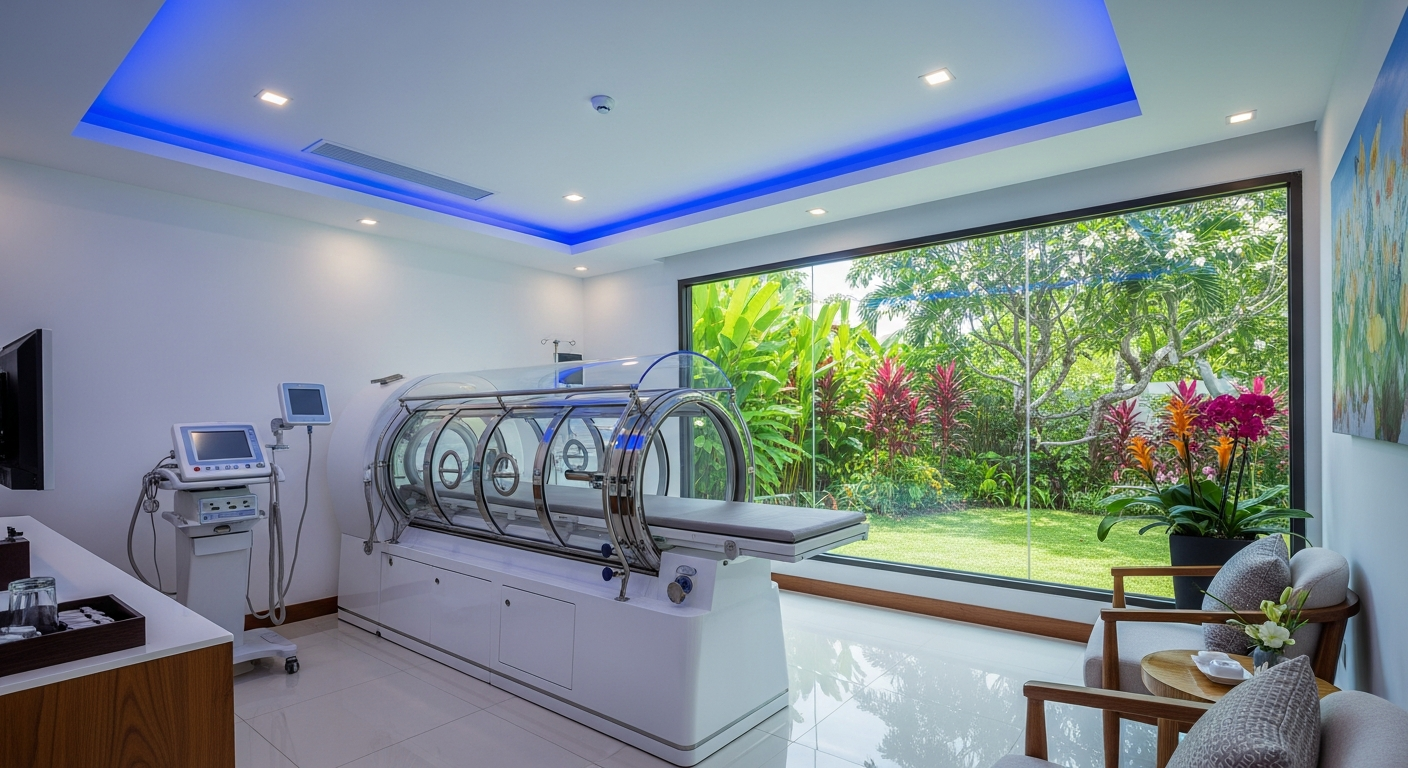
The hyperbaric chamber itself is a pressurised enclosure — either a monoplace unit designed for one person or a multiplace unit accommodating several individuals simultaneously. During each session, the client breathes pure oxygen through a mask or hood while atmospheric pressure is gradually increased to between 1.5 and 2.5 atmospheres, depending on the treatment protocol prescribed. Sessions typically last between 60 and 90 minutes. Most clients find the experience remarkably comfortable and report feelings of calm, warmth, or gentle pressure in the ears — similar to descending in an aeroplane — which equalises quickly.
A structured course of HBOT for brain recovery in addiction contexts generally involves:
- An initial intensive phase — typically 10 to 20 sessions delivered across the first two to three weeks of residential treatment, during which neurological repair processes are most actively supported
- A maintenance phase — sessions spaced across the remainder of the residential stay to consolidate oxygenation gains, support mood stabilisation, and reinforce cognitive improvements
- Ongoing clinical monitoring — regular check-ins with the supervising physician to assess tolerance, track symptomatic improvement, and adjust pressure levels or session duration as needed
- Integration with daily therapy — scheduling HBOT sessions to complement rather than compete with psychotherapy, group work, and somatic therapies, so that the enhanced neuroplasticity HBOT supports is immediately put to use in meaningful therapeutic work
Many clients report noticeably improved mental clarity, more restful sleep, and reduced anxiety within the first week of regular sessions. These early shifts are not coincidental — they reflect genuine neurochemical and vascular changes occurring in the brain as oxygen availability increases and inflammation begins to resolve. For individuals who have spent months or years feeling mentally foggy, emotionally blunted, or cognitively slow, these early improvements can be profoundly motivating.
It is also worth noting what HBOT does not feel like. There is no sedation, no significant discomfort, and no recovery time required after a session. Clients typically return directly to their therapeutic schedule, often reporting that they feel more alert and present in the counselling work that follows. This practical compatibility with intensive residential programming is one of the reasons HBOT has become an increasingly valued tool within evidence-informed luxury rehabilitation settings across the world.
At every stage, personalised care remains the governing principle. Pressure protocols, session frequency, and duration are adjusted based on each individual’s medical history, presenting symptoms, and treatment response — never applied from a generic template. This level of clinical precision is what distinguishes a well-integrated HBOT programme from opportunistic wellness offerings, and it is the standard that responsible residential rehabilitation providers uphold.
What to Expect From Hyperbaric Oxygen Therapy at a Residential Rehab Programme
Understanding what HBOT actually looks like in practice — and how it fits within a comprehensive residential treatment programme — helps prospective clients and their families make genuinely informed decisions. At Holina Rehab, hyperbaric oxygen therapy is never a standalone intervention. It is one carefully integrated component of a physician-supervised, personalised treatment plan designed to address addiction and trauma at every level: neurological, psychological, physical, and relational.
Sessions typically take place in a pressurised hyperbaric chamber, where atmospheric pressure is gradually increased to between 1.5 and 2.5 times normal atmospheric pressure while the client breathes pure oxygen through a mask or hood. Each session lasts approximately 60 to 90 minutes. During this time, most people find the experience surprisingly calm — many rest quietly, listen to music, or simply allow themselves to be still, something that can itself feel unfamiliar and therapeutic in early recovery. A small number of people experience mild ear pressure similar to descending in an aircraft, which resolves quickly with simple equalisation techniques.
A typical HBOT course within a residential programme involves multiple sessions scheduled across several weeks, allowing the cumulative neurological effects to build progressively. The precise number of sessions, frequency, and pressure levels are determined by the treating physician following a thorough clinical assessment that considers the individual’s substance use history, duration of use, current neurological and cognitive presentation, and any co-occurring health conditions. This is not a one-size-fits-all protocol — it is a clinically reasoned recommendation made for each unique person.
Clients at Holina commonly report a number of meaningful changes as their HBOT course progresses, including:
- Improved sleep quality and more consolidated sleep architecture, which is profoundly disrupted in early recovery from alcohol, opioids, and stimulants
- Gradual improvement in concentration and the ability to sustain attention during therapy sessions, group work, and individual counselling
- Reduction in the mental fog and cognitive heaviness that many describe as one of the most demoralising aspects of early sobriety
- Stabilisation of mood and a decrease in the emotional volatility that characterises post-acute withdrawal syndrome
- Greater capacity to engage meaningfully in psychotherapy, including trauma-focused modalities such as EMDR and somatic work
- Increased physical energy and motivation, which supports participation in yoga, mindfulness, and fitness components of the programme
These experiential improvements are not incidental. When the brain is functioning more effectively — when cerebral blood flow is restored, neuroinflammation is reduced, and cellular repair processes are active — the entire therapeutic process becomes more productive. Psychological insights are more accessible. Emotional regulation improves. The work of understanding and healing the roots of addictive behaviour becomes genuinely possible rather than constantly undermined by a brain still struggling to meet basic functional demands.
It is also worth noting that HBOT is considered a very well-tolerated therapy when delivered under appropriate medical supervision. Contraindications exist and are thoroughly screened for during the admissions and assessment process. Clients with certain ear or sinus conditions, specific pulmonary issues, or those taking particular medications will receive individualised guidance from the medical team before any sessions commence.
Holina Rehab’s approach reflects a fundamental belief: that people deserve treatment that takes the biology of addiction seriously, without losing sight of the human being at its centre. Hyperbaric oxygen therapy represents exactly that intersection — a rigorous, evidence-informed intervention delivered within a setting that is warm, attentive, and genuinely committed to long-term healing. Recovery is a process that unfolds over time, through consistent clinical care, therapeutic relationship, and the gradual restoration of a life that feels worth living. Giving the brain the conditions it needs to heal is not a luxury — it is a foundation.
The brain is remarkably resilient. Given the right conditions, the right support, and the right therapies, it can begin to repair itself in ways clinicians once thought unlikely this late after injury. Hyperbaric Oxygen Therapy represents one of the more promising emerging tools in addiction medicine precisely because it works with the brain’s own capacity for healing — supporting the oxygen-rich environment that damaged neural tissue needs to help regenerate, reconnect, and recover.
What makes HBOT particularly meaningful in addiction recovery is that it addresses something many conventional programmes overlook entirely: the physical toll that prolonged alcohol and drug use takes on the brain itself. Cognitive fog, emotional dysregulation, disrupted sleep, and persistent cravings are not simply matters of willpower or mindset. They are, in large part, neurological. Treating them at that level — alongside evidence-based therapies, trauma-informed care, and personalised counselling — creates a foundation for recovery that is deeper, more durable, and more complete.
At Holina Rehab on the island of Koh Phangan, Thailand, Hyperbaric Oxygen Therapy is integrated into a comprehensive, physician-supervised residential programme designed for adults who are ready to invest seriously in their wellbeing. Our approach combines the most current evidence-based treatments with holistic care and genuine luxury — because the environment in which you heal matters just as much as the therapies themselves. Surrounded by the natural beauty of the Gulf of Thailand, our residents receive individualised treatment that addresses mind, body, and spirit in equal measure.
★★★★★
“Since coming to Holina, I have been sober and, miraculously, my obsession with alcohol has been lifted.”
— Rodney B, Recovery.com, 25 Mar 2025
If you or someone you love is navigating the challenges of addiction or alcohol dependency, and you are looking for a programme that goes beyond the surface, we would love to speak with you. Recovery is not a destination you reach overnight, but every step forward matters — and the right support can make all the difference. Reach out to the Holina Rehab team today to learn more about our programme and how HBOT may form part of your personalised path to lasting recovery.
Ready to Start Your Recovery Journey?
Our clinical team is available to answer your questions and help you find the right programme for your needs.
Speak with Our Team →