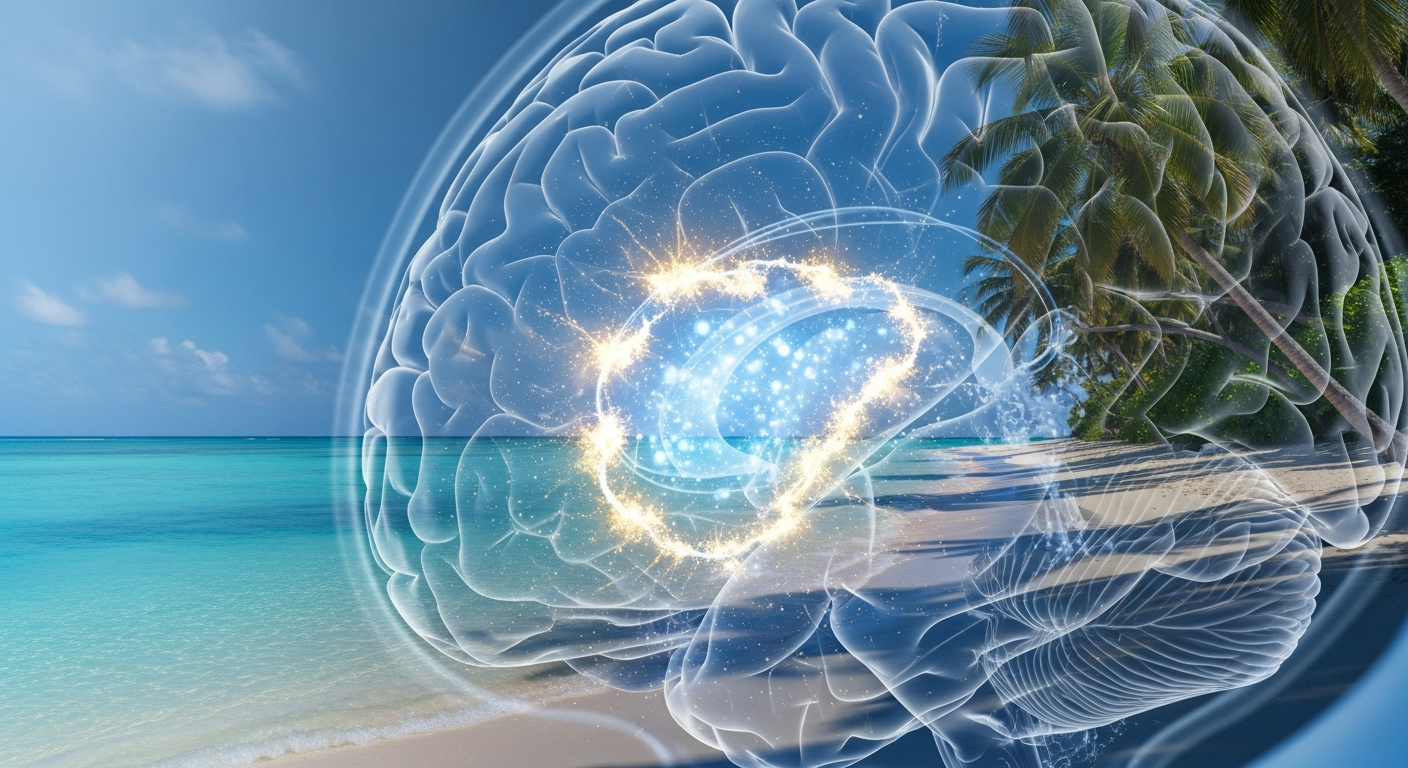
Every substance that passes through the brain leaves a mark. For most people living with addiction, that mark runs deeper than behaviour or habit — it reaches into the brain’s very architecture, reshaping neural pathways, depleting essential neurotransmitters, and quietly dismantling the cognitive machinery that makes clear thinking, emotional regulation, and genuine connection possible. Substance abuse brain damage is not a metaphor. It is a measurable, documented neurological reality — and understanding it is one of the most important steps toward meaningful, lasting recovery.
The encouraging truth, however, is that the brain is not a fixed structure. Decades of neuroscience have confirmed its extraordinary capacity for change — a quality known as neuroplasticity. With the right clinical environment, the right therapeutic interventions, and sustained support, damaged neural tissue can regenerate, disrupted pathways can be rewired, and cognitive function can be meaningfully restored. Drugs and brain damage recovery is not wishful thinking. It is science.
At Holina Rehab on the island of Koh Phangan, Thailand, we integrate one of the most promising evidence-based tools for neurological recovery into our physician-supervised residential treatment programmes: Hyperbaric Oxygen Therapy, or HBOT. Through carefully pressurised, high-concentration oxygen delivery, HBOT brain repair works at a cellular level — stimulating the growth of new blood vessels, reducing neuroinflammation, and supporting the regeneration of brain tissue compromised by prolonged substance use.
In this post, we explore the neuroscience of addiction-related brain damage, examine how hyperbaric oxygen neuroplasticity works in practice, and explain why addiction brain healing in Thailand — particularly within a luxury residential setting — offers something genuinely valuable.
What Substance Abuse Actually Does to Your Brain
Most people understand, at least in general terms, that prolonged substance use is harmful to the brain. What far fewer people appreciate is precisely how that harm unfolds — at the cellular and neurological level — and why recovering from it demands far more than simply stopping use. The brain does not reset the moment substances leave the body. In many cases, the structural and functional damage caused by years of alcohol, opioid, stimulant, or benzodiazepine use persists long after the last drink or the last dose, quietly driving cravings, emotional instability, cognitive fog, and relapse risk for months or even years into recovery.
Understanding the neuroscience isn’t about overwhelming people who are already struggling. It’s about offering a clearer, more honest picture of what healing actually requires — and why evidence-based, physician-supervised residential treatment that addresses the brain directly produces meaningfully better outcomes than willpower and talk therapy alone.
Here is what the research consistently shows happens inside the brain during chronic substance use:
- Dopamine system dysregulation. Substances such as alcohol, cocaine, heroin, and methamphetamine flood the brain’s reward circuitry with dopamine — the neurotransmitter associated with motivation, pleasure, and reinforcement. Over time, the brain compensates by reducing the number and sensitivity of dopamine receptors. The result is a brain that struggles to experience pleasure, motivation, or satisfaction from ordinary life. This is the neurological foundation of anhedonia, one of the most painful and underappreciated features of early and mid-stage recovery.
- Prefrontal cortex impairment. The prefrontal cortex governs decision-making, impulse control, emotional regulation, and the capacity to weigh long-term consequences against short-term rewards. Chronic substance use progressively weakens activity in this region, effectively reducing the brain’s ability to override compulsive behaviour — which is precisely why addiction is classified as a brain disease rather than a moral failing.
- White matter degradation. Neuroimaging studies have consistently demonstrated that heavy alcohol and stimulant use inhibits new myelin generation and damages the brain’s white matter — the network of myelin-coated fibres that allows different regions of the brain to communicate efficiently. This degradation is directly linked to the memory difficulties, processing delays, and emotional dysregulation that characterise early recovery.
- Chronic neuroinflammation. Substance use activates the brain’s immune cells, known as microglia, triggering a sustained inflammatory response that compromises blood-brain barrier integrity. This neuroinflammation damages neurons, disrupts synaptic function, and has been linked to depression, anxiety, cognitive impairment, and heightened sensitivity to stress — all conditions that powerfully increase the risk of relapse if left unaddressed in treatment.
- Reduced cerebral blood flow. Studies using SPECT and PET imaging have shown measurable reductions in cerebral blood flow and metabolism among people with substance use disorders — particularly those with histories of heavy alcohol or stimulant use. Without adequate blood flow, the brain cannot deliver the oxygen and glucose neurons need to function, repair, and ultimately heal.
What makes these findings especially significant in a treatment context is that many of these changes — receptor downregulation, white matter damage, neuroinflammation, compromised circulation — do not resolve spontaneously with abstinence alone. They require active, targeted intervention. This is why a growing number of leading residential programmes, including Holina Rehab, now integrate advanced, evidence-based neurological therapies alongside personalised psychological care. The brain, it turns out, is far more capable of healing than was once believed — but that healing requires the right conditions and the right support.
What Substance Abuse Actually Does to the Brain — Region by Region
To understand why certain therapies work, it helps to understand precisely what addiction does to the brain’s architecture. This isn’t simply a matter of “chemical imbalance” — prolonged substance use produces measurable structural and functional changes across multiple brain regions, many of which persist long after the last drink or drug.
The prefrontal cortex — the brain’s executive control centre — takes some of the heaviest damage. This region governs decision-making, impulse control, and the ability to weigh consequences. Chronic alcohol, opioid, and stimulant use — patterns our clinical team frequently addresses through structured alcohol detox and stabilisation — reduce grey matter density here and disrupt dopaminergic signalling pathways. This is why individuals in early recovery often describe difficulty making even simple decisions, managing frustration, or resisting cravings despite genuinely wanting to stop. The brain’s “brake system” has been structurally compromised.
The limbic system — particularly the amygdala and nucleus accumbens — becomes dysregulated in a way that closely mirrors the nervous-system dysregulation seen in unresolved trauma, though through a different mechanism. Substances artificially flood the reward circuit with dopamine, eventually causing the brain to downregulate its own receptors. Over time, ordinary pleasures — food, connection, achievement — register as flat or unrewarding. This neuroadaptation is what drives compulsive use: the brain is no longer seeking euphoria but simply trying to feel baseline normal.
Chronic substance use also causes significant harm through three interconnected mechanisms:
- Neuroinflammation: Alcohol and many other substances activate microglial cells, the brain’s immune responders, triggering chronic low-grade inflammation that damages neurons and disrupts synaptic communication.
- Cerebral hypoperfusion: Reduced blood flow — particularly documented in heavy alcohol and methamphetamine users — starves brain tissue of the oxygen and glucose it needs to function and repair itself.
- White matter degradation: The myelin sheaths that insulate neural pathways become damaged, slowing the speed and reliability of communication between brain regions. This contributes to the cognitive fog, emotional dysregulation, and memory difficulties commonly reported in early recovery.
Critically, neuroscience now confirms that much of this damage is not permanent. The brain retains a remarkable capacity for neuroplasticity — the ability to form new neural connections, restore function, and adapt. However, this repair process requires the right physiological conditions: adequate oxygenation, reduced inflammation, and a brain environment that actively supports cellular healing. This is precisely the context in which evidence-based adjunct therapies, delivered within a physician-supervised residential programme, become clinically meaningful rather than merely complementary.
“What clients often don’t realise is that many of the symptoms we associate with ‘early recovery’ — the fog, the irritability, the flat affect — are not personality traits or moral failings. They are the observable signature of a brain still repairing measurable injury. Naming that mechanism accurately, rather than treating it as willpower alone, is often the first thing that lets someone stop blaming themselves long enough to actually heal.”
— Dr. Aviva Wolf, Consultant Psychiatrist
How HBOT Fits Into a Comprehensive, Physician-Supervised Recovery Programme
Hyperbaric oxygen therapy is not a standalone solution — and at Holina Rehab, we would never present it as one. It is also important to be precise about where the evidence currently stands: substance-related brain injury is not yet among the Undersea and Hyperbaric Medical Society’s approved indications for hyperbaric oxygen therapy, and most HBOT-and-brain-injury research remains investigational rather than definitive. What existing evidence does show is meaningful: in patients with traumatic brain injury, controlled research has found that HBOT can induce cerebral angiogenesis and measurable regeneration of nerve fibres — a mechanism that plausibly extends to the hypoxic, inflamed brain tissue seen in chronic substance use, even though addiction-specific clinical trials are still catching up to that early promise. The brain healing that HBOT supports is most meaningful when it unfolds within a structured, personalised treatment programme that addresses the psychological, emotional, and physiological dimensions of addiction simultaneously. What HBOT does is create a neurological window of opportunity: a period of enhanced brain receptivity during which psychotherapy, trauma processing, and behavioural work tend to land more deeply and hold more durably.
Our physician-supervised approach means that every client who undergoes HBOT at our Koh Phangan residence is assessed individually before, during, and after each session. Oxygen pressure levels, session duration, and treatment frequency are calibrated to the individual’s health profile, history of substance use, and current stage of recovery. This is not a one-size-fits-all protocol. It is precision-led care delivered in a setting designed to support healing at every level.
Within our broader residential programme, HBOT works in meaningful synergy with several evidence-based therapeutic modalities:
- Individual psychotherapy and trauma-focused therapy: As prefrontal cortex function improves through repeated HBOT sessions, clients often find they are better able to engage with and process difficult emotional material in one-to-one sessions.
- Cognitive Behavioural Therapy (CBT) and Dialectical Behaviour Therapy (DBT): Enhanced neuroplasticity supports the formation of new thought patterns and emotional regulation skills — the very changes these therapies are designed to cultivate.
- Mindfulness, breathwork, and somatic practices: Improved circulation and oxygenation complement body-based healing modalities, helping clients reconnect with physical sensations that substance use had numbed or distorted.
- Nutritional medicine and lifestyle medicine: The brain requires optimal nutrition to rebuild damaged tissue. Our integrated nutritional support works alongside HBOT to supply the raw materials the recovering brain needs.
Families considering treatment for a loved one — or individuals exploring their own path to recovery — often ask whether the brain damage caused by long-term substance use is permanent. The honest, evidence-based answer is that significant recovery is achievable for many people. The brain retains a remarkable capacity for repair, particularly when given the right clinical support, the right environment, and the right time. At Holina Rehab, our luxury residential setting on one of Thailand’s most serene islands is designed precisely to provide all three. HBOT is one important piece of that picture — a scientifically grounded, physician-supervised therapy that may help support what addiction has taken, and opens the door to a life genuinely worth living.
Addiction is not a failure of willpower. It is a measurable, documented injury to the brain — one that disrupts prefrontal decision-making, collapses dopamine signalling, inflames neural tissue, and progressively erodes the neurological architecture that makes meaningful life possible. The evidence is unambiguous, and it deserves to be treated with the same clinical seriousness as any other complex medical condition.
Hyperbaric Oxygen Therapy offers something genuinely promising within a comprehensive recovery programme: a physiologically grounded mechanism for addressing the underlying brain damage that sustains addiction long after substances have left the body. By flooding compromised tissue with therapeutic-grade oxygen under increased atmospheric pressure, HBOT may support angiogenesis, help reduce neuroinflammation, and contribute to the biological conditions in which neuroplasticity can occur. Recovery becomes not simply abstinence, but a genuine, ongoing process of neural restoration.
At Holina Rehab on Koh Phangan, Thailand, HBOT is integrated within a fully physician-supervised, evidence-based dual treatment programme that combines psychiatric care, trauma-informed therapy, and personalised holistic treatment — all within a private luxury setting designed to support deep, sustained healing at every level.
★★★★★
“I felt I was in the right place to express my issues with trauma and addiction problems. I came in a broken man. And I left fixed.”
— Olly L, Recovery.com, 20 Feb 2025
If you or someone you love is ready to address addiction with the clinical depth and compassionate care it truly requires, we warmly invite you to reach out to the Holina Rehab admissions team today.
Ready to Start Your Recovery Journey?
Our clinical team is available to answer your questions and help you find the right programme for your needs.
Speak with Our Team →