
Alcohol-related brain injury is one of the most underrecognised consequences of long-term heavy drinking — and for many people arriving at residential treatment, it represents the most significant barrier to lasting recovery. Cognitive fog, memory fragmentation, emotional dysregulation, and impaired executive function are not simply withdrawal symptoms that resolve within a few days of abstinence. In many cases, they reflect genuine structural and neurochemical damage to brain tissue — damage that demands targeted, evidence-based intervention alongside traditional addiction therapy.
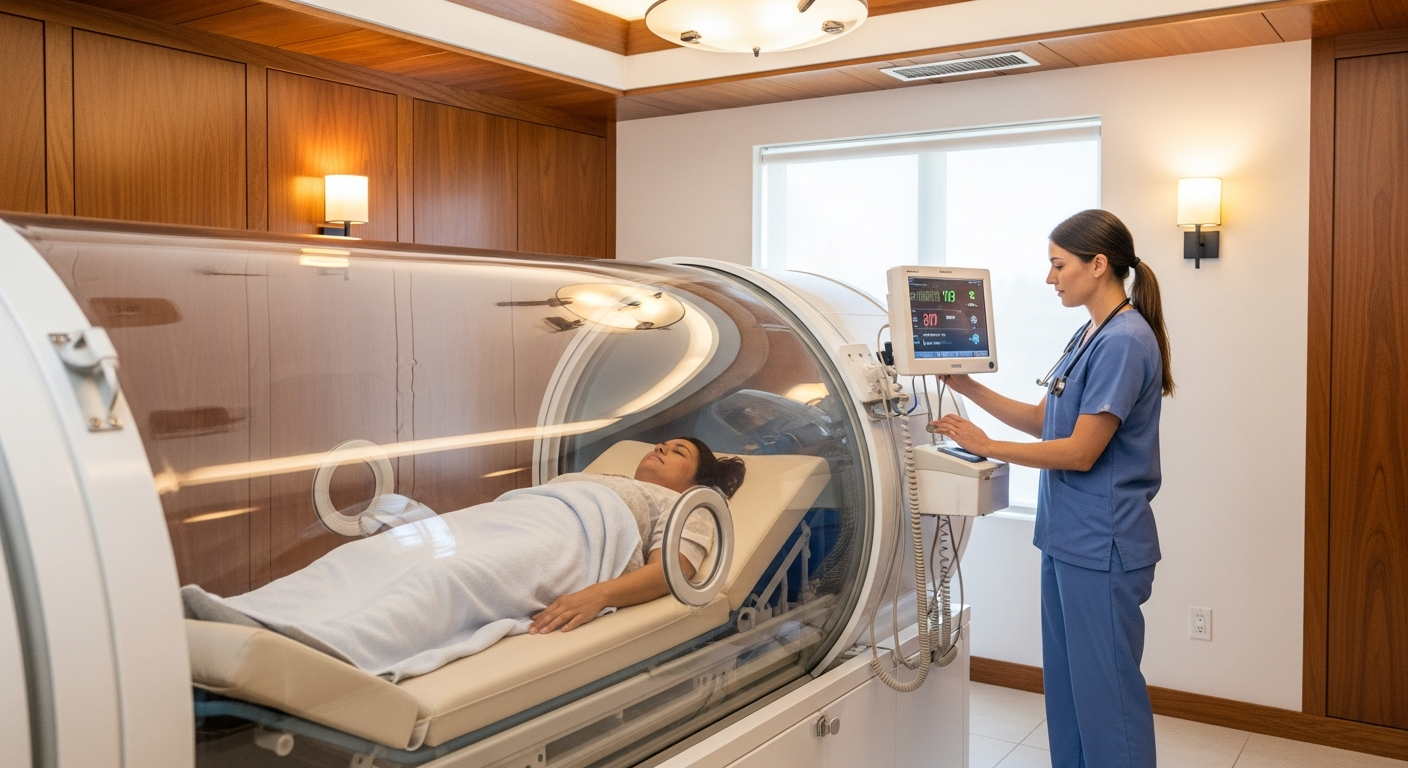
Hyperbaric oxygen therapy, known clinically as HBOT, has emerged as one of the most compelling adjunctive treatments in the field of alcohol-related brain damage treatment. By delivering high-concentration oxygen within a pressurised chamber, HBOT saturates plasma and tissues with oxygen at levels unachievable through normal breathing — stimulating neurological repair mechanisms, reducing neuroinflammation, and promoting the formation of new blood vessels in oxygen-depleted brain regions. For individuals whose brain tissue has been chronically starved of adequate oxygenation through years of heavy alcohol use, this mechanism of action carries profound therapeutic significance.
The clinical evidence supporting HBOT for alcohol brain healing is growing steadily, with peer-reviewed research demonstrating measurable improvements in cerebral blood flow, cognitive performance, and mood regulation among patients undergoing structured hyperbaric protocols during early and mid-stage recovery. Understanding both the science behind these outcomes and the realistic timelines involved helps individuals and families make informed, empowered decisions about the level and type of care required.
At Holina Rehab on Koh Phangan, Thailand, HBOT is integrated into a physician-supervised, personalised residential treatment programme — offered not as a standalone solution, but as a carefully calibrated component of comprehensive, holistic recovery for those navigating the neurological aftermath of alcohol dependence.
How Alcohol Damages the Brain — and Why Conventional Treatment Often Falls Short
Prolonged alcohol use does not simply impair the brain temporarily. It causes measurable, structural damage that persists long after the last drink. Chronic heavy drinking depletes thiamine (vitamin B1), triggers neuroinflammation, disrupts cerebral blood flow, and accelerates the death of neurons in regions critical for memory, emotional regulation, and executive function. The prefrontal cortex, hippocampus, and cerebellum are particularly vulnerable. What clinicians observe on brain imaging — cortical thinning, white matter lesions, reduced grey matter volume — reflects years of cumulative oxidative stress and hypoxic injury at the cellular level.
The clinical consequences are significant. Alcohol-related brain injury (ARBI) encompasses a spectrum of conditions including Wernicke-Korsakoff syndrome, alcoholic cerebellar degeneration, and the more broadly diagnosed alcohol-related dementia, a spectrum documented by the National Institute on Alcohol Abuse and Alcoholism (NIAAA). Even individuals who do not meet criteria for these formal diagnoses frequently present with meaningful cognitive deficits: slowed processing speed, impaired working memory, difficulty with emotional regulation, and disrupted sleep architecture. These are not abstract findings — they directly undermine a person’s capacity to engage with therapy, build insight, and sustain early recovery.
Standard addiction treatment protocols address withdrawal management and psychological therapy. Both are essential. But they do not directly target the underlying neurological injury. A person sitting in a therapy session while their prefrontal cortex remains functionally compromised will struggle to consolidate learning, regulate impulse, and tolerate emotional discomfort — all of which are fundamental to meaningful rehabilitation. This gap between psychiatric care and neurological rehabilitation is one of the most underappreciated challenges in alcohol recovery.
This is where the evidence base for Hyperbaric Oxygen Therapy (HBOT) becomes clinically relevant. HBOT works by delivering 100% pure oxygen under increased atmospheric pressure, typically between 1.5 and 2.4 atmospheres absolute (ATA). Under these conditions, oxygen dissolves directly into plasma, cerebrospinal fluid, and tissue — reaching areas where normal blood supply has been compromised. The mechanisms relevant to ARBI include:
- Reduction of neuroinflammation through suppression of pro-inflammatory cytokines
- Stimulation of angiogenesis — the formation of new blood vessels in oxygen-deprived brain tissue
- Upregulation of neurotrophic factors including BDNF, supporting neuronal repair and synaptic plasticity
- Reduction of cerebral oedema and oxidative stress at the mitochondrial level
- Potential activation of dormant neurons in hypoperfused brain regions — sometimes referred to as the “idling neuron” hypothesis
Understanding these mechanisms matters because HBOT in this context is not a standalone wellness treatment. When integrated into a physician-supervised, personalised treatment programme, it represents a targeted neurological intervention designed to restore the brain’s capacity for recovery — making every other element of rehabilitation more effective in the process.
What the Clinical Evidence Says About HBOT and Alcohol-Related Brain Repair
The science behind hyperbaric oxygen therapy for alcohol-related brain injury is more substantive than many people realise. While research is still evolving, a meaningful body of peer-reviewed clinical evidence supports HBOT as a valuable adjunctive treatment — particularly for the neurological damage caused by chronic alcohol misuse, including Wernicke’s encephalopathy, alcohol-related dementia, and the diffuse white matter changes seen in long-term heavy drinkers.
At its core, HBOT works by delivering 100% pure oxygen at atmospheric pressures typically between 1.5 and 2.4 atmospheres absolute (ATA). This dramatically increases the oxygen dissolved directly into blood plasma — bypassing haemoglobin-bound delivery entirely — allowing oxygen to penetrate deep into brain tissue that has been compromised by alcohol-induced vascular damage, oxidative stress, and thiamine deficiency. For neurons that are injured but not yet lost, this elevated oxygen environment can make the difference between recovery and permanent deficit.
Several clinical mechanisms are particularly relevant to alcohol-related brain injury:
- Neuroplasticity support: Elevated oxygen levels have been shown to upregulate brain-derived neurotrophic factor (BDNF), a protein essential for the survival, growth, and differentiation of neurons — directly supporting the brain’s capacity to form new neural pathways during recovery.
- Reduction of neuroinflammation: Chronic alcohol use triggers sustained inflammatory responses in brain tissue. HBOT has demonstrated measurable anti-inflammatory effects, reducing microglial activation and pro-inflammatory cytokine activity in affected regions.
- Improved cerebral blood flow: Alcohol-related vascular dysfunction restricts blood supply to critical brain structures. Hyperbaric oxygen stimulates angiogenesis — the formation of new blood vessels — and promotes endothelial repair, restoring more normal perfusion patterns over time.
- Mitochondrial restoration: Alcohol is directly toxic to mitochondrial function. HBOT has been shown to enhance mitochondrial efficiency and reduce oxidative damage at the cellular level, supporting the energy metabolism that neurons depend on to function and repair.
The strongest published evidence for this SPECT-and-cognition pattern comes from HBOT research in other acquired brain injuries rather than alcohol-specific trials: a randomised, prospective study in PLOS ONE found that patients with persistent post-concussion syndrome showed significant gains in processing speed, memory, and executive function after a structured course of HBOT, with SPECT imaging showing corresponding increases in activity across prefrontal and temporal regions. A broader 2024 mechanistic review of HBOT in the brain (Frontiers in Neurology) similarly documents HBOT upregulating BDNF and reducing inflammatory cytokine activity. These are not alcohol-specific trials, but they describe the same oxidative and neuroinflammatory pathology that alcohol-related brain injury involves, which is why clinicians treating ARBI extrapolate from this evidence base when offering HBOT sessions as an adjunct.
It is important to understand that HBOT does not operate in isolation. At a physician-supervised, residential treatment setting, hyperbaric therapy is most effective when delivered as part of a comprehensive, personalised treatment plan that addresses nutritional rehabilitation, psychological therapy, and medically managed stabilisation simultaneously. The brain’s capacity to heal is real and documented — but that healing is most effectively supported within a structured clinical environment where every variable of recovery is carefully monitored and adjusted.
“What I look for clinically isn’t just abstinence — it’s whether the underlying neurological injury is actually being addressed. HBOT gives us a physiological lever we didn’t have a decade ago, but it only works alongside proper psychiatric and nutritional care, never instead of it.”
What to Expect From HBOT as Part of an Integrated Alcohol Recovery Programme
Hyperbaric oxygen therapy is most effective not as a standalone intervention but as one carefully coordinated component within a broader, physician-supervised treatment plan. For individuals recovering from alcohol-related brain injury, the clinical picture is rarely straightforward — nutritional deficiencies, co-occurring mental health conditions, disrupted sleep architecture, and autonomic nervous system dysregulation all interact with neurological damage simultaneously. Addressing these layers in parallel is what separates meaningful recovery from surface-level stabilisation.
In a residential setting, HBOT sessions are typically scheduled in the morning or early afternoon, when cognitive alertness is at its highest and the brain is most receptive to the increased oxygen delivery the therapy provides. A standard protocol for alcohol-related neurological impairment generally involves sessions of 60 to 90 minutes at pressures between 1.5 and 2.0 atmospheres absolute (ATA), conducted five days per week over a minimum of four to six weeks. Some individuals with more significant white matter changes or extended drinking histories may benefit from longer courses, a determination made through ongoing clinical assessment rather than a fixed formula.
Alongside HBOT, a comprehensive programme will typically integrate:
- Nutritional rehabilitation — intravenous and oral thiamine (B1) repletion, B-complex support, and magnesium restoration to address the deficiencies that directly impair neuronal repair
- Cognitive rehabilitation therapy — structured sessions targeting memory encoding, executive function, and processing speed, timed to complement the neuroplasticity windows that HBOT appears to support
- Trauma-informed psychotherapy — addressing the psychological drivers of alcohol use, including EMDR and somatic approaches where clinically appropriate
- Sleep optimisation — pharmacological and behavioural support to restore restorative sleep, which is itself critical to glymphatic clearance and brain recovery
- Physical movement and mindfulness — yoga, breathwork, and supervised exercise to support cerebrovascular health and reduce neuroinflammation
Recovery timelines vary considerably depending on the severity of injury, age, duration of alcohol use, and how promptly treatment begins. Many individuals report measurable improvements in concentration and short-term memory within the first three to four weeks. Emotional regulation and more complex cognitive functions often continue improving over three to twelve months, provided the therapeutic environment remains structured and supportive.
At Holina Rehab, every person arriving with a history of heavy alcohol use begins with medically supervised alcohol detox and stabilisation, followed by a thorough neurological and medical assessment before any further treatment protocol is designed. HBOT is considered where clinically indicated, integrated thoughtfully alongside personalised therapeutic work, and monitored by our resident medical team throughout. If you or someone you love is navigating the aftermath of alcohol-related brain injury, we are here to help you understand your options in a calm, considered, and genuinely expert environment.
The clinical evidence surrounding hyperbaric oxygen therapy as a supportive intervention for alcohol-related brain injury continues to strengthen. Research consistently demonstrates that targeted increases in dissolved oxygen delivery can meaningfully support neurological repair, reduce neuroinflammatory burden, and promote the kind of cerebral blood flow restoration that chronic alcohol use so profoundly disrupts. While HBOT is not a standalone solution, when integrated within a comprehensive, physician-supervised treatment programme, it represents a genuinely valuable tool in addressing the neurological sequelae of long-term alcohol dependency — from white matter deterioration and cortical thinning to thiamine-related cognitive impairment and oxidative cellular damage.
Recovery timelines remain individual. Factors including the duration and severity of alcohol use, the presence of co-occurring nutritional deficiencies, and each person’s broader physiological and psychological health all influence how the brain responds to reparative interventions. What the evidence does affirm is that the brain retains a remarkable capacity for recovery when given the right conditions — and that early, structured, professionally guided treatment significantly improves long-term outcomes.
“Since coming to Holina, I have been sober and, miraculously, my obsession with alcohol has been lifted.”
— Rodney B, Recovery.com Review, 25 Mar 2025 · ★★★★★
At Holina Rehab on Koh Phangan, Thailand, HBOT is offered as part of a deeply personalised, holistic residential programme that combines evidence-based addiction medicine, trauma-informed therapy, and luxury residential care designed to support whole-person healing. If you or someone you love is navigating alcohol dependency and its neurological impact, we warmly invite you to reach out to our clinical team today, or learn more about our approach to trauma treatment, to explore whether Holina is the right fit for your recovery journey.
Ready to Start Your Recovery Journey?
Our clinical team is available to answer your questions and help you find the right programme for your needs.
Speak with Our Team →