
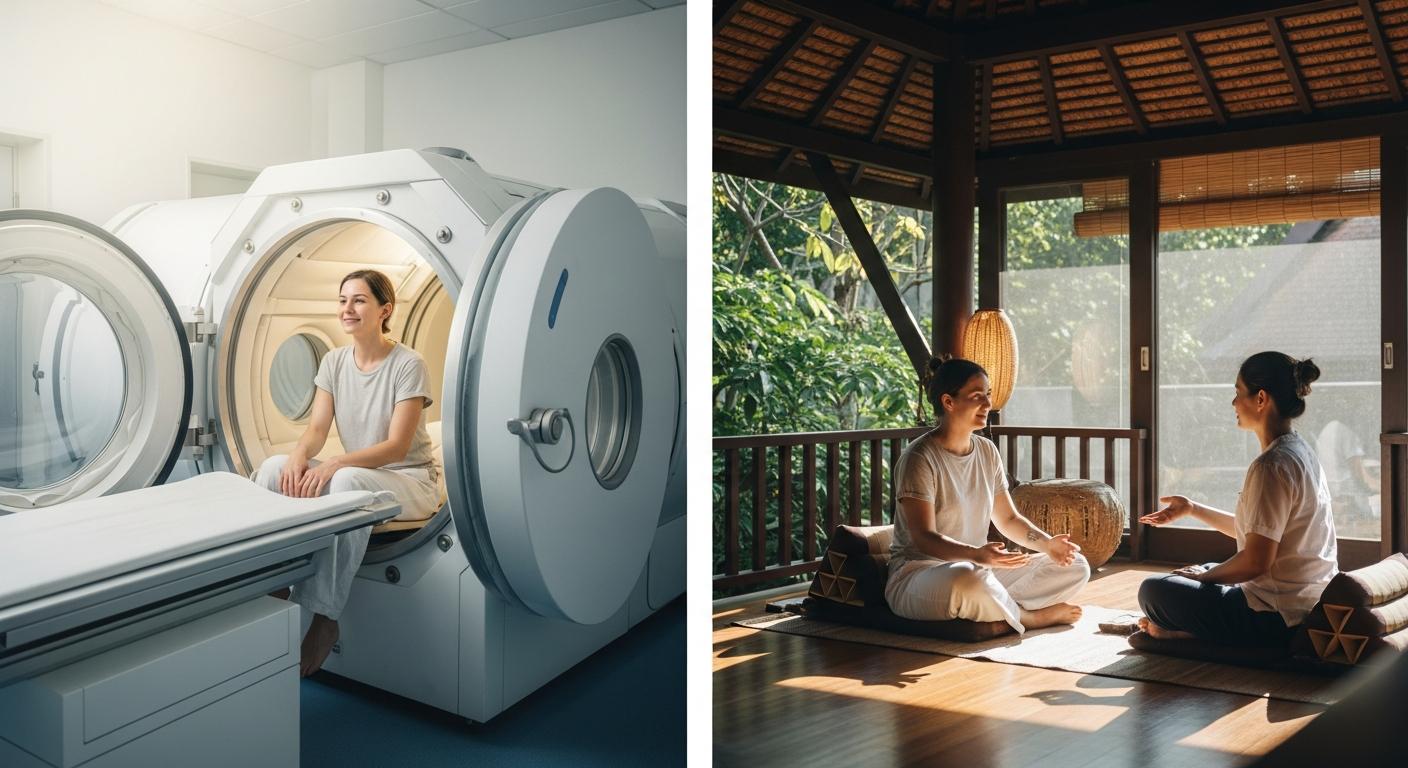
There is a moment in recovery when the body and the mind finally begin to speak the same language. For many people arriving at Holina Rehab on the shores of Koh Phangan, that moment comes not from a single breakthrough session or a carefully chosen medication — it comes from the carefully orchestrated convergence of two powerful therapeutic disciplines working in concert: hyperbaric oxygen therapy and evidence-based psychotherapy. The HBOT psychotherapy combination that forms the backbone of Holina’s integrated treatment philosophy represents one of the most compelling advances in residential addiction and trauma care available anywhere in Southeast Asia today.
Hyperbaric oxygen therapy — the physician-supervised process of breathing pure, pressurised oxygen inside a specialised chamber — has long been recognised in medical literature for its profound capacity to support neurological repair, reduce systemic inflammation, and accelerate tissue regeneration at the cellular level. Prolonged substance use, chronic stress, and unresolved psychological trauma all leave measurable biological imprints on the brain: depleted neurotransmitter pathways, compromised prefrontal cortical function, and a nervous system locked in cycles of hyperarousal or dissociative shutdown. Hyperbaric oxygen therapy psychotherapy integration directly addresses this biological terrain, creating conditions in which the brain becomes genuinely more receptive, more plastic, and more capable of the deep emotional processing that lasting recovery demands.
What distinguishes the Holina HBOT therapy model is not simply the inclusion of hyperbaric sessions within a broader programme — it is the deliberate, clinically informed sequencing of HBOT alongside individual psychotherapy, somatic bodywork, and trauma-focused modalities. When increased cerebral oxygenation is timed thoughtfully in relation to therapeutic sessions, clients frequently report a heightened sense of cognitive clarity, reduced emotional reactivity, and a greater capacity to access and process deeply held memories and somatic patterns that might otherwise remain defended or unreachable.
This is HBOT somatic healing in its most meaningful form — not as a standalone wellness add-on, but as a physiological foundation upon which genuine psychological transformation can be built. For those seeking integrated addiction treatment Thailand at a high standard of personalised, luxury residential care, understanding this synergy is the essential first step.
Why the Brain Needs More Than Talk: The Physiological Case for HBOT in Addiction and Trauma Recovery
There is a moment that many people reach in traditional therapy — a moment where the insight is present, the willingness is real, yet something still feels stuck. The words come out, the understanding is there, but the nervous system does not seem to shift. For decades, this gap was attributed to resistance, denial, or simply the slow nature of psychological change. Increasingly, neuroscience tells a different story: the brain itself may be too compromised, too inflamed, and too oxygen-depleted to consolidate what the therapy room is offering.
This is precisely where Hyperbaric Oxygen Therapy — HBOT — enters the treatment picture at Holina Rehab. Far from being an add-on or a wellness trend, HBOT is a physician-supervised clinical intervention with a growing body of peer-reviewed research supporting its use in neurological recovery, post-traumatic stress, and substance-related brain changes. Understanding why it works requires a brief look at what prolonged substance use and chronic trauma actually do to the brain.
Alcohol, opioids, stimulants, and benzodiazepines — used heavily over months or years — produce measurable reductions in cerebral blood flow. Neuroimaging studies have consistently documented hypoperfusion: areas of the prefrontal cortex, limbic system, and anterior cingulate cortex that are simply not receiving adequate oxygenation. These are precisely the regions responsible for emotional regulation, impulse control, decision-making, and the processing of traumatic memory. When these regions are underfuelled, psychotherapy faces an uphill battle — not because the therapy is inadequate, but because the neurological substrate it depends upon is compromised.
Trauma compounds this picture significantly. Chronic stress and trauma exposure dysregulate the hypothalamic-pituitary-adrenal axis, elevate neuroinflammatory markers, and can suppress neurogenesis in the hippocampus — the brain structure central to memory consolidation and contextual learning. For many residents arriving at Holina, the combination of substance use history and unresolved trauma means they are beginning recovery with a brain that is both inflamed and under-oxygenated.
HBOT addresses this at a foundational level by delivering 100% pure oxygen at pressures greater than sea level — typically between 1.5 and 2.0 atmospheres absolute — inside a pressurised chamber. Under these conditions, oxygen dissolves not only into red blood cells but directly into blood plasma, cerebrospinal fluid, and interstitial tissue, reaching areas where circulation may be restricted. The physiological effects documented in clinical literature include:
- Increased cerebral blood flow and restoration of perfusion to hypoxic brain tissue
- Reduction of neuroinflammation through downregulation of pro-inflammatory cytokines
- Stimulation of angiogenesis — the formation of new blood vessels — supporting longer-term circulatory improvement
- Upregulation of neurotrophic factors, including brain-derived neurotrophic factor (BDNF), which supports synaptic plasticity and neurogenesis — a mechanism detailed in a 2024 review of HBOT neurobiology in Frontiers in Neurology
- Improved mitochondrial function in neurons, increasing the energy available for cellular repair and cognitive processing
What this means practically is that a brain receiving regular HBOT sessions during residential treatment is progressively better equipped — more oxygenated, less inflamed, more neuroplastic — to engage with the psychological work happening in the therapy room. The physiological and the psychological are not separate tracks running in parallel; they are deeply interdependent systems that, when supported simultaneously, create conditions for change that neither modality could achieve in isolation. This is the foundation of the synergy model that shapes how Holina structures treatment for every resident.
How HBOT and Psychotherapy Work Together at Holina: A Sequenced, Synergistic Approach
At Holina Rehab, hyperbaric oxygen therapy is never positioned as a standalone intervention. Its real power emerges when it is deliberately sequenced alongside structured psychotherapy — a model our clinical team has refined to support deeper, more sustainable healing for residents working through addiction, trauma, and co-occurring mental health conditions.
The physiological rationale for this synergy is well-supported in the literature. Chronic substance use, prolonged stress, and unresolved trauma all contribute to measurable neurological changes — reduced cerebral blood flow, impaired prefrontal cortex function, and dysregulation of the limbic system. HBOT addresses these changes directly by delivering 100% oxygen under increased atmospheric pressure, which significantly raises plasma oxygen concentration and supports the restoration of cerebrovascular function. Studies published in journals including PLOS ONE and the Journal of Neurotrauma have demonstrated HBOT’s capacity to improve regional cerebral blood flow and promote neuroplasticity in compromised brain tissue, though these particular trials were conducted in post-concussion and blast-injury populations rather than addiction-specific cohorts.
This is clinically meaningful because the very brain regions that HBOT helps to rehabilitate — particularly the prefrontal cortex — are the same regions most critical to successful psychotherapy outcomes. When the prefrontal cortex is under-functioning, a person’s capacity for emotional regulation, insight, impulse control, and narrative processing is significantly limited. Attempting deep therapeutic work in this state is a bit like trying to rebuild a house on an unstable foundation.
Holina’s sequenced model works in a specific and intentional way:
- HBOT sessions are typically scheduled in the morning, taking advantage of the post-session window during which residents often report heightened mental clarity, reduced anxiety, and increased emotional availability.
- Individual psychotherapy and trauma-focused sessions are then scheduled later in the day, allowing residents to enter therapeutic conversations from a neurologically more receptive state.
- Group therapy and integrative modalities — including somatic work, mindfulness-based cognitive therapy, and EMDR — a therapy with a well-established evidence base for trauma (systematic review, 2018) — are woven into the weekly schedule to reinforce and consolidate what emerges in both HBOT and one-to-one sessions.
- Physician-supervised progress reviews occur regularly to assess both physiological response to HBOT and therapeutic progress, ensuring the two tracks remain clinically aligned.
This is personalised treatment in practice — not a fixed programme applied uniformly, but a living, responsive clinical model. Each resident’s HBOT frequency, session duration, and psychotherapy modalities are calibrated to their specific history, presentation, and weekly progress by a multidisciplinary team working in genuine collaboration.
The luxury residential setting matters here too. The calm, unhurried environment of Holina’s Koh Phangan facility means residents are not rushing between appointments or navigating the stressors of daily life. The therapeutic window created by HBOT can be honoured and used — something that is genuinely difficult to replicate in outpatient settings.
“Medication and psychotherapy alone sometimes hit a ceiling when the brain itself is too depleted to do the work therapy is asking of it. Sequencing HBOT before deeper psychotherapeutic sessions is one of the more clinically interesting things we’ve built into the programme.”
What to Expect When HBOT and Psychotherapy Work Together at Holina
Understanding the theory behind HBOT and psychotherapy integration is one thing — experiencing it as a carefully sequenced, physician-supervised programme is another. At Holina, the combination is not incidental. It is structured with clinical intention, timed around your individual neurological and emotional readiness, and woven into a residential schedule designed to give each modality the conditions it needs to work most effectively.
A typical HBOT session at Holina lasts between 60 and 90 minutes, during which you breathe pure oxygen inside a pressurised chamber at carefully monitored atmospheric levels. The physiological response that follows — increased cerebral blood flow, reduced neuroinflammation, enhanced mitochondrial activity in brain tissue — creates a window of heightened neuroplasticity that our clinical team takes seriously. Psychotherapy sessions, including Cognitive Behavioural Therapy, EMDR, somatic work, and trauma-focused processing, are often scheduled within hours of an HBOT session to align with this period of elevated brain receptivity. This sequencing is not arbitrary; it reflects a growing body of peer-reviewed evidence suggesting that the brain is measurably more responsive to learning, emotional integration, and pattern disruption following hyperbaric oxygen exposure.
From a practical standpoint, clients frequently report that the quality of their psychotherapy sessions shifts noticeably over the first two weeks of combined treatment. Common observations include:
- Reduced emotional numbness, allowing traumatic memories to be approached with greater access and less avoidance
- Improved capacity to stay present during somatic and body-based interventions
- Clearer recall of experiences being processed in EMDR and narrative therapy
- A greater sense of cognitive flexibility when working through entrenched behavioural patterns in CBT
- Reduced anxiety before and during therapy sessions, particularly for those with complex trauma histories
None of this happens in isolation. Holina’s multidisciplinary team — including addiction medicine physicians, psychiatrists, licensed psychotherapists, and integrative health practitioners — meets regularly to review each client’s progress, adjust the sequencing of modalities, and ensure that the pace of emotional processing remains therapeutically safe. Pushing too hard, too fast, is never the goal. The aim is sustainable neurological and psychological change that continues well after leaving our care.
“Yossi, Ian and the rest of the team at Holina are outstanding. Exceptional facilities and care that will truly get you back to yourself.”
— Thomas Dittoe, Google Review, 21 Mar 2026 · ★★★★★
The setting itself plays a meaningful role. Holina’s residential environment on Koh Phangan — surrounded by tropical nature, designed for genuine rest and reflection — means that the nervous system is not fighting an urban, overstimulating backdrop during some of the most demanding inner work of a person’s life. Recovery asks a great deal of the brain and body. Everything here is designed to make that work not only possible, but profound.
Healing from addiction, trauma, or co-occurring mental health challenges is rarely a linear journey — and it was never meant to be addressed by a single intervention alone. At Holina Rehab, the integration of Hyperbaric Oxygen Therapy with evidence-based psychotherapy represents a carefully considered, physician-supervised approach that honours both the biological and emotional dimensions of recovery. By supporting neurological repair at the cellular level while simultaneously creating the psychological safety needed for deep therapeutic work, this synergy model offers something genuinely different from conventional treatment pathways.
The result is a programme where your nervous system is given every opportunity to settle, restore, and become receptive — allowing the transformative work of therapy to take root in ways that feel lasting rather than fragile. Every element of care at Holina is personalised to your unique history, your body, and your goals, held within an environment of genuine luxury and profound clinical integrity on the serene shores of Koh Phangan, Thailand.
If you or someone you love is ready to explore a more complete approach to healing, we warmly invite you to reach out to the team at Holina Rehab. A confidential conversation costs nothing — and it may be the most important conversation you have this year.
Ready to Start Your Recovery Journey?
Our clinical team is available to answer your questions and help you find the right programme for your needs.
Speak with Our Team →