
When two people who love each other are both carrying the weight of unresolved trauma, the relationship itself can become both a refuge and a battleground. Arguments that seem to appear from nowhere, emotional withdrawal that feels like abandonment, cycles of closeness and distance that leave both partners exhausted — these are rarely signs that the love has gone. More often, they are the language of attachment wounds that have never had the chance to heal.
At Holina Rehab in Koh Phangan, Thailand, we work with couples who arrive not just struggling with addiction or mental health challenges, but with the deeply painful relational patterns that so often sit beneath them. One of the most powerful therapeutic approaches we use is the NeuroAffective Relational Model — known as NARM — a sophisticated, evidence-based framework designed specifically to address complex trauma and the developmental attachment wounds that shape how we connect, or struggle to connect, with the people we love most.
Couples NARM therapy offers something genuinely different from traditional couples counselling. Rather than focusing solely on communication strategies or conflict resolution techniques, it invites both partners to explore the deeper biological and psychological roots of their relational patterns — together, in a safe and physician-supported environment. This approach to attachment healing in couples recovery recognises that lasting change happens not just through insight, but through felt, embodied experience within the relationship itself.
If you and your partner are ready to stop repeating painful cycles and begin something new, this is where that journey starts.
Why Addiction and Relationship Pain Are Rarely Separate Problems
When one or both partners in a relationship are struggling with addiction, the damage rarely stays confined to one person. Over time, the relationship itself becomes a site of injury — a place where trust erodes, communication breaks down, and each person learns to protect themselves in ways that push the other further away. What looks like a relationship problem is very often an attachment problem, and what looks like an attachment problem is almost always rooted in something that happened long before this relationship began. This is not simply anecdotal: peer-reviewed research on attachment and substance use disorders documents a consistent, bidirectional link between insecure attachment and addiction, with each capable of deepening the other over time.
This is where the NeuroAffective Relational Model, known as NARM, offers something genuinely different. Developed by Dr. Laurence Heller through the NARM Training Institute, NARM is a sophisticated, evidence-informed therapeutic approach designed specifically to address complex developmental trauma — the kind of early, relational wounding that shapes how we connect with others throughout our lives. Unlike trauma therapies that focus primarily on processing specific events, NARM works at the level of identity and the nervous system, addressing the deep adaptive survival styles that people develop in childhood when their core needs for connection, attunement, trust, autonomy, and love-sexuality are not adequately met.
In the context of couples recovery, this distinction matters enormously. Many partners arrive at treatment believing their problems are fundamentally about the addiction — the lies, the broken promises, the chaos. And while those wounds are real and deserve serious attention, they are often layered on top of much older patterns. A person who grew up in a household where love was conditional may unconsciously recreate those dynamics in adult relationships. A partner who learned early that expressing needs led to rejection may have spent years suppressing their voice, building resentment in silence. These are not character flaws. They are intelligent adaptations to early environments that were not safe enough for authentic connection.
NARM helps both individuals and couples see these patterns with clarity and compassion rather than shame, working from Dr. Heller’s framework of five core developmental needs. The therapeutic work is highly personalised — no two people carry the same constellation of survival adaptations — and is always conducted within a physician-supervised, holistic treatment framework that attends to the nervous system, the body, and the relational field simultaneously.
- Connection wounds — a fundamental fear that genuine closeness will lead to abandonment or engulfment
- Attunement wounds — difficulty identifying or trusting one’s own emotional needs, often leading to people-pleasing or emotional numbness
- Trust wounds — a deep-seated belief that depending on others is dangerous, frequently expressed through controlling behaviour or isolation
- Autonomy wounds — feeling trapped between the need for independence and the fear of separation, often playing out as passive resistance or explosive conflict
- Love-sexuality wounds — a split between emotional intimacy and physical closeness, which frequently intersects with shame and addictive behaviour
Understanding which wounds are active in each partner — and how those wounds interact with one another — forms the foundation of effective couples recovery work at Holina Rehab. When both people begin to understand not just what happened in the relationship, but why their nervous systems respond the way they do, genuine healing becomes possible in a way that no amount of communication exercises alone can achieve.
How NARM Works in Practice: Rebuilding Connection Through the Nervous System
The NeuroAffective Relational Model — NARM — is a sophisticated, body-oriented psychotherapy that works at the intersection of neuroscience, attachment theory, and somatic awareness. Unlike traditional talk therapies that focus primarily on the narrative of what happened, NARM invites couples to explore how unresolved trauma is expressing itself right now — in the body, in the breath, in the involuntary contraction that happens when one partner raises their voice or goes quiet. This present-moment focus on the nervous system’s role in trauma is what makes NARM so clinically powerful, particularly for couples where both individuals carry developmental trauma from early childhood relationships.
In a couples context, NARM-trained therapists work to identify each person’s core adaptive survival styles — the deeply ingrained patterns that once protected them as children but now create distance, misattunement, and repeated relational injury. There are five primary survival styles within the NARM framework: Connection, Attunement, Trust, Autonomy, and Love-Sexuality. Most individuals carry wounds across more than one of these domains, and in a couple, the interaction between two people’s survival styles can become the primary engine of conflict, withdrawal, and mutual triggering.
In practical terms, couples work in NARM looks like this:
- Somatic tracking in session: A therapist guides both partners to notice physical sensations — tightening in the chest, shallow breathing, a sudden urge to leave — as these arise during difficult conversations, helping each person recognise their nervous system’s automatic threat response before it escalates into conflict or shutdown.
- Identity-level inquiry: Rather than focusing only on behaviour, NARM asks deeper questions — “What does this moment tell you about yourself?” and “What do you believe you deserve in connection?” — gently challenging shame-based core beliefs that drive relational patterns.
- Co-regulation practice: Partners learn to become a resource for each other’s nervous system, using eye contact, attuned listening, and grounded physical presence to move each other out of dysregulation — a skill that takes time and guided repetition to develop safely.
- Tracking the relational field: The therapist holds awareness of what is happening between the couple, not just within each individual, naming moments of contact, disconnection, and repair as they occur in real time.
At Holina Rehab, NARM is woven into an individually tailored treatment programme designed by our physician-led clinical team. Each couple receives a personalised therapeutic plan that integrates NARM sessions alongside individual trauma work, mindfulness-based practices, and nutritional and lifestyle support — all delivered within a private, luxury residential environment where the conditions for genuine healing can take root.
What Couples Can Expect from NARM-Informed Treatment at a Residential Level
Choosing to pursue recovery together is an act of profound courage. When couples arrive at a residential programme where NARM is integrated into the treatment model, the experience looks meaningfully different from conventional couples counselling or standard addiction treatment. It is slower, more deliberate, and more attuned to the body — and that intentionality is precisely what makes it effective for attachment wounds that have resisted every other approach.
At a physician-supervised residential facility, the clinical team begins with a thorough individual assessment for each partner before any joint sessions take place. This matters enormously. Each person carries their own nervous system history, their own adaptive survival styles, and their own relationship to substances or compulsive behaviours. Treating the couple as a single unit from the outset risks bypassing the individual healing that must occur first. Personalised treatment plans are built around each person’s specific trauma landscape, and joint NARM work is introduced progressively, when both individuals have developed enough capacity to remain regulated during difficult conversations.
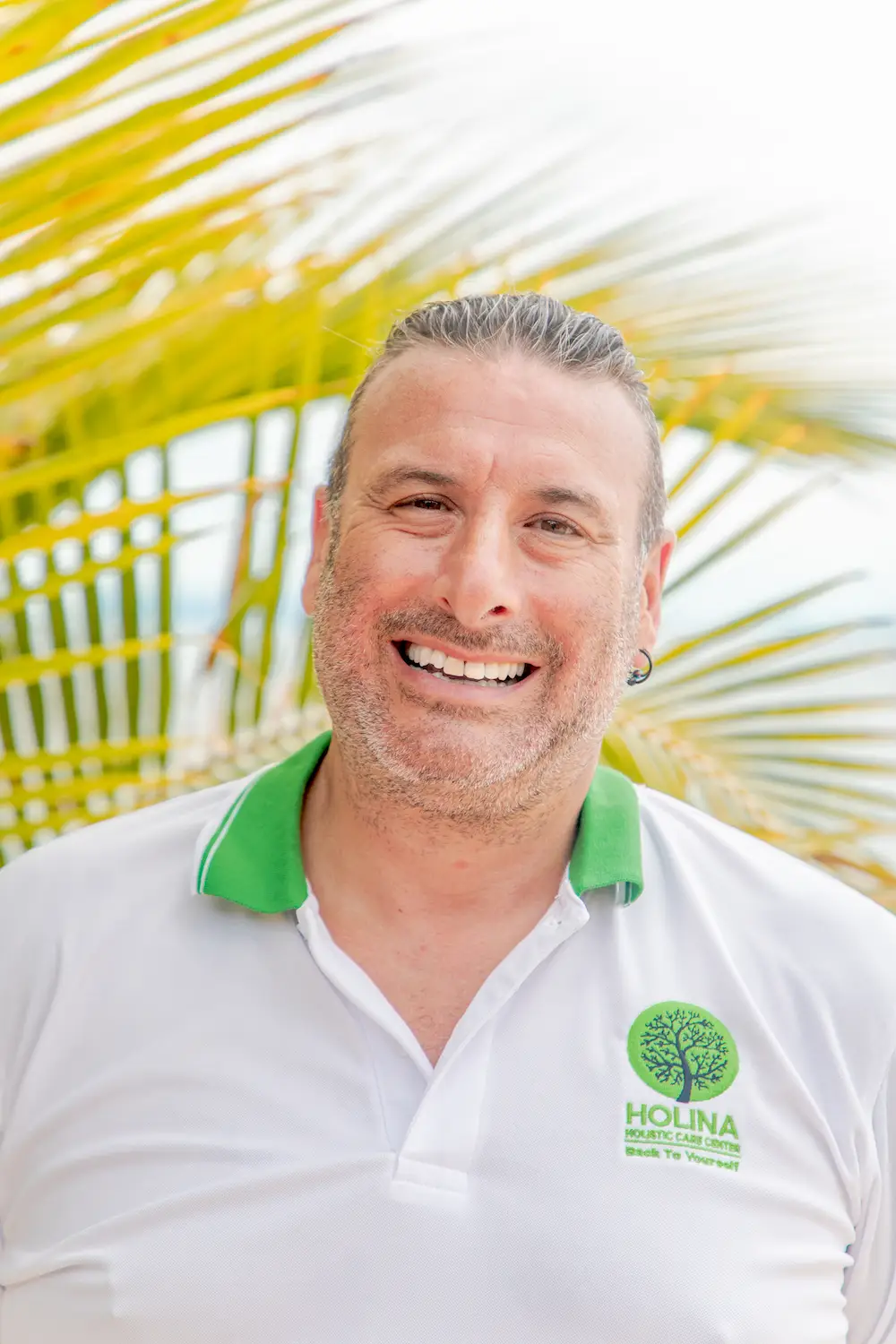
“Couples rarely come in speaking the same emotional language, because they learned to survive in different households, with different rules about closeness. My job isn’t to referee the fight in front of me — it’s to help each partner recognise the much older fight they’re still having, and bring that into the room where it can finally be repaired.”
— Marc Rower, Trauma Therapist
In practice, NARM-informed couples sessions focus on several interconnected areas:
- Nervous system co-regulation: Couples learn to recognise their own and each other’s activation states, developing practical skills for supporting mutual regulation rather than mutual escalation.
- Identifying adaptive survival styles in relationship: Partners begin to see how their earliest attachment strategies — withdrawal, compliance, perfectionism, or aggression — play out in their dynamic, reducing blame and increasing genuine curiosity.
- Repairing ruptures in real time: Guided by a therapist trained in NARM, couples practise moving through conflict without collapsing into shame or disconnection, building what researchers call earned security.
- Reconnecting with authentic identity: As each partner’s sense of self becomes less defined by survival patterns, there is more genuine presence available — for themselves and for each other.
The residential setting amplifies this work in ways that weekly outpatient therapy simply cannot replicate. Immersed in a structured, supportive environment on Koh Phangan — with daily therapeutic rhythm, holistic practices including yoga, breathwork and somatic movement, nutritional support, and the natural calm of a tropical setting — the nervous system has genuine space to reorganise. Healing is not rushed toward a finish line; it unfolds at the pace the body allows.
For couples who have spent years locked in cycles of pain, addiction, and disconnection, NARM offers something that goes far beyond conflict resolution. It offers the possibility of truly knowing — and being known by — the person beside them.
Healing attachment wounds is rarely a solitary journey. When two people commit to recovery together — not just from addiction, but from the relational patterns that sustained it — something profound becomes possible. NARM offers couples a compassionate, evidence-based pathway to understand how early experiences shaped their connection, and how genuine intimacy can be rebuilt on a foundation of safety, honesty, and mutual support.
This work is not about assigning blame or revisiting pain for its own sake. It is about helping both individuals recognise their own needs, regulate their nervous systems, and show up more fully for one another. When attachment wounds begin to heal, relationships stop being a source of triggers and become a genuine resource for lasting recovery.
At Holina Rehab in Koh Phangan, Thailand, our physician-supervised, luxury residential programme integrates NARM alongside a personalised blend of holistic and evidence-based therapies — designed to support both individuals and couples ready to do this deeper work. Our experienced clinical team creates a safe, private environment where real transformation can unfold at its own pace.
★★★★★
“Trauma and addictions are dealt with in a truly holistic manner – not only dealing with addictions, but also help to identify underlying causes.”
— Steve R., Recovery.com, 18 Apr 2025
If you and your partner are ready to begin healing together, we warmly invite you to reach out to the Holina team today for a confidential conversation.
Ready to Start Your Recovery Journey?
Our clinical team is available to answer your questions and help you find the right programme for your needs.
Speak with Our Team →