
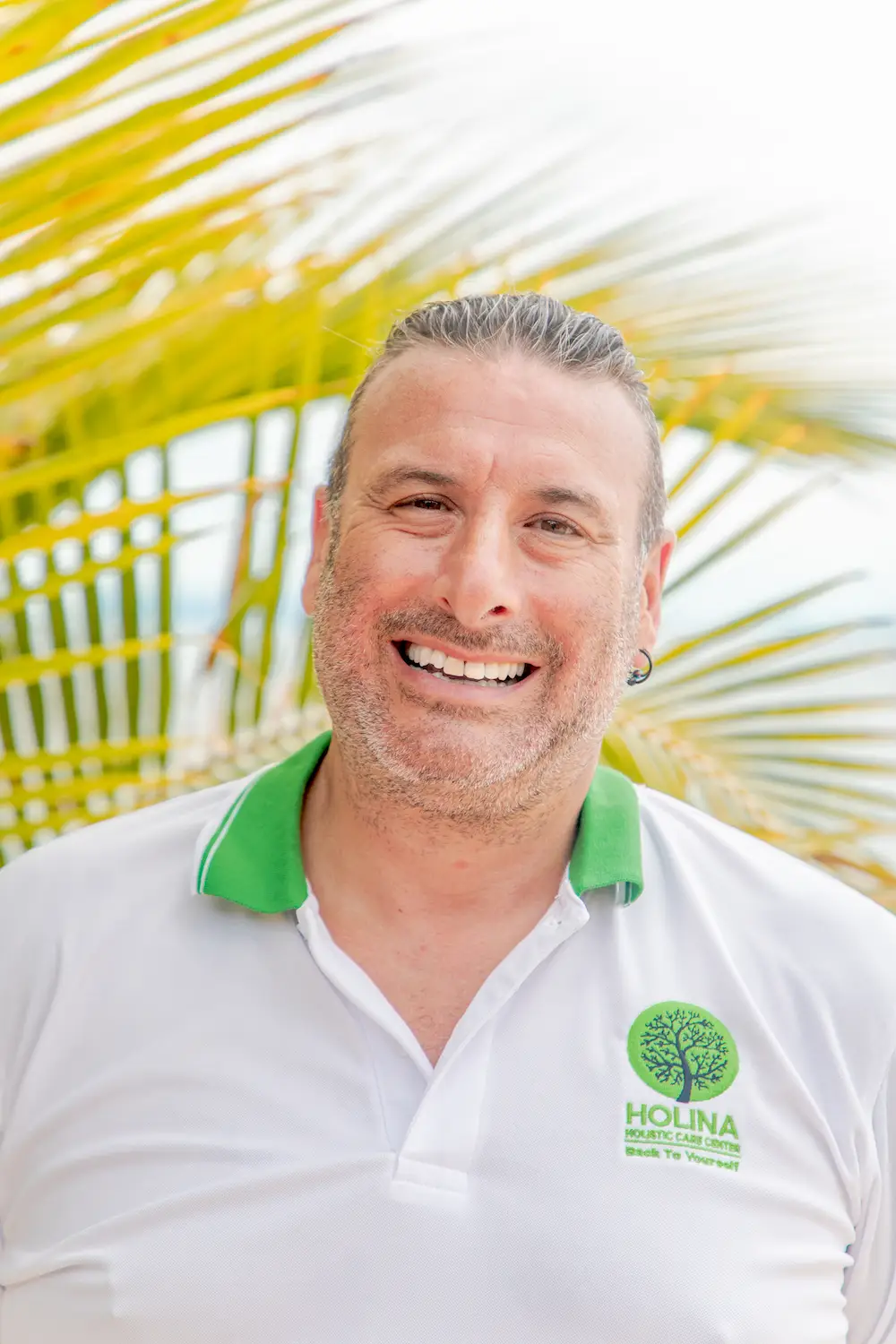

Clinically reviewed by Marc Rower — Trauma Therapist · Last reviewed 7 July 2026.
When the Past Still Lives in the Present
Addiction rarely begins with pleasure — it begins with pain.
Behind every story of substance use, dependency, or self-destruction, there is almost always a quieter story: a wound that never fully healed.
At Holina Rehab Thailand, we see this truth every day. People arrive believing they have a “drug problem” or a “drinking problem,” but as layers unfold, we often discover that what they really carry is unprocessed trauma — emotional pain stored deep in the body and mind.
Trauma and addiction are inseparable in many lives. Addiction becomes the attempt to soothe what trauma has made unbearable. And recovery — true recovery — means learning to feel safe in your own body again.
What Is Trauma, Really?
Trauma isn’t defined by what happens to you, but by what happens inside you as a result.
Two people might experience the same event — a loss, a betrayal, an accident — yet one may move through it while the other carries it for years. The difference lies in whether the nervous system felt safe enough to process it.
At Holina, we recognize several forms of trauma:
-
Acute trauma — a single, overwhelming event such as an accident or assault
-
Chronic trauma — repeated exposure to stress or harm, such as childhood abuse, neglect, or bullying
-
Complex trauma — a series of events over time that erode trust, safety, and self-worth
-
Intergenerational trauma — emotional pain passed unconsciously through family systems
For many, trauma isn’t one dramatic event; it’s a thousand small moments where they felt unseen, unsafe, or unloved.
Trauma disconnects people from their emotions and their bodies. Addiction, in turn, becomes a way to reconnect — artificially, temporarily, and painfully.
How Trauma Fuels Addiction
When trauma isn’t resolved, the nervous system remains stuck in survival mode.
Stress hormones like cortisol and adrenaline stay high, creating a constant sense of anxiety or emptiness. Substances, behaviors, or even relationships can seem to offer relief — a momentary pause from the chaos inside.
Clients often describe addiction as “self-medication.” Alcohol quiets the mind. Drugs numb pain. Work, sex, or gambling provide distraction. But what once felt like control slowly becomes dependence.
The truth is, addiction and trauma reinforce each other in a devastating cycle:
-
Pain leads to escape.
-
Escape brings temporary relief.
-
Relief fades — and pain returns stronger than before.
Breaking this cycle requires more than detox. It requires learning to feel again — safely, gently, and without fear.
The Body Keeps the Score
Trauma doesn’t live in memory alone; it lives in the body.
Chronic tension, insomnia, digestive issues, and panic attacks are all physical echoes of unprocessed trauma. The body remembers what the mind tries to forget.
That’s why Holina Rehab Thailand incorporates somatic therapies — body-based methods that help release trauma stored in the nervous system.
Through breathwork, movement, and mindfulness, clients learn to listen to their bodies again — to recognize sensations not as threats, but as communication.
This embodied awareness becomes the foundation of healing. When clients begin to feel grounded in their own bodies, they no longer need substances to escape them.

Healing Trauma at Its Roots: The Holina Approach
At Holina, we believe trauma and addiction can’t be treated separately.
Our integrated model addresses both simultaneously, blending clinical therapy with holistic practices that help the mind and body heal together.
Every client receives a personalized care plan designed to restore safety, connection, and self-trust.
Key elements include:
1. Trauma-Informed Therapy
Our therapists are trained to work gently and safely with trauma survivors. Modalities include:
-
CBT and DBT (to reframe destructive thought patterns)
-
EMDR (Eye Movement Desensitization and Reprocessing)
-
Inner child and attachment work (to heal core wounds)
-
Psychoeducation (to understand trauma’s impact on the brain and body)
These therapies help clients make sense of their experiences and rebuild a sense of control.
2. Somatic and Body-Based Healing
Somatic therapy helps clients process trauma physically, not just intellectually.
Guided breathwork, movement, and sensory grounding exercises calm the nervous system and release stored energy.
Clients rediscover safety in stillness and learn to inhabit their bodies without fear.
3. Mindfulness and Meditation
Mindfulness teaches presence — the antidote to trauma’s time distortion.
When clients learn to observe their thoughts and emotions without judgment, they gain the power to respond instead of react.
Daily guided meditations, yoga, and mindful reflection are woven into the Holina program, helping rewire emotional regulation pathways.
4. Creative Expression
Art, music, and movement therapy allow clients to express feelings that words can’t reach.
In trauma recovery, creativity becomes a bridge between silence and voice — a safe way to release, explore, and transform.
5. Community and Connection
Healing doesn’t happen in isolation.
Through group therapy and shared experiences, clients realize they are not alone.
Hearing others say, “I understand,” breaks through years of shame and self-blame.
At Holina, community isn’t forced — it’s felt.
The Role of Safety in Trauma Healing
Safety is the foundation of all recovery.
Before a person can face their pain, they must first feel safe enough to feel at all.
From the moment clients arrive at Holina, every element — the tranquil surroundings, the compassionate staff, the gentle routine — is designed to communicate one message: You are safe here.
Safety allows the body to relax, the mind to open, and the heart to begin to trust again.
Only then can healing take root.
Relearning How to Feel
One of the most profound stages of recovery is emotional reconnection.
Many trauma survivors have spent years suppressing feelings they once believed were too painful to handle.
At Holina, we teach clients that emotions are not enemies — they are messages. Anger signals boundaries. Sadness asks for rest. Fear calls for protection.
Through guided therapy and mindfulness, clients learn to name emotions, express them safely, and let them pass through rather than control their behavior.
This emotional literacy becomes a cornerstone of relapse prevention.
When clients can feel fully, they no longer need to numb.
The Healing Power of Environment
The natural beauty of Koh Phangan plays a quiet yet essential role in trauma recovery.
Time spent in nature can help lower stress hormones, steady the heart rate, and ease symptoms of depression and anxiety.
At Holina, therapy often extends beyond the walls of a session room — onto the beach, into the gardens, or even into the water during aqua somatic sessions.
Nature provides the gentle backdrop for deep emotional work, reminding clients that life — even after pain — can still be beautiful.
From Survival to Self-Discovery
For many, trauma created a version of life that revolved around surviving. At Holina, recovery is about learning to live again — with curiosity, openness, and courage.
As clients move through the program, they begin to rediscover parts of themselves long buried by pain:
-
Creativity
-
Sensitivity
-
Strength
-
Humor
-
Hope
These aren’t new traits — they’re the authentic self, finally free to breathe.

The Intersection of Trauma, Addiction, and Relationships
Unresolved trauma often shapes how we connect with others.
It can lead to codependency, people-pleasing, or avoidance of intimacy. These patterns can keep addiction alive, even in recovery, if left unaddressed.
At Holina, we integrate relationship and boundary therapy into our trauma-informed model.
Clients learn to communicate needs, establish healthy limits, and rebuild trust — not only with others, but within themselves.
This relational healing is what allows recovery to last beyond treatment.
Life After Trauma: The Path Forward
Healing trauma doesn’t erase the past; it changes your relationship to it.
After completing their time at Holina, clients often describe feeling lighter, more grounded, and more present. They understand their emotions, honor their boundaries, and live with renewed purpose.
Our aftercare program ensures that this growth continues long after clients leave. Ongoing therapy, alumni circles, and mindfulness practices help maintain emotional stability and connection.
Recovery becomes not just a phase — but a way of living.
FAQs About Trauma and Addiction
Q1: What if I don’t remember my trauma clearly?
That’s okay. Healing doesn’t require perfect memory. We work with sensations, emotions, and body awareness — all of which carry valuable information.
Q2: How do I know if trauma is behind my addiction?
If you’ve used substances or behaviors to numb emotional pain, there’s a good chance unresolved trauma is part of the picture. Our team can help you explore this safely.
Q3: Can trauma work feel overwhelming?
It can, which is why we move slowly and compassionately. You’ll always have tools to ground yourself before exploring deeper emotions.
Q4: Do you use EMDR and somatic therapies at Holina?
Yes. EMDR, somatic experiencing, and breathwork are central to our trauma recovery program.
Q5: Can I heal trauma without discussing every painful memory?
Yes. Trauma therapy focuses on restoring safety and connection, not revisiting every detail. Healing happens through the body and emotions, not just through stories.
Conclusion: Healing the Root, Not Just the Symptoms
Addiction may look like the problem, but it’s often the body’s attempt to solve a deeper one.
At Holina Rehab Thailand, we go beyond managing symptoms — we heal the root.
Through trauma-informed care, holistic therapy, and the gentle embrace of nature, clients rediscover what safety feels like. They learn that healing isn’t about forgetting the past — it’s about reclaiming the present.
When trauma softens, the need to escape disappears.
What remains is peace — steady, grounded, and real.
Begin your healing journey with Holina today.
Get back to yourself — body, mind, and spirit.
“Trauma and addictions are dealt with in a truly holistic manner – not only dealing with addictions, but also help to identify underlying causes.”
— Steve R., verified Recovery.com review, 18 Apr 2025 · ★★★★★
References
- SAMHSA TIP 57 — Trauma-Informed Care in Behavioral Health Services (trauma is a common driver of substance use). ncbi.nlm.nih.gov
- CDC — About Adverse Childhood Experiences (ACEs) (early adversity and later substance-use risk). cdc.gov
- National Institute on Drug Abuse — Treatment and Recovery (addiction as a treatable, whole-person condition). nida.nih.gov
Related reading
Ready to Start Your Recovery Journey?
Our clinical team is available to answer your questions and help you find the right programme for your needs.
Speak with Our Team →