

When the Past Doesn’t Stay in the Past
Sometimes anxiety isn’t just about what’s happening now — it’s about what hasn’t yet healed.
Many people living with addiction describe feeling “on edge,” unable to relax or trust, even when life seems stable. Beneath the surface lies a deeper story — one of old wounds, unprocessed emotions, and a nervous system stuck in survival mode.
At Holina Rehab Thailand, we help clients uncover and heal the connection between trauma, anxiety, and addiction.
Because anxiety isn’t always the problem — it’s often the symptom.
And healing begins not by silencing the fear, but by understanding where it comes from.
Understanding Trauma: The Hidden Thread
Trauma isn’t just what happens to us — it’s what happens inside us as a result.
It’s the internal imprint left by overwhelming experiences that the mind and body couldn’t fully process.
For some, trauma comes from a single life-altering event — an accident, abuse, or sudden loss.
For others, it’s the accumulation of smaller wounds: neglect, rejection, chronic stress, or years of emotional invalidation.
Regardless of its source, trauma changes how the nervous system functions.
It keeps the body in a heightened state of alert, scanning for danger even when none exists.
This is what many experience as chronic anxiety — the constant feeling that something bad is about to happen, even when life is calm.

The Nervous System: Where Trauma and Anxiety Meet
When we experience trauma, the amygdala (the brain’s alarm system) becomes hyperactive, while the prefrontal cortex (the part that reasons and soothes) becomes less effective.
As a result, the body remains in fight, flight, freeze, or fawn mode long after the threat is gone.
This survival response can manifest as:
Restlessness or hypervigilance
Racing thoughts or panic
Muscle tension or chronic pain
Emotional numbness or detachment
Trouble sleeping or regulating mood
For many people, substances temporarily offer relief — a way to escape the body’s constant alertness.
But when the substance fades, the anxiety returns — often stronger than before.
The cycle of self-soothing becomes self-defeating.
At Holina, we break this cycle by addressing both the anxiety and the trauma that fuels it.
The Anxiety–Addiction Cycle
Anxiety and addiction are closely intertwined.
Anxiety creates distress → substances relieve that distress → withdrawal or guilt amplifies anxiety → leading to more use.
This loop becomes self-perpetuating, leaving people feeling trapped between panic and escape.
Our goal at Holina Rehab Thailand is to help clients step out of that loop — not by fighting anxiety, but by healing the nervous system that drives it.
Through integrated trauma therapy, somatic healing, mindfulness, and compassionate care, clients learn that safety isn’t something you achieve externally — it’s something you rebuild internally.
Recognizing Trauma-Related Anxiety
Not all anxiety is trauma-based, but many signs overlap.
Common indicators of trauma-linked anxiety include:
Startling easily or being overly cautious
Feeling detached from your body or surroundings (dissociation)
Avoidance of memories, places, or relationships
Sleep disturbances or recurring nightmares
Intense fear of losing control
At Holina, our therapists use trauma-informed assessments to help clients identify how their anxiety developed — and more importantly, how to release it safely.
Understanding that anxiety is a response — not a flaw — is often the first step toward healing.
The Holina Approach: Healing the Root, Not the Reaction
At Holina Rehab Thailand, we treat trauma and anxiety as interconnected conditions.
Our multidisciplinary team combines clinical psychology with holistic healing to address both the mind’s patterns and the body’s imprints of fear.
Our integrative trauma and anxiety recovery program includes:
Trauma-informed psychotherapy — building emotional safety before exploring the past
Somatic therapy — releasing tension and trauma held in the body
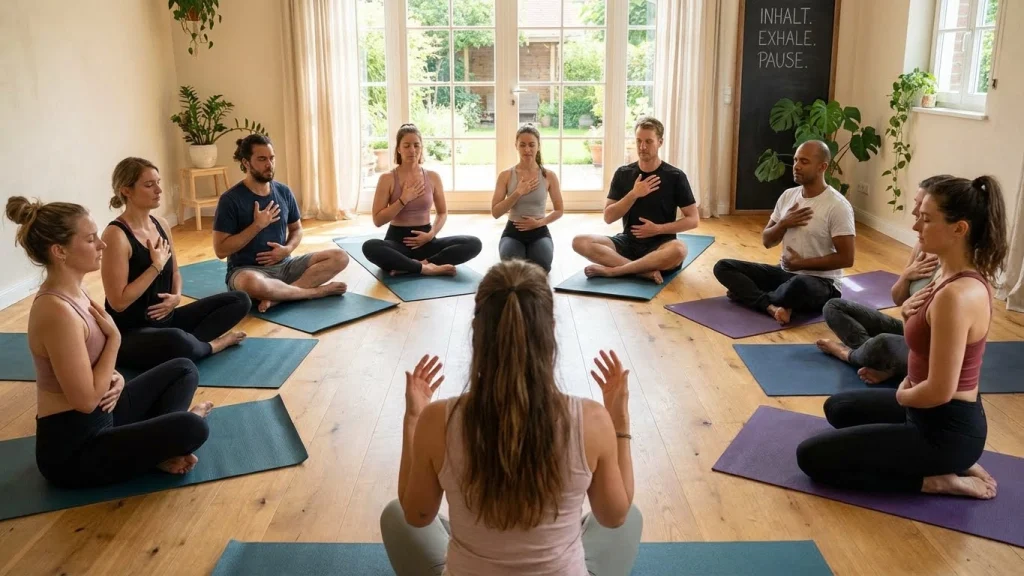
Mindfulness and meditation — calming the mind and restoring present awareness
Yoga and breathwork — grounding the nervous system through movement and breath
EMDR (Eye Movement Desensitization and Reprocessing) — reprogramming traumatic memories
Creative therapies — using art, sound, and expression to externalize emotion
12-Step and spiritual reflection — finding meaning, forgiveness, and faith in self
This combination of approaches allows healing to happen holistically — emotionally, physically, and spiritually.
Step One: Creating Safety
For trauma survivors, safety isn’t just about environment — it’s about nervous system regulation.
That’s why healing always begins with creating internal and external safety.
At Holina, every client is surrounded by compassionate professionals who understand trauma sensitivity.
Sessions move at the client’s pace — never rushed, never forced.
Therapists use gentle grounding techniques to help clients feel stable in the present moment.
Only when the body feels safe can the mind begin to process what happened.
Step Two: Understanding Triggers
Anxiety often arises when the body encounters reminders of past danger.
These triggers might not be logical — a smell, a tone of voice, a sound — yet they activate the same physiological fear response.
Through therapy and mindfulness, clients learn to recognize and name these triggers.
By observing them with awareness rather than fear, they begin to rewire their response.
This process builds emotional resilience — transforming anxiety from a reaction into information.
The body begins to learn, “This is not then. This is now.”
Step Three: Releasing the Body’s Story
Trauma isn’t stored in memory alone; it’s stored in muscles, breath, and posture.
That’s why Holina integrates somatic therapy — to help clients release the physical residue of fear.
Through guided breathwork, gentle movement, and sensory awareness, the body completes survival responses that were once interrupted.
Clients may tremble, yawn, or sigh as their nervous system discharges years of held tension.
This release is not dramatic — it’s sacred.
Each exhale becomes a letting go of what the body has carried for too long.
Step Four: Building Emotional Resilience
Healing anxiety isn’t about eliminating fear — it’s about learning to relate to it differently.
Through CBT (Cognitive Behavioral Therapy) and DBT (Dialectical Behavioral Therapy), clients develop practical tools for emotional regulation.
They learn how to:
Identify distorted thought patterns
Calm the body through breath and awareness
Communicate needs clearly and assertively
Practice compassion for themselves in moments of fear
With time, clients stop seeing anxiety as the enemy.
It becomes a signal — a messenger guiding them toward self-care and balance.
The Role of Mindfulness
Mindfulness is one of the most powerful antidotes to trauma-related anxiety.
By focusing on the present moment, mindfulness teaches the brain that it no longer needs to replay or anticipate danger.
At Holina, mindfulness is woven into every aspect of daily life — from morning meditations to mindful meals and evening gratitude circles.
These practices gently train the nervous system to rest in awareness instead of reaction.
Over time, the body learns: safety exists in stillness.
“Mindfulness didn’t erase my anxiety — it taught me how to hold it with compassion.”
— Holina client, Australia
Healing the Spirit: Finding Meaning After Trauma
Many people emerge from trauma asking “Why me?”
At Holina, we help them transform that question into “What now?”
Through spiritual counseling, reflective practices, and connection to nature, clients rediscover a sense of purpose and belonging beyond pain.
This doesn’t mean bypassing the past — it means finding strength and wisdom within it.
Healing the spirit is about rediscovering trust — in life, in others, and in oneself.
For many, this becomes the moment recovery truly begins.
The Environment: A Sanctuary for Safety
Koh Phangan’s natural beauty plays an essential role in Holina’s healing process.
The sound of waves, the warmth of sunlight, the scent of tropical rain — each sensory detail reminds the nervous system of peace.
Nature offers what trauma once took: rhythm, safety, and flow.
As clients walk barefoot on the beach or breathe beneath palm trees, they reconnect with something greater than their fear — a sense of belonging in the world.
This environment, paired with compassionate human care, becomes a living mirror of safety.

From Anxiety to Empowerment
As trauma and anxiety begin to release, clients experience more than relief — they experience empowerment.
They begin to trust their feelings instead of fearing them, to set boundaries with confidence, and to live from presence instead of protection.
This shift marks the true essence of recovery — not just being sober, but being alive and emotionally free.
Real Stories of Healing
“I came to Holina thinking I just needed to stop drinking. What I discovered was that my anxiety was rooted in old trauma I’d never faced. Healing that changed everything.”
— Holina graduate, UK
“For the first time, I felt safe in my own body. That safety became my foundation for recovery.”
— Holina client, Singapore
“Holina taught me that anxiety isn’t the enemy — it’s my body asking for care. I finally listened.”
— Holina alumni, Germany
FAQs About Trauma, Anxiety, and Recovery
Q1: Can trauma really cause anxiety years later?
Yes. Trauma can remain stored in the nervous system long after the event, creating ongoing anxiety responses.
Q2: How do you treat anxiety without medication?
We use a combination of therapy, mindfulness, somatic work, and nutrition to naturally regulate the nervous system.
Q3: Do I have to talk about my trauma in detail?
No. Healing focuses on safety and awareness, not reliving events. You’ll always move at your own pace.
Q4: How is trauma therapy different from regular therapy?
It’s body-centered and paced for safety — focusing on nervous system healing, not just analysis.
Q5: Can I heal trauma and addiction at the same time?
Absolutely. At Holina, both are treated together — because one cannot fully heal without the other.
Conclusion: Healing the Fear Beneath the Surface
Anxiety isn’t weakness. It’s the body’s way of asking for safety.
When that safety is restored — through understanding, compassion, and presence — anxiety transforms into awareness, and trauma into wisdom.
At Holina Rehab Thailand, we help clients do more than manage symptoms.
We help them reclaim peace, purpose, and wholeness — by healing the fear beneath the surface and reconnecting to the calm that was always within.
Because you are not your past.
You are the peace that comes after it.
Begin your healing journey with Holina today.
Get back to yourself — body, mind, and spirit.
Ready to Start Your Recovery Journey?
Our clinical team is available to answer your questions and help you find the right programme for your needs.
Speak with Our Team →