
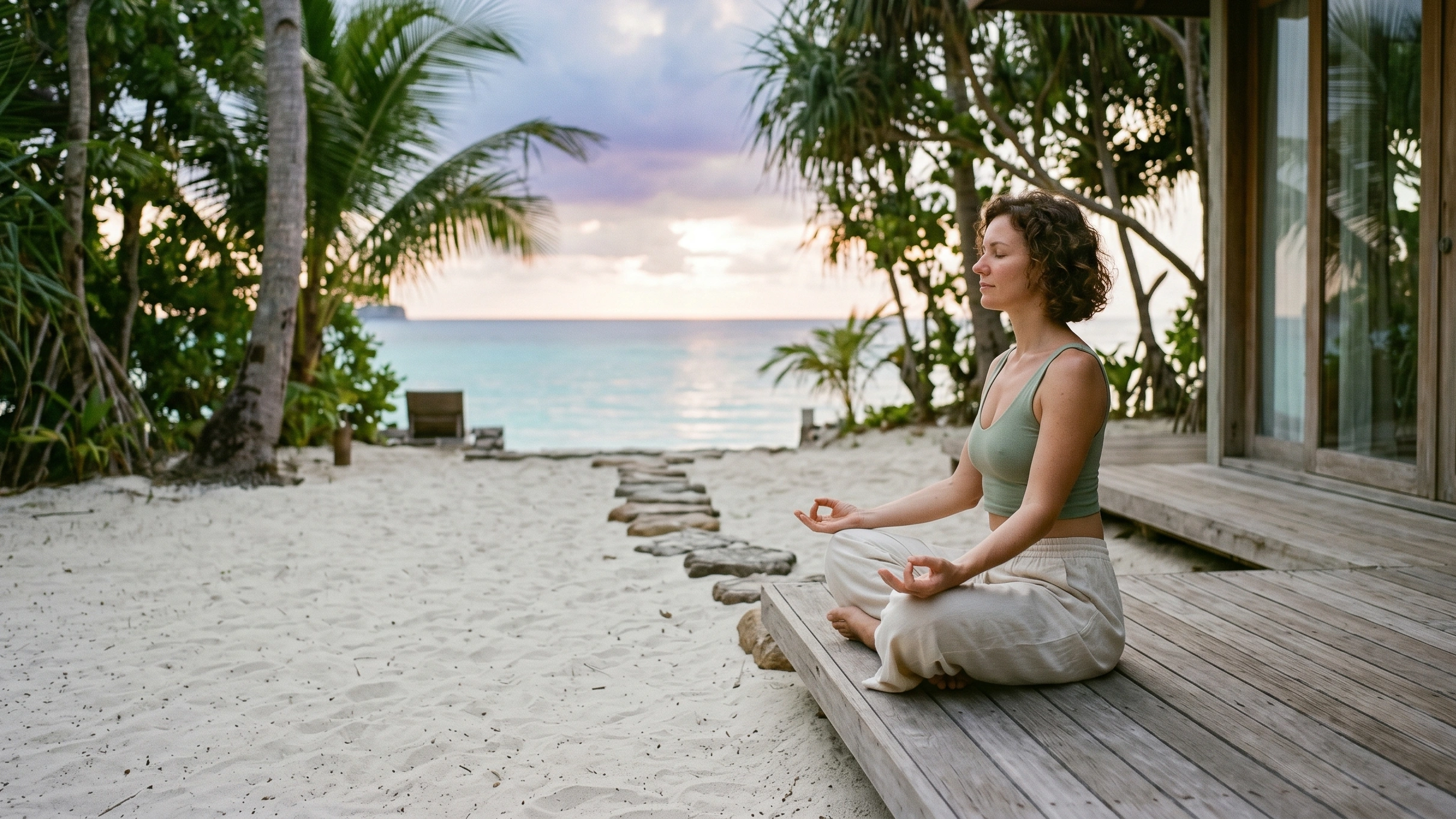
More and more people looking for residential addiction and trauma treatment are paying attention to the setting itself — not as a holiday, but because a calm, natural environment can genuinely support the clinical work of recovery. In Thailand, that often means a beachfront location. This guide looks honestly at what a coastal setting can and cannot do, and how to think about choosing residential treatment on a Thai island.
Holina Rehab sits on the quiet side of Koh Phangan and is a licensed residential rehab and detox clinic (#84-03-00294). We are candid throughout: the sea and the surroundings are a supportive backdrop, but the treatment is the clinical programme — medical care, therapy, and structure — not the view.
Does the Setting Actually Matter?
There is reasonable evidence that natural environments, and water settings in particular, are associated with better mental wellbeing. A systematic review and meta-analysis of the health effects of “blue spaces” found consistent associations between contact with water environments and improved wellbeing and reduced psychological distress, while being clear that the mechanisms are still being studied.1 A broader review of green and blue spaces and behavioural health reached similar conclusions across longitudinal studies.2 The rhythmic sound of the sea and open natural surroundings appear to help many people feel calmer — a useful state to be in when doing hard therapeutic work.
What the evidence does not support is the idea that a beach heals addiction. Environment can lower everyday stress and remove familiar triggers; it does not replace medical detox, psychotherapy, or clinical supervision. We present our setting in that light.
Choosing a Thai Island: Phuket, Koh Samui, Koh Phangan
Thailand has become a well-established destination for international residential treatment, but locations differ. Phuket offers extensive medical infrastructure and luxury, but is also a large, busy tourist hub. Koh Samui sits somewhere in the middle, with good infrastructure and several clinics. Koh Phangan — and specifically its quiet side, away from the island’s better-known nightlife — offers a calmer, more private setting, which is what many people seeking treatment are looking for. The island is popularly associated with a peaceful, restorative atmosphere; we present that as part of its character and appeal rather than as a clinical property.
Privacy and a Break From Triggers
One of the clearest practical benefits of the quiet side of Koh Phangan is privacy and distance from everyday triggers. Recovery is hard to begin in the same environment where the difficulties took hold — the familiar places, people, and stresses that are woven into a pattern of use. A residential stay provides a genuine break from those cues, giving people space to build new routines. The anonymity of a quiet location also matters to many residents and families.
What Treatment Actually Involves
The setting supports the programme; it is not the programme. At Holina, treatment addresses both the addiction and the difficulties underneath it. Our clinical work combines the 12-Step model with individual and group psychotherapy and holistic practices such as somatic therapy, breathwork, and mindful movement. Physical activity and good nutrition are built into the daily structure because they support mood, sleep, and stress — effects consistently reported in reviews of exercise in substance use recovery.3 All of this happens under 24/7 medical supervision.
Co-Occurring Conditions and Trauma-Informed Care
Many people seeking residential treatment are managing more than one difficulty at once — the co-occurrence of a substance use problem and a behavioural health condition such as depression, anxiety, or PTSD, sometimes described clinically as a dual diagnosis. Treating these in isolation tends not to work well. Holina’s Dual Treatment programme is designed to address both together, combining psychotherapy, trauma-informed care, and medical supervision so that all aspects of a person’s health are worked with at the same time.
Adjunctive Therapies
Alongside core clinical care, some residents access adjunctive therapies such as hyperbaric oxygen therapy and sound-based relaxation. We offer these as complements that some people find supportive — not as stand-alone cures, and never in place of medical and psychotherapeutic treatment. Where the evidence for a therapy is still emerging, we say so.
Costs, Insurance, and Visas
Residential treatment in Thailand is often more affordable than comparable private care in the UK, Europe, or Australia, while maintaining international clinical standards. Holina’s programmes are all-inclusive — accommodation, 24/7 clinical care, chef-prepared meals, all therapy sessions, and airport transfers. Four-week all-inclusive programmes start from USD $9,700, with reduced rates for longer stays paid in full before admission. Because room options and rates are updated over time, current pricing is kept on our rehab prices page.
Most Thai facilities require payment up front, but many international and private insurers will reimburse part of the cost where the centre is a licensed residential rehab and detox clinic; Holina provides the medical documentation and invoices needed to support a claim. On visas, most residents enter on a standard tourist visa, which can be extended locally; for longer stays our admissions team advises on the most appropriate route. We can also help families arrange travel and accommodation for visits. You can see more of the setting on our rehab facilities page.
Admission and Aftercare
Admission is straightforward: a confidential assessment with our admissions team, an online intake form, and travel arranged to Koh Samui Airport (USM), from where we meet you and transfer you to Holina. All-inclusive care begins on arrival. Recovery does not end at discharge, so we build an aftercare plan with each resident, including online group and one-to-one support and help connecting with local support and the 12-Step community in their home area.
“The setting matters, but it is not the treatment. A calm environment removes the daily triggers that make recovery harder at home — but the clinical programme is still what does the work.”
“the facilities are amazing and the destination of the facility is beautiful, the staff really do make the place so good”
— Matthew Hill, Google Review, 1 Apr 2026 · ★★★★★
A Closing Note
A beachfront setting can make the difficult early weeks of recovery a little more bearable, and there is real evidence that natural, coastal environments support wellbeing. But choose a residential programme for its clinical quality first — its licensing, its team, and how it treats the causes beneath addiction — and let the setting be the welcome bonus that it is. If you would like to talk through whether a residential programme is right for you or a loved one, our admissions team is available seven days a week.
Sources:
1. Georgiou, M. et al., “Mechanisms of Impact of Blue Spaces on Human Health: A Systematic Literature Review and Meta-Analysis,” PMC, 2021.
2. “Relationship between Green and Blue Spaces with Mental and Physical Health: A Systematic Review of Longitudinal Observational Studies,” PMC, 2021.
3. “A Systematic Review of the Benefits of Physical Exercise on Behavioural Health and Quality of Life in Patients With Substance Use Disorders,” PMC, 2024.
Related Reading
Ready to Start Your Recovery Journey?
Our clinical team is available to answer your questions and help you find the right programme for your needs.
Speak with Our Team →