

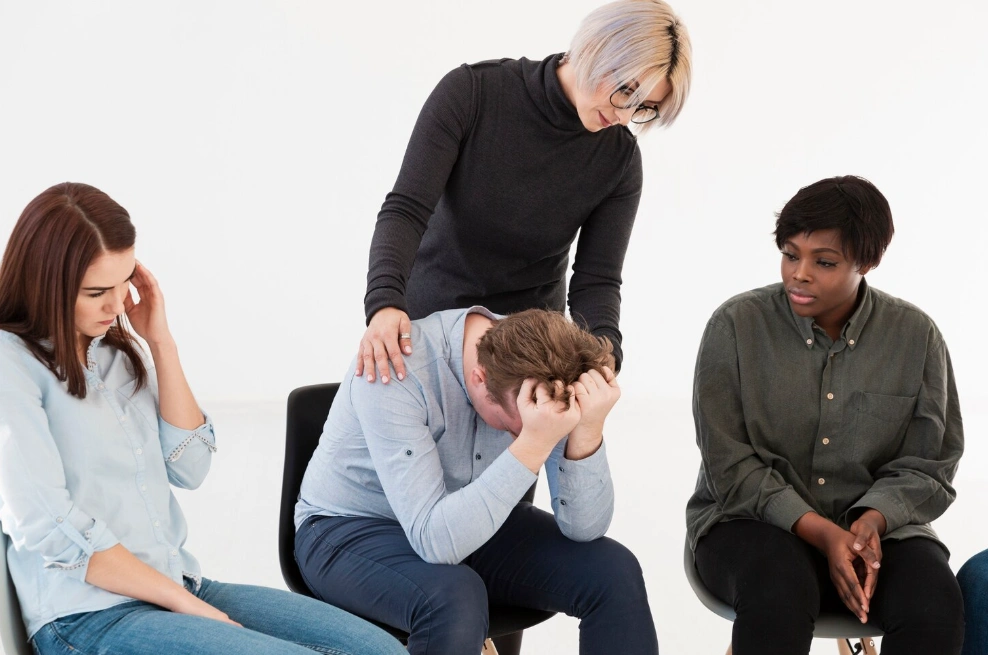
Coming off ketamine is rarely the medical emergency that stopping alcohol or benzodiazepines can be — but that does not make it easy. Ketamine withdrawal is driven by the mind: cravings, low mood, anxiety and disrupted sleep that can quietly pull someone back to use long after the drug has left the body. This guide explains what ketamine withdrawal genuinely feels like, how the symptoms unfold over time, and how Holina Rehab in Koh Phangan, Thailand treats the psychological side of dependence that other approaches often miss.
If you are still weighing up whether use has become a problem at all, our companion piece answers the four questions people ask most about ketamine — including whether it is addictive. This article picks up where that leaves off: what happens when someone who has become dependent decides to stop.
The honest pictureWhat ketamine withdrawal is — and what it isn’t
Ketamine withdrawal is the set of symptoms that surface when someone reduces or stops ketamine after prolonged or heavy use. The most important thing to understand is that it is predominantly psychological. Unlike alcohol or benzodiazepine withdrawal — which can produce seizures and, in severe cases, life-threatening delirium tremens — ketamine withdrawal is rarely medically dangerous and is not usually life-threatening (Priory Group).
That distinction matters, and it cuts both ways. It should reassure anyone who has been too frightened to stop. But it should not be mistaken for “easy.” The cravings, the crashing mood and the sleepless nights are real, and they are the exact mechanism through which people relapse. Ketamine dependence is treated as a genuine clinical condition — not a failure of willpower.
Why the pull is psychological, not physical
Ketamine acts on the brain’s NMDA receptors, altering the glutamate signalling involved in mood, memory and learning. With repeated heavy use, tolerance climbs quickly and the brain leans on the drug to feel level. When use stops, the reward and stress systems need time to recalibrate — and in the meantime the mind produces powerful urges to use, alongside low mood and anxiety.
This is the same pattern of psychological dependence we address across every substance in our drug addiction treatment programme. Because there are no approved medications that switch off ketamine cravings, recovery leans on structured psychological support rather than a detox drug (American Addiction Centers).
The ketamine withdrawal timeline
No two people move through withdrawal identically — duration and frequency of use, co-occurring mental-health conditions and any other substances involved all shape it. As a general guide, it tends to unfold in three overlapping phases.
First 24–72 hours: the acute phase
Because ketamine clears the body within about a day, symptoms can begin quickly. The early phase is dominated by the mind:
- Strong cravings and irritability
- Anxiety and restlessness
- Low or crashing mood
- Insomnia and fatigue
Minor physical effects such as headaches, sweating or a raised heart rate can appear, but they are secondary to the psychological pull and typically mild.
Days 4–14: the sub-acute phase
Physical effects usually settle within the first week to ten days, while the psychological symptoms persist and often become the main challenge. This is a high-risk window for returning to use:
- Ongoing fatigue and low motivation
- Mental fog and difficulty concentrating
- Emotional flatness or numbness
- Continuing cravings
Beyond two weeks: post-acute symptoms
For people who used heavily over a long period, some symptoms — mood swings, disturbed sleep and intermittent cravings — can linger for weeks or months as the brain fully rebalances. Recognising this is normal, and planning for it, is central to staying well after the initial detox (Recovered.org).
Managing cravings: the real work of ketamine recovery
Because ketamine withdrawal has no medication to lean on, craving management is where recovery is won or lost. Evidence-based approaches focus on changing the thoughts and situations that drive use, and on riding out urges without acting on them:
- Cognitive behavioural therapy (CBT) — identifying and reframing the thought patterns and triggers that lead back to use.
- Urge surfing and grounding — learning that a craving peaks and passes, rather than fighting or feeding it.
- Structure and routine — predictable days that protect sleep, movement and nutrition while the brain recalibrates.
- Peer and group support — reducing the isolation that so often fuels relapse.
Where ketamine use sits alongside depression, anxiety or trauma — which is common — treating both together through our dual treatment programme gives recovery a far stronger footing than tackling the substance alone.
Why supervised support matters — even without medical danger
People often underestimate the intensity of cravings and the depth of psychological dependence, which is why unsupported “cold turkey” attempts so frequently end in early relapse. In someone with co-occurring mental-health difficulties, the low mood of withdrawal can also become genuinely destabilising and needs proper clinical attention. A structured setting removes access to the drug, holds the routine steady, and puts qualified support in the room for the moments cravings peak.

How Holina treats ketamine withdrawal
Our ketamine detox in Thailand is built around the reality that this is a psychological withdrawal. Every guest is medically screened on arrival, and our team monitors comfort throughout — using supportive care such as sleep and nutritional support rather than a detox drug that does not exist for ketamine.
From day one, licensed psychologists and trauma specialists work alongside that medical oversight. One-to-one therapy addresses the triggers behind use, while group sessions rebuild connection and accountability. Holistic practices — breathwork, guided meditation, gentle movement and water therapy — help calm an over-activated nervous system and give guests real tools to manage cravings and low mood. Detox then flows directly into longer-term care through our structured ketamine addiction treatment, so the progress made in the first two weeks is carried into lasting recovery.
A note from our clinical team:
“With ketamine, the danger isn’t a dramatic physical withdrawal — it’s how quietly the cravings and the low mood wear people down until they use again. Once someone understands that the urge will rise and fall on its own, and they have support in the room while it passes, the whole process becomes far less frightening and far more survivable.”
— Draft attribution: Adrian Solomon, Counselling Psychologist. Pending clinical sign-off before publication.
“After a period of residential care, I never dreamt that l would be gifted with the re-birth and clearer understanding of myself that I do today. The community, the staff, the (variety) therapies, the restaurant, the accommodation and the facilities are outstanding. I experienced a number of varying therapies bespoke to my individual requirements. Through this, I am equipped with tools and practices to approach my life – positively, thoughtfully and most importantly – JUST FOR TODAY! I am eternally grateful to all at Holina!”
— Christine, verified Google review, 26 August 2025
Frequently asked questions
How long does ketamine withdrawal last?
Most physical effects ease within seven to ten days. Psychological symptoms — cravings, low mood and disturbed sleep — can linger for weeks and are best addressed with ongoing therapy.
Is ketamine withdrawal dangerous?
It is rarely medically dangerous and does not carry the seizure or delirium risk of alcohol or benzodiazepine withdrawal. The real risk is psychological: intense cravings and low mood that can lead to relapse, and destabilised behavioural health in those with co-occurring conditions.
Can I detox from ketamine at home?
Some people do, but unsupported attempts often underestimate the cravings and end in early relapse. A structured, supported environment makes staying stopped far more achievable.
Does ketamine withdrawal cause permanent damage?
The withdrawal symptoms themselves are generally reversible. Early, structured support helps prevent lingering mood, sleep and cognitive effects from taking hold.
What happens after detox at Holina?
Guests move into longer-term therapeutic care — building coping skills, emotional strength and a support network to sustain recovery well beyond the withdrawal period.
Ready to stop — with support?
Ketamine withdrawal is far easier to face with the right team around you. Reach out to Holina Rehab in Koh Phangan, Thailand.
+66 82 113 0657 holinarehab.comReady to Start Your Recovery Journey?
Our clinical team is available to answer your questions and help you find the right programme for your needs.
Speak with Our Team →