
Prescription Drug Detox in Thailand
Prescription drug dependence often begins with a doctor’s prescription, not a street drug — which is why many people don’t recognise it as addiction. Holina Rehab provides medically supervised detox in Thailand, using a slow, class-specific taper for opioid painkillers and benzodiazepines, connected to full residential Dual Treatment care on Koh Phangan.
- Licensed Facility
- Medical Detox Available
- Koh Phangan, Thailand
- 30–90 Day Programmes
What Is Prescription Drug Detox?
Prescription drug detox is the medically supervised process of safely withdrawing from a medication the body has become physically dependent on — most often an opioid painkiller or a benzodiazepine, though sleeping pills and other sedatives can be involved too. Because the medication was legitimately prescribed, many people don’t recognise what they are experiencing as addiction; they simply know that missing a dose feels wrong, and that stopping on their own has failed before.
Opioid painkillers and benzodiazepines are pharmacologically different medications, and withdrawal from them is different too. Opioid withdrawal is physically miserable but rarely dangerous on its own. Benzodiazepine withdrawal carries a real risk of seizures and must never be stopped abruptly. Treating the two the same way is a common and avoidable mistake — one our medical team does not make.
At Holina Rehab, prescription drug detox is delivered by an on-site physician and a 24-hour nursing team, with a taper built around the specific medication, dose, and history involved. It connects directly into our residential Dual Treatment programme for the pain, anxiety, or insomnia the medication was originally prescribed to treat.
SAMHSA’s 2024 National Survey on Drug Use and Health estimated that 8.0 million Americans aged 12 and older (2.8%) misused prescription pain relievers, and a further 4.6 million misused prescription tranquilizers or sedatives — the category that includes benzodiazepines — in the past year. NIDA is clear that physical dependence on opioids can develop through legitimate, correctly-followed prescribing, as the body adapts to the drug’s presence — a physiological response, not a moral failing.
The two medication classes carry different withdrawal risk. World Health Organization clinical guidelines note that opioid withdrawal, while intensely uncomfortable, is not usually life-threatening on its own. Benzodiazepine withdrawal is different: reducing the dose too quickly, or stopping abruptly, can trigger seizures. A 2025 joint clinical practice guideline on benzodiazepine tapering recommends dose reductions of roughly 5–10% at a time, never exceeding 25% every two weeks, slowing further for anyone on a high or long-term dose — abrupt cessation is never the recommended approach.

Holina Rehab — Koh Phangan, Thailand
Learn about our Prescription Drug Addiction Treatment programme →
Signs You May Need Medically Supervised Detox
Because the medication came from a doctor, these signs are easy to explain away. If several of these feel familiar, unsupervised self-tapering is not the safest path — medical detox is.
Withdrawal Between Doses
Feeling shaky, anxious, or unwell when a dose is delayed, missed, or wears off early — a sign the body has adapted to the drug.
Escalating Tolerance
Needing a higher or more frequent dose to get the same relief you felt when the medication was first prescribed.
Fear of Running Out
Counting pills, refilling early, or feeling real panic at the thought of being without the medication even briefly.
Previous Failed Self-Tapers
Attempts to cut down or stop alone that ended in withdrawal severe enough that you restarted the medication.
Polypharmacy
Taking more than one dependence-forming medication together — for example an opioid and a benzodiazepine — which raises withdrawal complexity and risk.
Using Medication for Non-Medical Relief
Taking a dose to cope with stress, sadness, or boredom, rather than the condition it was originally prescribed for.
Medical Vulnerability
Existing heart, liver, or psychiatric conditions that make unsupervised withdrawal considerably more dangerous.
Heavy or Long-Term Benzodiazepine Use
A specific red flag: the longer and higher the benzodiazepine dose, the greater the seizure risk if it is stopped too fast.
Believing You Can’t Function Without It
A conviction that ordinary daily life — sleep, work, calm — feels impossible without the medication.
How Does Prescription Drug Detox Work at Holina Rehab?
Prescription drug detox at Holina is never one generic protocol. Our physician builds a class-specific taper — paced differently for opioid painkillers than for benzodiazepines — then connects you into a personalised residential plan and our Dual Treatment programme for the condition the medication was treating, followed by structured aftercare.
Assessment
Full medication, dose, and duration history, plus psychiatric and physical evaluation, to build your taper plan.
Class-Specific Detox
Opioid painkillers and benzodiazepines are tapered on different, medically appropriate schedules — never the same protocol.
Primary Care
CBT, DBT, Dual Treatment, group therapy and holistic care address the condition behind the prescription.
Aftercare
A relapse-prevention plan for managing pain, anxiety, or sleep without returning to the medication.

Two Medications, Two Different Tapers
-
Opioid Painkiller Tapering
For medications such as oxycodone, hydrocodone, tramadol, and codeine, our physician sets a dose-reduction schedule paced to your comfort, supported by 24-hour nursing. Withdrawal is physically demanding — muscle aches, nausea, sweating, disrupted sleep — but for most physically healthy adults it is not classed as medically dangerous on its own.
-
Benzodiazepine Slow Taper — Never Abrupt Cessation
For medications such as alprazolam, diazepam, clonazepam, and lorazepam, we never stop the drug suddenly. Doses are reduced gradually, sometimes over several weeks, with close neurological monitoring for the seizure risk that abrupt benzodiazepine withdrawal can carry.
-
Treating the Underlying Condition
Chronic pain, anxiety, and insomnia frequently sit behind prescription dependence. Once you are medically stable, our Dual Treatment programme addresses that original condition directly — detox is the start of the plan, not the whole of it.
A Different Kind of Detox

Medically Supervised, Never Unsupervised
Holina Rehab is fully licensed by the Thai Ministry of Public Health. Our on-site physician and 24-hour nursing team design an individual taper for each medication class you are dependent on, rather than applying one generic detox protocol to every prescription drug.
Medical detoxification, Dual Treatment for the condition behind the prescription, and evidence-based therapy are delivered within a single integrated residential setting — no referrals, no gaps in care.

From Detox Into Full Dual Treatment
Detox resolves the physical dependence. It does not, on its own, resolve the pain, anxiety, or insomnia that led to the prescription, or the fear of returning to it. Every prescription drug detox at Holina is built as the entry point into our residential Dual Treatment programme.
Clients move from medical stabilisation into therapy, holistic care, and a structured aftercare plan for managing the original condition without the medication — all in the same setting on Koh Phangan.
Our Clinical Team
Treatment at Holina Rehab is led by qualified medical professionals and experienced addiction therapists. Every client is under active clinical supervision throughout their programme.


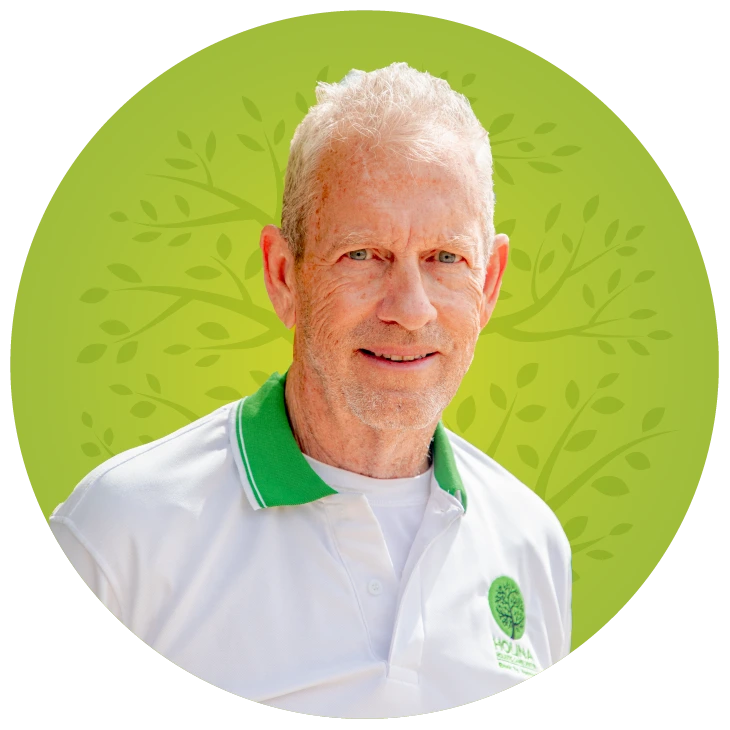
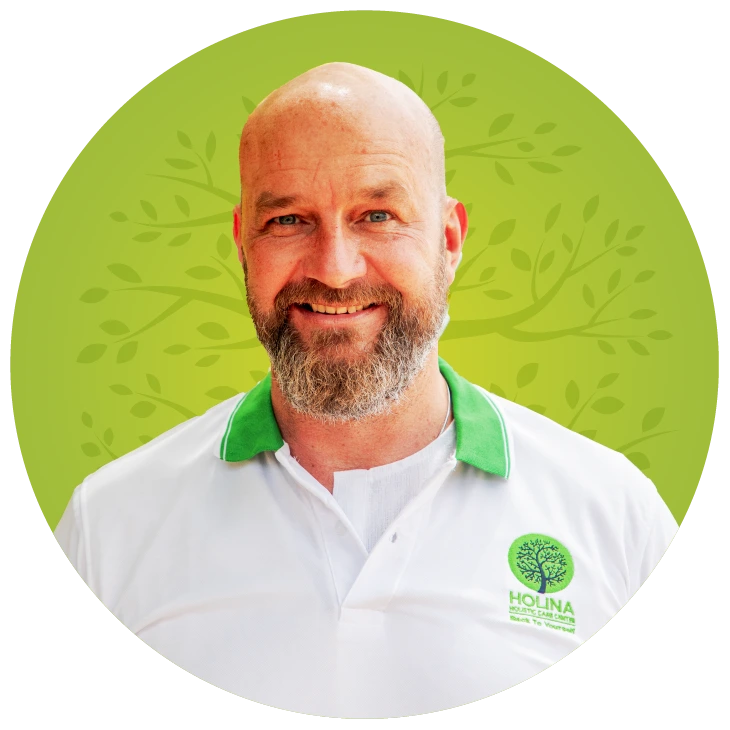
Licensed by the Thai Ministry of Public Health · Residential Rehab Licence #84-03-00294 · International Addiction Treatment Standards
“The community, the staff, the (variety) therapies, the restaurant, the accommodation and the facilities are outstanding.”
— Christine, Recovery.com Review, 26 Aug 2025 · ★★★★★
Prescription Drug Detox: Frequently Asked Questions
Is it dangerous to stop taking a prescribed opioid or benzodiazepine suddenly?
Yes, for both, but in different ways. Stopping a prescription opioid painkiller abruptly causes withdrawal that is physically miserable but rarely medically dangerous on its own. Stopping a benzodiazepine abruptly is a different risk category: it can trigger seizures and other serious complications, which is why benzodiazepines should always be tapered gradually under medical supervision rather than stopped cold turkey.
What is the difference between opioid withdrawal and benzodiazepine withdrawal?
Opioid painkiller withdrawal, from medications such as oxycodone, hydrocodone, or tramadol, is intensely uncomfortable, with flu-like symptoms, muscle pain, cramping, and cravings, but is not typically life-threatening in a physically healthy adult. Benzodiazepine withdrawal, from medications such as alprazolam, diazepam, or clonazepam, carries a genuine seizure risk and can also involve severe anxiety and tremor, which is why it requires a slower, more cautious taper. Because the risk profiles differ, our medical team designs a different withdrawal protocol for each class rather than treating all prescription drugs the same way.
Can I become dependent on a medication even if I only ever took it exactly as prescribed?
Yes. Physical dependence on opioids and benzodiazepines can develop through legitimate, correctly-followed prescribing, because the body adapts to the presence of the drug over time. This is a physiological response, not a sign of weakness, poor judgement, or moral failure. Many of the people we treat never took an extra dose or bought medication outside a pharmacy.
How long does a prescription drug taper take?
It depends entirely on the medication, the dose, and how long you have been taking it, so there is no fixed timeline. Benzodiazepine tapers are typically the slowest, sometimes extending over several weeks, because reducing too quickly raises the risk of seizures. Opioid painkiller tapers can often move a little faster, but are still paced to your comfort and vital signs rather than a fixed calendar. Our physician reviews your progress daily and adjusts the pace based on how your body responds.
Does detox address the pain, anxiety, or insomnia that led to the prescription in the first place?
Yes, this is central to how we work. Removing the medication without treating the underlying pain, anxiety, or sleep disorder leaves the door open to relapse or a return to the same medication. Once you are medically stable, our clinical team treats the original condition through our integrated Dual Treatment programme, using evidence-based therapy and non-medication strategies for pain, anxiety, and sleep.
What happens after detox? Do I need residential treatment too?
Detox manages the physical withdrawal safely, but it does not on its own change the thinking patterns or circumstances that led to dependence. We recommend detox as the entry point into a full residential programme, where therapy, Dual Treatment care, and structured aftercare planning address the reasons the medication was needed in the first place. The right length of stay, typically 30, 60, or 90 days, is set during your initial assessment.
Ready to Begin Your Recovery?
Our admissions team responds the same day — seven days a week, in full confidence.
+66 (0) 82 113 0657 or contact us online ↓