
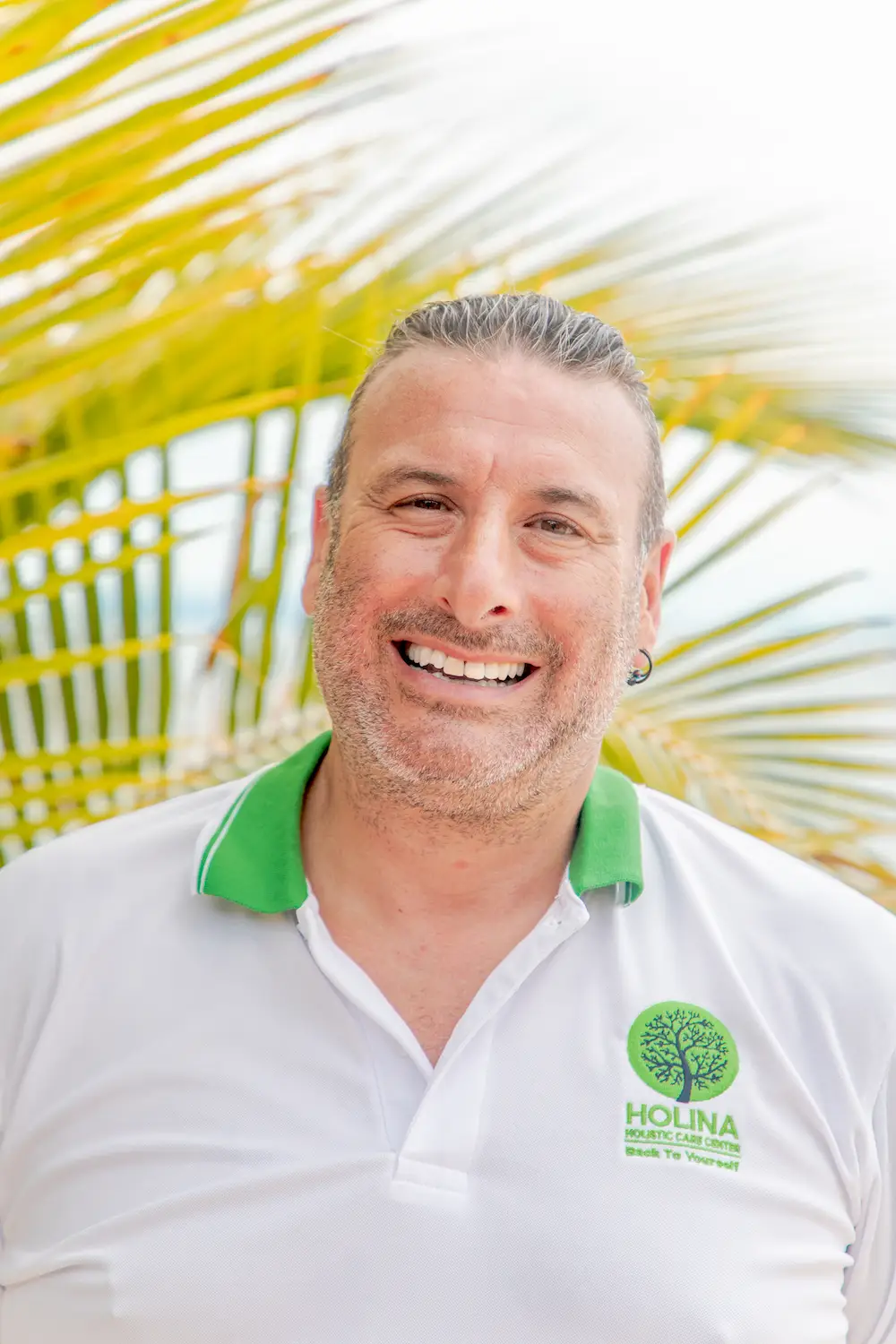

Clinically reviewed by Marc Rower, Lead Trauma Therapist, Holina Rehab. Review pending final sign-off.
Anyone who has lived with addiction and unresolved trauma knows how tightly the two are bound together. Trauma keeps the body’s stress response switched on, leaving the nervous system dysregulated, and many people turn to alcohol or drugs to quiet that constant sense of alarm. Research consistently shows that trauma is one of the most common drivers of substance use: around 60% of people with post-traumatic stress disorder also have a co-occurring alcohol or drug use disorder, and adverse childhood experiences sharply raise the risk of addiction in adulthood.
That is why, at Holina Rehab, trauma is not treated as a standalone wellness experience. It is addressed inside a structured, residential addiction-recovery programme, because treating the substance use without addressing the trauma underneath it rarely holds. In this article we look at how trauma-informed addiction treatment helps re-regulate the nervous system and support lasting recovery. For more information on Holina Rehab’s programmes, contact us on +66 82 113 0657 (international) or +66 61 936 8047 (Thai).
The Link Between Trauma and Addiction
Understanding recovery starts with understanding why trauma and addiction so often travel together. According to the self-medication model, which has the strongest empirical support among the explanations for this overlap, people use substances to relieve distressing trauma-related symptoms. Each use temporarily dulls the distress, which reinforces the behaviour, and over time that pattern can develop into a substance use disorder. The US Centers for Disease Control and Prevention reports that adverse childhood experiences are strongly associated with substance misuse later in life, and people in treatment for addiction show higher rates of these experiences than the general population.
This is the clinical foundation of Holina’s Dual Treatment programme, which addresses addiction and its underlying psychological drivers, including trauma, at the same time rather than one after the other.
Understanding Nervous System Dysregulation
Your nervous system is built to respond to danger through the fight-or-flight response, allowing you to react quickly to threats. When you experience trauma, whether a single event or a series of stressful experiences, the nervous system can become stuck in that heightened state of alertness. You can read more about this in our guide to how to heal a dysregulated nervous system.
When your nervous system is dysregulated you might experience chronic anxiety, insomnia, difficulty concentrating and a persistent sense of unease. You may feel constantly on edge, unable to relax and perpetually exhausted. For many people, substances become a way to force that switched-on system to quiet down, which is one of the reasons addiction can take hold. Learning to recognise and calm this dysregulation is a core part of trauma-informed recovery, and it is explored in depth on our Trauma, Body and the Nervous System page.
Why Treating the Addiction Alone Is Rarely Enough

Talk therapy is a valuable part of addiction treatment, helping you process experiences and understand them on a cognitive level. On its own, though, it often does not resolve the physical and emotional stress responses that trauma leaves behind. This is why some people can stop using for a time yet still feel the same underlying anxiety and reactivity that led them to substances in the first place, which leaves them vulnerable to relapse.
The evidence supports treating both together. In a study funded by the National Institute on Drug Abuse, people who received trauma-focused therapy alongside addiction treatment saw greater improvement in their symptoms than those who received addiction treatment alone. This is the principle behind trauma-informed care, which the Substance Abuse and Mental Health Services Administration defines through core values of safety, trust, collaboration and empowerment. At Holina we combine evidence-based addiction treatment with trauma treatment so that both are addressed within one programme.
How Residential Treatment Supports Trauma Work
One reason a residential setting helps is that it lets you step away from the triggers, relationships and routines that surround daily substance use, and focus fully on recovery. Trauma work asks a great deal of a person, and it is far safer to do that work in a supervised environment with clinical support close at hand than to attempt it alone.
At Holina you are surrounded by professionals trained in trauma-informed care who understand how trauma and nervous-system dysregulation interact with addiction. Through psychotherapy, body-based approaches and structured group work, the residential setting gives you space to address the trauma driving the substance use, with support available around the clock rather than only during a weekly appointment.
Body-Based and Somatic Approaches Within Treatment
Trauma affects both the mind and the body’s stress responses, so recovery often benefits from approaches that involve the body as well as talk therapy. Body-based practices such as yoga, breathwork and mindfulness aim to help you notice your body’s signals and bring a dysregulated nervous system back toward balance. Focusing on slow, mindful movement and the breath can engage the parasympathetic, or rest-and-digest, response that counteracts fight-or-flight.
It is worth being clear about the evidence: these are supportive, complementary practices used alongside core addiction treatment, not replacements for it. The National Center for Complementary and Integrative Health and systematic reviews of yoga for substance use describe the findings as promising but still preliminary, with larger studies needed. At Holina these practices form one part of an individualised treatment plan, not a standalone offering.
The Role of a Safe, Structured Environment

Holina Rehab is located in a quiet coastal setting on Koh Phangan, Thailand. A calm, low-stimulation environment can make it easier to settle a dysregulated nervous system and engage with demanding trauma work, but the setting supports the treatment rather than being the treatment itself. What matters most is the structure: consistent routine, clear clinical boundaries and a sense of physical and emotional safety, which SAMHSA identifies as a foundation of trauma-informed care.
Feeling safe is not a small thing for someone recovering from trauma and addiction. A predictable, supportive environment allows the body to begin to trust that the immediate danger has passed, which is often when deeper recovery work becomes possible.
Community and Peer Support in Recovery
Recovery from trauma and addiction can feel isolating, but it does not have to be done alone. Being among others on a similar path can be validating in a way that is hard to find elsewhere, and it reminds you that recovery is possible.
Group sessions, shared meals and open discussion create opportunities to connect with people who understand what you are working through. For those whose trauma has affected their ability to trust, these supportive interactions offer a chance to rebuild a sense of safety in relationships and strengthen a social support network that continues to matter long after treatment ends.
Building Recovery That Lasts
The benefits of trauma-informed addiction treatment are meant to extend well beyond the time spent in a programme. Many people leave with practical tools they continue to use, such as a regular mindfulness or movement practice, the ability to recognise early signs of nervous-system dysregulation, and clearer strategies for managing the triggers that once led to substance use.
Addressing the trauma underneath the addiction, rather than only the substance use itself, is what gives recovery a stronger foundation. It supports the resilience and emotional stability that help people stay well after they return home, and it is why an integrated, dual approach is central to how Holina works.
Is Trauma-Informed Addiction Treatment Right for You?
If you have struggled with substance use and suspect that unresolved trauma sits underneath it, addressing both together may be the step that finally makes recovery hold. Holina’s approach is designed for exactly this, treating addiction and the trauma driving it within one structured, residential programme.
Recovery is a process, and seeking support is a strength rather than a weakness. If you are ready to take the next step, we are here to help. For more information on Holina Rehab’s programmes, contact us on +66 82 113 0657 (international) or +66 61 936 8047 (Thai).
“I was on the verge of losing my life due to my drug addiction. This is no exaggeration, I came to Holina a broken man, had nowhere else to turn to… from the first day I arrived I had nothing but full professional support around me. I could never thank Holina enough for the help I have received and cannot wait to return to see them again a clean sober man… if you’re also looking for help with addiction then please don’t wait any longer to contact them, it will save your life like it has mine.”
— Benjamin Field, verified Google review, 20 March 2026
References
- US Department of Veterans Affairs, National Center for PTSD, Treatment of comorbid PTSD and substance use disorders. ptsd.va.gov
- National Institute on Drug Abuse (NIDA), Trauma and Stress. nida.nih.gov
- Centers for Disease Control and Prevention, About Adverse Childhood Experiences. cdc.gov
- Substance Abuse and Mental Health Services Administration (SAMHSA), Trauma-Informed Approaches and Programs. samhsa.gov
- National Center for Complementary and Integrative Health (NCCIH), Psychological and Physical Approaches for Substance Use Disorders. nccih.nih.gov
Ready to Start Your Recovery Journey?
Our clinical team is available to answer your questions and help you find the right programme for your needs.
Speak with Our Team →