
There is something quietly transformative about waking before dawn to the sound of monks chanting, watching mist lift off temple rooftops while the rest of the world still sleeps. For people arriving in Thailand carrying the weight of addiction, trauma, or years of unprocessed pain, this kind of stillness is not simply beautiful — it is profoundly therapeutic. Monastery rehab Thailand experiences are drawing increasing attention from addiction specialists and researchers alike, and for good reason.
Thailand’s Buddhist culture is not a backdrop. It is an active, living framework for understanding suffering, impermanence, and the possibility of genuine change. Unlike Western recovery models that often treat addiction as an isolated medical problem, Buddhist philosophy approaches human struggle with a depth and compassion that naturally complements evidence-based clinical treatment. This is precisely why Thailand spiritual rehab immersion programmes have become some of the most sought-after recovery pathways for discerning individuals who have tried conventional routes and found something missing.
At Holina Rehab on Koh Phangan, we have witnessed firsthand how Buddhist cultural immersion addiction treatment creates a quality of inner stillness that accelerates healing in ways that clinical intervention alone cannot always achieve. When physician-supervised, personalised treatment is woven together with mindfulness traditions that have been refined over 2,500 years, something remarkable happens. The nervous system begins to settle. Shame loosens its grip. A person starts to reconnect with themselves — perhaps for the first time in years.
This is the quiet power of Koh Phangan monastery healing, and in this post, we explore exactly why it works.
How Buddhist Principles Create a Therapeutic Container for Deep Recovery
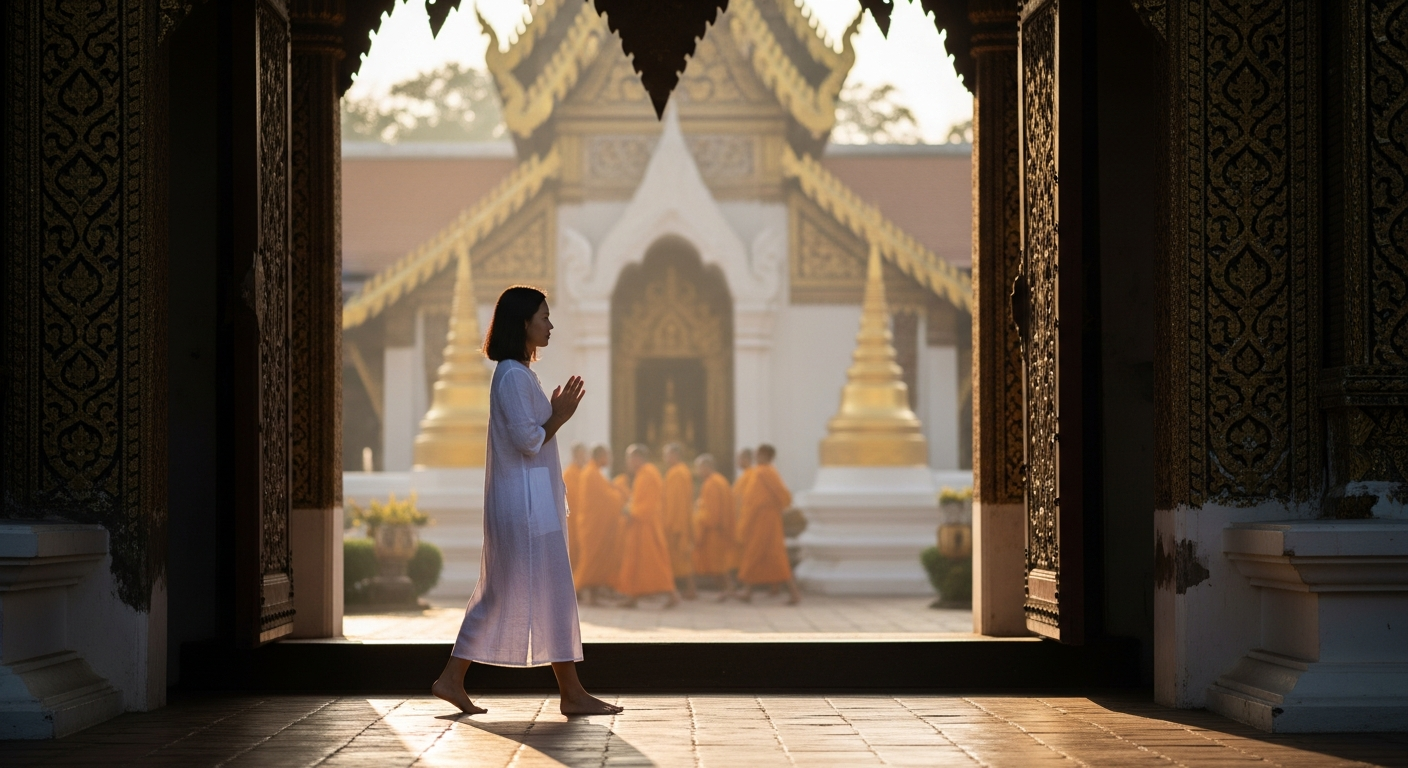
There is something quietly profound about beginning each morning in a country where temple bells mark the hours and saffron-robed monks walk barefoot through mist-covered streets. Thailand’s Buddhist culture is not a backdrop to healing — for many people in residential treatment, it becomes one of the most unexpected and powerful catalysts in their entire recovery journey. Understanding why requires looking beyond the aesthetics and into the specific psychological and neurological mechanisms that contemplative Buddhist practices activate.
At the clinical core of this conversation is the concept of present-moment awareness. The Theravada Buddhist tradition, which forms the living cultural fabric of Thailand, has practised structured mindfulness for over 2,500 years. What neuroscience now confirms is that these ancient techniques — breath observation, body scanning, compassion cultivation — produce measurable changes in the prefrontal cortex and amygdala, the very brain regions most disrupted by long-term substance use and unresolved trauma. A 2019 meta-analysis published in Substance Abuse and Rehabilitation found that mindfulness-based interventions significantly reduced craving intensity and improved emotional regulation in adults with substance use disorder. Buddhist cultural immersion in Thailand offers this not as a scheduled session, but as an ambient, continuous experience woven through daily life.
Several specific elements of Thai Buddhist culture translate directly into therapeutic benefit:
- Impermanence (Anicca): The Buddhist teaching that all states — including craving, shame, and pain — are transient aligns precisely with cognitive behavioural frameworks that help clients tolerate distress without acting on it. Understanding impermanence at a felt, cultural level accelerates this process in ways that a whiteboard explanation alone rarely achieves.
- Non-attachment: Many people entering treatment carry catastrophic, fused thinking about their identity and their addiction. Buddhist philosophy gently challenges the rigidity of self-concept, creating psychological flexibility — a core outcome measure in Acceptance and Commitment Therapy (ACT).
- Metta (Loving-Kindness) practice: Structured compassion meditation has demonstrated efficacy in reducing self-criticism and shame, which clinical research consistently identifies as primary drivers of relapse.
- Community and Sangha: The Thai cultural emphasis on collective wellbeing and respectful community mirrors the peer-supported therapeutic community model, reinforcing accountability and belonging.
When a residential treatment programme is physically situated within this living culture — not simulating it, but genuinely embedded in it — clients receive a consistent, sensory-rich signal that an alternative way of experiencing oneself is not only possible, but is being lived by millions of people around them. That environmental reinforcement, operating alongside physician-supervised, evidence-based clinical care, creates a therapeutic container that is genuinely difficult to replicate in any other setting in the world.
How Buddhist Practices Translate Into Evidence-Based Therapeutic Tools
It would be easy to dismiss Buddhist cultural immersion as simply atmospheric — a pleasant backdrop to conventional treatment. The clinical reality is far more substantive. Decades of neuroscientific and psychological research have established that core Buddhist practices, particularly mindfulness meditation, compassionate awareness, and present-moment attention, produce measurable changes in brain structure, stress hormone regulation, and emotional reactivity. When these practices are woven into a structured residential treatment programme, they become precision therapeutic instruments rather than decorative additions.
At the heart of this approach is mindfulness-based intervention, which has accumulated a robust body of evidence supporting its effectiveness in reducing relapse rates, managing withdrawal-related anxiety, and interrupting the automatic craving responses that drive addictive behaviour. Thailand’s living Buddhist culture offers something that a Western clinic attempting to replicate these techniques simply cannot: authenticity. When clients practise sitting meditation in a centuries-old temple, walk in silence through monastery grounds at dawn, or observe the quiet discipline of resident monks, the experience carries an embodied weight that deepens engagement and accelerates therapeutic benefit.
Several specific practices form the clinical backbone of monastery-informed programming at residential facilities on Koh Phangan:
- Vipassana-style insight meditation: Systematic observation of thought patterns and physical sensations trains clients to witness cravings without acting upon them — a skill directly mapped to the urge-surfing techniques used in third-wave cognitive behavioural therapies such as Acceptance and Commitment Therapy (ACT).
- Metta (loving-kindness) practice: Structured compassion cultivation has been shown in peer-reviewed research to reduce shame, a primary driver of relapse, and to improve emotional self-regulation in individuals with trauma histories.
- Noble Silence periods: Scheduled periods of silence reduce cognitive overload, support nervous system downregulation, and create space for the kind of deep self-inquiry that accelerates progress in parallel psychotherapy sessions.
- Impermanence contemplation (Anicca): Therapeutic reflection on the Buddhist concept that all states — including suffering, craving, and emotional pain — are transient powerfully reinforces the neurological reality of neuroplasticity and recovery.
Physician-supervised treatment teams at premium residential programmes integrate these culturally rooted practices alongside psychiatric assessment, trauma-informed psychotherapy, and personalised relapse-prevention planning. The result is a genuinely holistic model in which the spiritual dimension does not exist separately from clinical care — it is woven into it, session by session, day by day, creating conditions in which lasting change becomes not only possible but structurally supported.
How Holina Rehab Weaves Buddhist-Informed Practice Into Personalised Clinical Treatment
At Holina Rehab on Koh Phangan, the influence of Thailand’s Buddhist culture is not a decorative backdrop — it is woven deliberately into a structured, physician-supervised treatment programme that meets the highest standards of evidence-based care. The integration is always intentional, always clinically guided, and always tailored to where each individual is in their recovery journey.
From the moment a resident arrives, the natural rhythm of the island itself begins its quiet work. The unhurried pace, the proximity to the Gulf of Thailand, the gentle sounds of temple bells carried on the breeze — these environmental factors are not incidental. Research in environmental psychology consistently shows that restorative natural settings reduce cortisol levels, lower sympathetic nervous system arousal, and create the neurological conditions in which meaningful therapeutic work becomes possible. Thailand’s Buddhist culture amplifies this through a shared community ethos of gentleness, non-judgement, and present-moment awareness that permeates daily life beyond the clinic walls.
Within Holina’s personalised treatment framework, Buddhist-informed practices are offered as evidence-aligned therapeutic tools, including:
- Mindfulness-Based Cognitive Therapy (MBCT) — drawing directly from Vipassana meditation traditions, MBCT has robust clinical evidence for reducing relapse rates in depression and substance use disorders by interrupting automatic thought patterns before they escalate into crisis
- Loving-kindness (Metta) meditation — used in structured sessions to rebuild the capacity for self-compassion, which trauma and addiction systematically erode, supporting the emotional repair that underpins sustained recovery
- Contemplative walking practices — grounded in the Thai forest monastery tradition, these guided sessions develop interoceptive awareness and help residents reconnect with bodily sensation in a safe, regulated way, particularly valuable in trauma processing
- Community dining and shared ritual — mirroring the sangha, or community of practitioners, Holina’s communal approach to mealtimes and group activities rebuilds the social attunement that isolation and substance use have often damaged
Crucially, every resident’s engagement with these practices is shaped by their clinical team. For some, silent meditation will be introduced gradually and only after stabilisation. For others, it becomes a cornerstone of daily structure from early in their stay. This is the distinction between genuine integration and superficial wellness tourism — the practices serve the person, not the programme’s aesthetic.
Families choosing a residential rehabilitation centre for someone they love deserve to know that cultural immersion, when handled with clinical rigour and deep respect, offers something that a conventional hospital setting rarely can: a reason to stay present, a philosophy that makes suffering meaningful, and a community that holds healing as its highest purpose. At Holina, Thailand’s Buddhist heritage is not an add-on. It is part of why people heal here.
The intersection of Buddhist philosophy and modern clinical practice creates something that neither discipline could achieve alone. When evidence-based therapies such as Cognitive Behavioural Therapy, trauma-informed care, and physician-supervised medical management are woven together with mindfulness meditation, impermanence teachings, and compassionate community living, the result is a profoundly layered healing experience. Thailand’s cultural landscape does not simply provide a beautiful backdrop — it actively participates in the recovery process, reshaping how individuals relate to suffering, craving, shame, and self-worth at a neurological and psychological level.
Research consistently demonstrates that sustained mindfulness practice reduces activity in the default mode network — the brain system most associated with rumination, compulsive thinking, and addictive craving cycles. When this is combined with structured group therapy, individualised treatment planning, and genuine sanctuary from everyday triggers, the conditions for meaningful, lasting change become genuinely attainable.
At Holina Rehab in Koh Phangan, Thailand, these principles are not aspirational — they are embedded into every dimension of personalised residential care. Within a luxury setting that honours both clinical rigour and holistic restoration, our multidisciplinary team supports each person with the depth and dignity they deserve.
If you or someone you love is ready to explore a more meaningful path to recovery, we warmly invite you to reach out to the Holina Rehab team today.
Ready to Start Your Recovery Journey?
Our clinical team is available to answer your questions and help you find the right programme for your needs.
Speak with Our Team →