
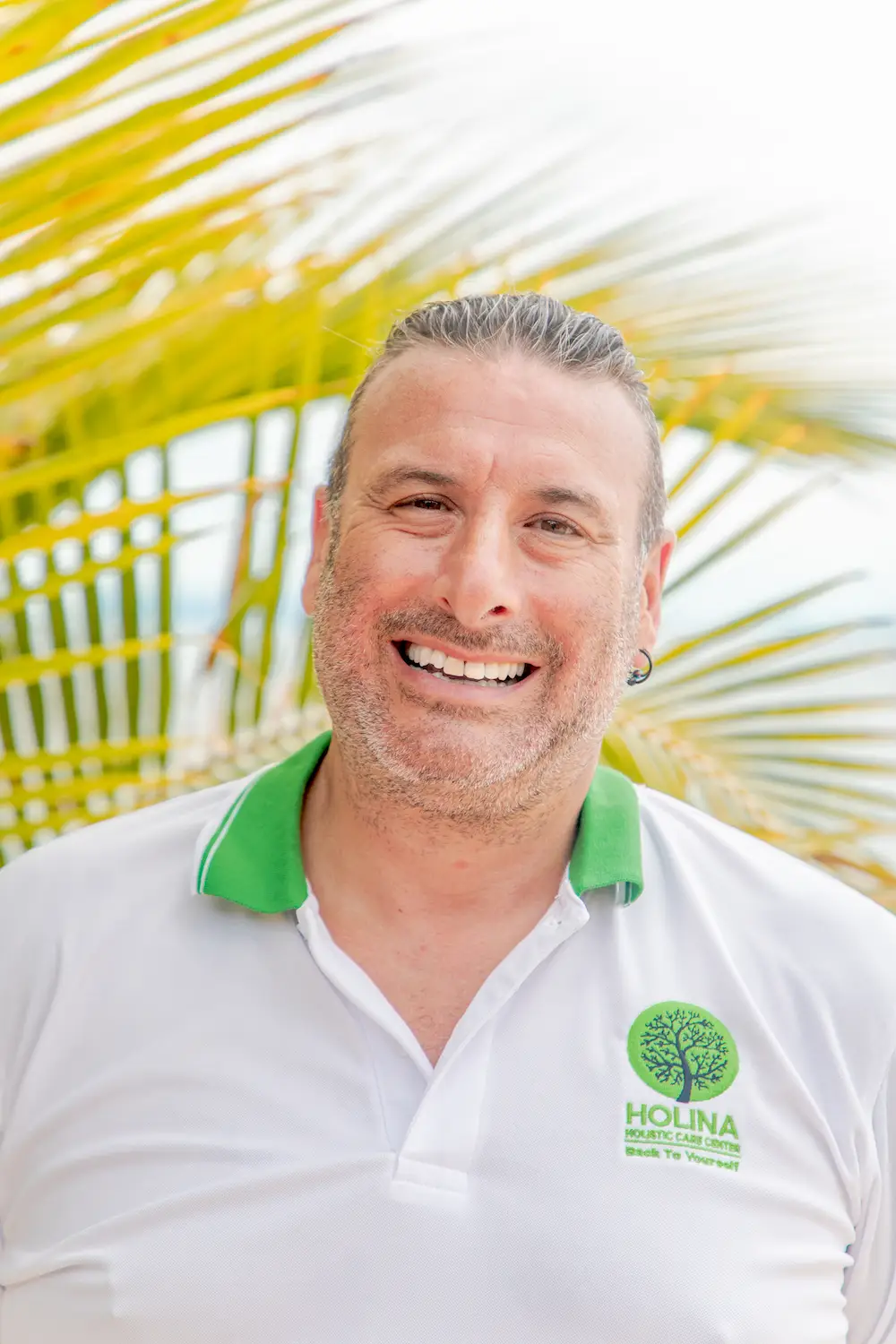

Reviewed by Ian Young — Managing Director · Last reviewed 7 July 2026
Holina Rehab is a licensed residential addiction treatment centre in Koh Phangan, Thailand that operates on a private-pay basis — we do not bill insurance companies directly, and there are no third-party approvals or delays before treatment begins. Whether your own insurance can reimburse you afterward depends entirely on your individual policy, but in most cases — for UK, Canadian and Australian residents — state-funded schemes such as the NHS, provincial health plans and Medicare do not cover residential addiction treatment at an overseas facility. Some private and extended-benefits insurance plans may reimburse a portion of costs after you have paid, which is genuinely worth investigating before ruling out treatment in Thailand on financial grounds. See our full guide to financing treatment at Holina for exact pricing and how reimbursement claims work.
This is one of the most common questions families and individuals ask when they first begin researching private addiction treatment abroad, and it deserves a clear, honest answer rather than vague reassurance. The reality is that navigating insurance for overseas rehab can feel complicated — policies vary enormously between providers, and the language around “mental health,” “substance use disorder” and “psychiatric inpatient treatment” means that what qualifies for reimbursement in one plan may be excluded in another. Understanding where you stand financially, and understanding that Holina itself is a private-pay facility rather than an insurance-billing one, is an important part of making a considered, confident decision about your care.
For UK residents, the NHS does not fund residential addiction treatment outside the United Kingdom, and the S2 referral scheme — which allows for some elective hospital treatment in EU and EEA countries, Switzerland, Norway, Iceland and Liechtenstein — applies to public healthcare providers only, excludes private treatment, and does not extend to Thailand in any case. However, if you hold a private health insurance policy with a provider such as BUPA or AXA Health, there is a reasonable chance that at least some level of mental health or addiction treatment benefit exists within your plan. The specifics matter enormously: coverage limits, pre-authorisation requirements, whether the overseas facility meets your insurer’s accreditation criteria, and whether addiction is categorised as a mental health condition under your particular policy will all influence what, if anything, is reimbursable.
Canadian residents face a similar landscape. Provincial health plans provide no coverage for treatment outside Canada — OHIP’s out-of-country coverage, for example, is restricted to services that are medically necessary, acute, unexpected and delivered at a licensed hospital, which excludes planned, elective residential rehabilitation abroad. British Columbia’s MSP similarly caps out-of-country coverage at emergency care only, at a maximum of CAD $75 per day, and explicitly does not cover community-based mental health, alcohol and drug, or rehabilitation services outside the province. Some employer-sponsored extended benefits plans include mental health or out-of-country provisions that may apply beyond this, so it is worth reviewing your specific plan documents.
In Australia, Medicare does not cover overseas residential rehab, as confirmed by Victoria’s Better Health Channel, which explains that government-funded addiction treatment in Australia is delivered through a separate public and non-government system, while private treatment — whether in Australia or overseas — is funded directly by the patient or through private health insurance. Certain international or premium hospital cover policies, including some offered by Bupa Australia and NIB, may provide partial benefits depending on how treatment is coded and claimed. Whatever your country of residence, the single most important step you can take is to call your insurer directly, ask specifically about coverage for residential addiction treatment abroad, and request the response in writing.
Does Your Home Country’s Health Insurance Actually Cover Rehab Treatment Abroad?
For most patients travelling from the UK, Canada, or Australia, standard government health schemes will not cover the cost of residential addiction treatment at a private rehab centre in Thailand, and Holina Rehab does not bill any insurer directly on your behalf. However, certain private health insurance policies — depending on their tier and specific wording — may offer partial reimbursement to you for some elements of treatment after you have paid, making it genuinely worth investigating your policy before ruling anything out.
Understanding why this matters begins with recognising that international rehabilitation is a distinct category of healthcare. Residential addiction treatment combines medical stabilisation, evidence-based psychological therapies such as Cognitive Behavioural Therapy (CBT) and trauma-focused modalities, psychiatric assessment, and round-the-clock physician supervision, all within a structured therapeutic environment. This is not a holiday wellness retreat or an elective cosmetic procedure. It is a clinically rigorous intervention, and many insurance providers classify it accordingly, even when treatment takes place outside your home country.
For UK residents, the NHS does not fund overseas addiction rehabilitation. The S2 referral scheme, which allows access to some elective hospital treatments in EU and EEA countries, Switzerland, Norway, Iceland and Liechtenstein under NHS-funded arrangements, explicitly applies to public providers only and does not extend to Thailand, so this pathway is not available to patients seeking treatment here. That said, UK residents holding private health insurance through providers such as BUPA, AXA Health, or Aviva should review their policy documents carefully. Some premium international health plans include a mental health and substance use benefit that extends to treatment delivered abroad, provided the facility meets the insurer’s clinical standards and the admission is pre-authorised. Coverage is never guaranteed, and the degree of reimbursement, if any, will vary considerably between plans and policy tiers.
Canadian patients face a similar picture. Provincial and territorial health plans, including OHIP in Ontario and MSP in British Columbia, restrict out-of-country coverage to acute, unexpected medical emergencies, not planned residential treatment. Canadians who hold extended health benefits through their employer or through privately purchased group plans may find that their mental health and substance use provisions carry some international scope. It is essential to contact your benefits provider directly and ask specific questions about out-of-country mental health coverage and whether pre-authorisation is required before admission.
For Australian residents, Medicare does not extend to private residential rehab in Thailand under any current scheme. Some Australians holding international or comprehensive private health insurance — for example, through providers such as Bupa International or NIB’s international plans — may have relevant mental health benefits. However, domestic Australian private health insurance, as regulated under the Private Health Insurance Act, is generally structured around Australian-registered providers and hospitals, which means overseas facilities fall outside standard benefit calculations.
Across all three countries, the practical steps are the same: locate your policy’s mental health or substance use section, note any out-of-country treatment clauses, and call your insurer directly to ask whether a physician-supervised residential programme at an internationally recognised facility in Thailand would be eligible for even partial reimbursement to you after payment. Many patients are surprised to find that the answer is more nuanced, and sometimes more encouraging, than they initially expected — but it is never something Holina, or any private-pay facility, can guarantee on your behalf.
Draft quote — pending approval
“We made a deliberate choice to be private-pay. It means a family knows the exact cost before they arrive, instead of finding out mid-treatment that a claim has been reduced or delayed. We’ll always help with the paperwork if someone wants to try for reimbursement from their own insurer — but nobody’s care here is ever contingent on an insurer’s decision.”
— Ian Young, Managing Director, Holina Rehab
Why Does International Insurance Coverage Matter So Much When Choosing Rehab in Thailand?
Understanding your insurance position before committing to residential treatment abroad is not a bureaucratic formality; it is a decision that can meaningfully shape both your financial wellbeing and your ability to focus entirely on recovery. Because Holina is a private-pay facility, you pay for your programme directly and, if you intend to seek reimbursement, you claim it back from your own insurer afterward. For patients travelling from the UK, Canada, or Australia, the gap between what you assume your policy covers and what it actually reimburses can run into thousands of pounds, dollars, or more, making clarity at the outset an essential part of responsible treatment planning.
Addiction and trauma do not announce themselves at a convenient moment, and when the decision to seek help finally arrives, it often comes with urgency. The last thing a person, or their family, needs during that window of courage and readiness is to discover mid-treatment, or worse afterwards, that anticipated reimbursement will not materialise. Taking a few hours to review your policy documents and speak directly with your insurer before departure can protect you from a financial shock that could otherwise overshadow the progress you have worked so hard to achieve.
The picture varies considerably depending on where you live and what kind of cover you hold. For UK residents, the position is relatively clear, if disappointing on the surface. The NHS does not fund overseas rehabilitation, and the S2 scheme explicitly applies to public providers within the EU/EEA, Switzerland, Norway, Iceland and Liechtenstein only, which by definition excludes both private treatment and treatment in Thailand. This means that for most UK patients, any reimbursement must come from a private insurer such as BUPA UK or AXA Health. Private health policies in the UK differ significantly in whether they include mental health and addiction care, and those that do will often specify geographical limits or require pre-authorisation. Reviewing your schedule of benefits and speaking with your insurer’s international claims team before you travel is strongly recommended.
For Canadian patients, provincial health insurance plans do not extend to overseas residential addiction treatment. However, many Canadians hold supplementary extended health benefits through an employer or professional association, and a smaller number hold international health insurance plans. Some of these extended benefit plans do include a mental health or out-of-country emergency component that may be relevant, though the specifics vary enormously between providers and plan tiers. If you hold extended benefits, request the full policy wording from your HR department or broker and look specifically for sections relating to mental health, substance use disorder, and out-of-country coverage.
Australian residents face a similarly layered picture. Medicare does not cover treatment received overseas, and standard hospital cover under Australian private health insurance is generally restricted to facilities registered within Australia. That said, some internationally-focused policies, including certain plans offered by providers such as Bupa Australia or NIB, may include provisions for overseas treatment, particularly where an international travel health component is included. Coverage terms change regularly, and no two policies are identical, so any reimbursement should be verified directly with your insurer rather than assumed.
- UK patients: Check your private policy for mental health and addiction provisions, geographical scope, and whether pre-authorisation is required for overseas inpatient treatment.
- Canadian patients: Review extended health benefit plan documents for out-of-country mental health or substance use disorder coverage; contact your plan administrator directly.
- Australian patients: Confirm with your private insurer whether international treatment is included under your specific plan tier; do not rely on general product summaries alone.
- All patients: Request written confirmation of any expected reimbursement before beginning treatment, and keep all clinical records, invoices, and correspondence for your claims process.
The Holina Rehab admissions team works closely with prospective patients and their families to provide the detailed clinical documentation and itemised invoicing that insurers typically require for claims assessment. Whilst we cannot bill your insurer directly or guarantee any specific reimbursement outcome, as this depends entirely on your individual policy, we are experienced in supporting patients through this process so that the financial dimension remains as clear and manageable as possible.
What Should You Actually Expect When Claiming for International Rehab?
The honest answer is that claiming for residential addiction treatment abroad is rarely straightforward, and the gap between what your policy appears to promise and what it ultimately pays can be significant. Because Holina does not bill insurers directly, every claim is between you and your own insurance provider — understanding the practical realities before you travel, rather than after, is one of the most important steps you can take to protect both your finances and your focus on recovery.
For UK patients, it is worth being clear about a common misconception: the NHS S2 scheme, which allows for elective hospital treatment to be funded in certain EU/EEA countries, Switzerland, Norway, Iceland and Liechtenstein, does not extend to residential addiction rehabilitation and was never designed to. Similarly, whilst private insurers such as BUPA UK and AXA Health do include some mental health and addiction provisions within certain premium policies, coverage for overseas residential rehab is frequently subject to strict pre-authorisation requirements, limits on the number of covered days, and exclusions for conditions deemed pre-existing. If you hold a private health policy, contact your insurer directly before committing to a programme and ask specifically whether inpatient addiction treatment at an overseas residential facility is included, not just mental health treatment broadly.
Canadian patients face a similar picture. Provincial health plans do not fund treatment outside the country beyond narrowly defined emergency care — MSP, for instance, caps out-of-country reimbursement at CAD $75 per day for emergency hospital care only, with any excess the patient’s own responsibility. Those with employer-sponsored extended health benefits may find that some out-of-country mental health or substance use provisions exist within their plan. Coverage varies enormously between providers and plan tiers, and what is listed as a benefit on paper can look very different once a claim is submitted. Patients should request written confirmation from their benefits administrator, ideally citing the specific treatment type — physician-supervised residential rehabilitation — before departure.
Australian patients should note that Medicare does not cover treatment received outside Australia, regardless of medical necessity. Some international health insurance policies offered through providers such as Bupa International or NIB may include provisions for inpatient psychiatric or substance use care, but these policies are distinct from standard domestic Australian health cover and tend to be held by expatriates or frequent international travellers rather than the general population. If you are unsure which category your policy falls into, your insurer’s international division, not the standard domestic customer service line, is the correct point of contact.
Across all three countries, there are several practical steps that significantly improve the likelihood of a successful claim or reimbursement:
- Request pre-authorisation in writing before your admission date, referencing the specific treatment programme and facility details
- Ask your treating physician at home for a formal referral letter documenting clinical necessity
- Ensure the rehabilitation centre provides itemised medical invoices using internationally recognised diagnostic codes where possible
- Keep copies of all clinical correspondence, admission documents, and discharge summaries
- Submit claims promptly; many policies have strict windows for international treatment claims
At Holina Rehab, our admissions team is experienced in supporting international patients through this process. Whilst we are never able to guarantee what your insurer will ultimately approve, and we do not bill insurers directly, we can provide thorough clinical documentation and itemised billing to give your claim the strongest possible foundation. Many families find that even partial reimbursement makes a meaningful difference, and that the transparency of a fixed, published private-pay fee — see our full rehab pricing — removes the uncertainty of waiting on an insurer’s decision before treatment can begin.
How Do Patients from the UK, Australia and Canada Actually Access Insurance Coverage for Thailand Rehab?
Accessing any form of insurance reimbursement for residential rehab in Thailand requires proactive research, careful policy review, and direct communication with your insurer before you travel, not after. For patients from the UK, Australia and Canada, the pathways differ slightly by country, but the core principle is the same: reimbursement to you is possible in some cases, but it is never automatic, Holina does not bill your insurer on your behalf, and the responsibility for confirming eligibility sits firmly with you.
For UK patients, it is important to understand what public funding will and will not cover. The NHS does not fund overseas residential rehabilitation, and the S2 scheme, which allows UK residents to access elective hospital treatment in certain EU/EEA countries, Switzerland, Norway, Iceland and Liechtenstein under NHS funding arrangements, applies to public providers only and does not extend to Thailand in any case. If you hold a private health insurance policy through providers such as BUPA or AXA Health, however, there may be scope for partial reimbursement of treatment costs, particularly where your policy includes mental health or psychiatric cover. International or expatriate-level policies are considerably more likely to include this provision than standard domestic plans. Before making any travel arrangements, UK patients should request a written statement from their insurer confirming whether residential addiction treatment at an internationally accredited facility would fall within their policy’s covered benefits, what pre-authorisation steps are required, and whether Thailand is included within the policy’s geographic scope.
For Canadian patients, provincial health insurance plans, whether OHIP in Ontario, MSP in British Columbia, or equivalent programmes in other provinces, do not fund addiction treatment provided outside Canada beyond narrowly defined emergency care. Some Canadians, however, hold extended health benefits through employer group plans or private supplemental insurance, and a subset of these policies may include mental health or substance use treatment as a covered benefit. Whether that coverage extends internationally, and specifically to a residential facility in Southeast Asia, will depend entirely on the specific terms of your individual plan. Canadian patients are strongly advised to contact their benefits administrator or insurance provider directly and ask specific questions about international residential mental health and addiction treatment coverage before making any commitments.
For Australian patients, Medicare does not cover overseas medical or therapeutic treatment of any kind, and this includes residential addiction rehabilitation. That said, some Australians hold international private health insurance, through providers such as Bupa International or NIB, and certain policies within these product ranges may include provisions for mental health or psychiatric treatment abroad. As with UK and Canadian policies, the terms vary considerably between products, and no specific coverage should be assumed. Australian patients should review their Product Disclosure Statement carefully and speak directly with their insurer to clarify what documentation, pre-authorisation, and clinical criteria may apply.
Across all three countries, a few practical steps apply universally. Request all insurer communications in writing. Ask your treatment facility, such as Holina Rehab, for any clinical documentation, treatment summaries, or itemised invoices that your insurer may require for a reimbursement claim. Understand that Holina is private-pay: you pay upfront for treatment, and if partial reimbursement is available from your own insurer, you claim it back retrospectively. And wherever insurance does not apply, the all-inclusive, physician-supervised residential care provided at Holina, from USD $9,700 per four-week programme, often represents transparent, predictable value for self-funding patients compared with the uncertainty of insurer pre-authorisation processes in the UK, Australia or Canada.
What Are the Most Important Considerations Before Choosing Rehab in Thailand?
Choosing to seek residential addiction or trauma treatment abroad is one of the most significant decisions you or your family will make, and approaching it with both clarity and care will serve you far better than rushing towards the first available option. Understanding the financial, clinical, and personal factors involved, not just the insurance question, allows you to make a decision that genuinely supports long-term recovery rather than simply ticking a logistical box.
The insurance landscape for international rehab remains genuinely complex for patients from the UK, Canada, and Australia. As explored throughout this article, NHS funding does not extend to overseas residential rehab, Canadian provincial health plans do not cover international treatment beyond narrow emergency provisions, and Australian Medicare provides no reimbursement for private residential addiction programmes abroad. That said, private health insurance through providers such as BUPA or AXA (UK), extended employee benefits plans (Canada), or international policies through providers like NIB or Bupa Australia may offer partial reimbursement to you in some circumstances, but this varies enormously by policy, and we would never encourage anyone to assume coverage without speaking directly with their insurer. Holina does not bill any of these insurers directly on your behalf. Always request written confirmation of what is and is not covered before making any financial commitment.
Beyond insurance, consider the clinical quality of the programme itself. Evidence-based treatment, meaning therapies with a track record in published research, such as Cognitive Behavioural Therapy (CBT), Dialectical Behaviour Therapy (DBT), trauma-focused modalities like EMDR, and medically supervised withdrawal management, should sit at the heart of any programme you consider. Look for facilities staffed by qualified physicians, licensed therapists, and experienced addiction counsellors, and ask directly about the clinical credentials of the team who would be working with you.
Personalisation is another important consideration. Addiction and co-occurring trauma are deeply individual experiences; a programme that offers genuinely tailored treatment plans, rather than a one-size-fits-all schedule, is more likely to address the underlying drivers of your situation. Ask whether the facility conducts a thorough clinical assessment before admission, and whether your programme can be adapted as your needs evolve during your stay.
For families supporting a loved one through this process, the geographical distance of a Thailand-based rehab is worth addressing honestly. Reputable facilities will offer regular family communication, structured family therapy sessions, and clear aftercare planning that bridges your time in Thailand with your return home. Continuity of care, the handover to ongoing therapy, support groups, or outpatient treatment in your home country, is as important as the residential programme itself.
- Contact your insurer in writing before admission and request a detailed breakdown of what may be reimbursable to you
- Ask any facility for full details of their clinical team’s qualifications and therapeutic approach
- Ensure a comprehensive pre-admission assessment is conducted, not just an intake form
- Confirm that an individualised aftercare plan is included as a standard part of the programme
- Weigh the total cost of treatment against the long-term cost, financially, professionally, and personally, of untreated addiction or trauma
“I love this place! I come back every year for a refresh on their excellent sober living program.”
— RDB, Recovery.com, 5 Apr 2026 · ★★★★★
At Holina Rehab on Koh Phangan, we work with prospective patients and their families to answer every question honestly, including the difficult financial ones. We are a private-pay facility — we do not bill insurance companies directly — but our admissions team can provide documentation to support insurance reimbursement claims where applicable, and our clinical team is available to speak with you about whether our physician-supervised, holistic residential programme is the right fit for your circumstances. The decision to seek treatment is an act of courage; making it an informed one helps give you a strong foundation for what comes next.
How Do You Take the Next Step?
The most important step is simply starting the conversation. Coverage rules vary significantly between insurers, policy tiers, and individual circumstances, and the only way to know what applies to you is to ask. Before contacting your insurer, it helps to have a clear picture of the treatment you are considering: the clinical structure, the length of stay, and the medical supervision involved, along with our published programme pricing. Holina Rehab can provide you with a detailed treatment summary and physician-led programme documentation that you can submit directly to your insurer for pre-authorisation review.
Whether your policy reimburses part of your stay, all of it, or none of it, many families find that the quality of personalised, residential care at Holina, set within a genuinely restorative environment in Koh Phangan, represents a meaningful investment in long-term wellbeing. Reach out to the Holina admissions team today for a confidential conversation about your situation, your options, and how to move forward.
Frequently Asked Questions About Insurance Coverage for Rehab in Thailand
Does Holina Rehab bill my insurance company directly?
No. Holina Rehab is a private-pay facility: you pay for your programme directly, and there are no third-party approvals or delays before treatment begins. If your own insurance policy allows for reimbursement of overseas residential addiction treatment, we can provide itemised clinical documentation to support a claim you submit to your insurer after treatment. See our financing and insurance page for full details and current pricing.
Will the NHS pay for residential rehab in Thailand?
No. The NHS does not fund overseas addiction treatment, including residential rehab programmes in Thailand. The NHS S2 scheme, which can cover some elective hospital procedures in EU/EEA countries, Switzerland, Norway, Iceland and Liechtenstein, applies to public providers only and does not extend to private residential addiction rehab abroad. Individuals seeking treatment at an international facility like Holina Rehab do so on a self-pay or private insurance basis.
Can UK private health insurance such as BUPA or AXA cover treatment at a Thai rehab?
Some UK private health insurance policies do include a mental health or substance use treatment benefit that may partially reimburse you for overseas residential care after you have paid. Coverage depends entirely on your individual policy tier, the clinical criteria your insurer applies, and whether pre-authorisation is obtained before admission. You should contact your insurer directly and request a written pre-authorisation decision before travelling.
Does provincial health insurance in Canada cover rehab in Thailand?
OHIP in Ontario and MSP in British Columbia do not cover residential addiction treatment outside Canada; both restrict out-of-country benefits to acute, unexpected emergency care. However, some employer-sponsored extended health benefits plans include out-of-country mental health or substance use provisions. Reviewing your group benefits booklet and speaking with your plan administrator before admission is the recommended approach.
Does Medicare or private health insurance in Australia cover overseas rehab?
Medicare does not cover treatment received outside Australia, including residential rehab, as confirmed by Victoria’s Better Health Channel. Some international travel health policies or higher-tier private health products from providers such as Bupa or NIB may include overseas mental health or psychiatric treatment benefits, but addiction-specific residential care is frequently excluded or subject to strict conditions. Always confirm the scope of any overseas benefit in writing with your insurer.
What documentation does Holina Rehab provide to support an insurance claim?
Holina Rehab can provide a comprehensive clinical treatment summary, confirmation of physician-supervised care, programme structure details, and itemised cost documentation suitable for submission to your insurer. While Holina cannot guarantee reimbursement from any third-party insurer, and does not bill insurers directly, having thorough clinical documentation significantly strengthens a pre-authorisation or reimbursement request. The admissions team is available to assist you in preparing the necessary paperwork for your specific insurer.
Ready to Start Your Recovery Journey?
Our clinical team is available to answer your questions and help you find the right programme for your needs.
Speak with Our Team →