
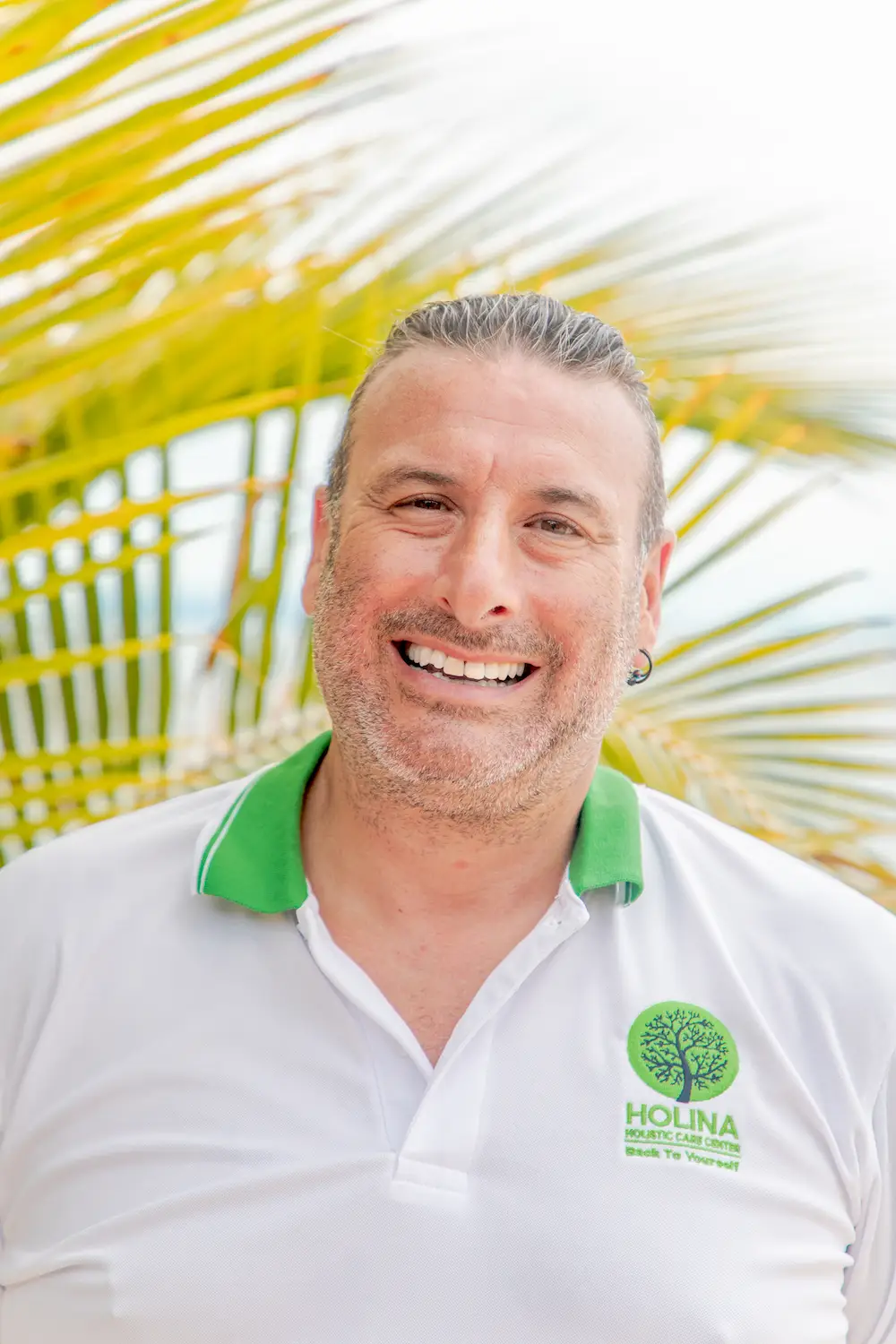
Reviewed by Ian Young — Managing Director · Last reviewed 7 July 2026
For Australians considering treatment, a residential programme at Holina Rehab in Koh Phangan, Thailand costs USD $9,700–$18,700 for a four-week stay and USD $24,700–$47,700 for a full 90-day (three-month) stay, all-inclusive across every accommodation tier (see current rehab prices) — roughly AUD $14,000–$27,000 and AUD $35,800–$69,000 at current exchange rates. By comparison, published pricing from two Australian private facilities shows a similarly wide range: AUD $14,500 for a 30-day stay at Melbourne’s Ray Hader Clinic (Essendon) up to AUD $42,000 for a 28-day stay at Southern Highlands Rehab in NSW. The fairer comparison is cost per day of treatment, not the headline total — and on that basis, a longer stay in Thailand is generally the more economical option, even though the full 90-day figure can exceed what the most affordable Australian 28-day programmes charge.
That cost-per-day comparison is quietly reshaping how Australian adults and families approach addiction treatment. For a long time, the assumption has been that physician-supervised residential care means staying close to home — paying a premium for proximity, navigating waitlists at public facilities, or stretching finances to afford the limited private options available in Sydney, Melbourne, Brisbane, or Perth. The picture in 2026 looks more nuanced. A growing number of Australians are travelling for rehab in Thailand — and specifically to destinations such as Koh Phangan — not because they are seeking the cheapest possible option, but because a longer, more clinically thorough programme is often accessible for a comparable or lower cost per day of care.
The cost comparison matters because it removes one of the most significant barriers to recovery: financial pressure. Medicare does not cover private residential rehabilitation in Australia — government-funded treatment is delivered through a separate, means-tested public and non-government system, while private facilities are paid for directly or through private health insurance, which frequently leaves a substantial gap. When a family is weighing a 28-day Australian programme costing tens of thousands of dollars against a 90-day programme in Thailand at a comparable or lower total cost, the financial arithmetic is not the only consideration, but it is an important one. Addiction medicine research broadly associates longer residential treatment episodes with better long-term outcomes, which is one reason extended 60- and 90-day programmes are increasingly considered by patients who can access them.
It is also worth understanding what the Thailand price actually includes. At Holina, the programme fee covers physician-supervised medical assessment and ongoing clinical oversight, individual and group psychotherapy, trauma-informed therapeutic modalities, nutritional support, accommodation, and a full schedule of holistic wellness activities — all within a residential environment designed to remove the patient from the triggers, stressors, and environmental cues that sustain addictive behaviour. Australians comparing private rehab costs in Australia against addiction treatment in Thailand are not automatically comparing a budget option against a premium one; in many cases, they are comparing two genuinely resourced models of care, where Thailand offers substantially more time in treatment for a comparable or lower cost per day.
Draft quote — pending approval
“Cost shouldn’t be the reason someone waits until things get worse before they get help. What we’re able to offer here — real clinical depth, physician oversight, and enough time for the work to actually take hold — is often simply out of reach at home for the same money. That gap is exactly why so many Australian families start looking overseas.”
— Ian Young, Managing Director, Holina Rehab
How Much Does Residential Rehab Actually Cost for Australians in 2026?
For Australians considering residential addiction treatment, published pricing varies enormously depending on where and how you seek care. Two real, published Australian examples illustrate the range: Melbourne’s Ray Hader Clinic lists a standard rate of AUD $14,500 for a 30-day residential stay at its Essendon facility, while Southern Highlands Rehab in NSW publishes an all-inclusive rate of AUD $1,500 per day with a 28-day minimum stay (AUD $42,000 for 28 days). A full 90-day, all-inclusive residential programme at Holina Rehab in Thailand costs USD $24,700–$47,700 depending on accommodation tier — roughly AUD $35,800–$69,000. Understanding what drives these figures, and what you actually receive per day of care, is the first step in making a decision that genuinely serves your recovery.
The cost of rehabilitation is not simply a reflection of quality. It is shaped by real estate values, staffing overheads, local regulatory requirements, and the economic environment of the country in which a facility operates. Australian private rehab facilities carry significant fixed costs — urban or coastal properties, clinical staff salaries, and a highly developed healthcare infrastructure that does not come cheaply to operate. Medicare does not cover private residential rehabilitation, which means every night in a private Australian facility comes directly out of your pocket or your private health insurance, often with considerable out-of-pocket gaps remaining even for those with higher-tier cover.
Thailand, by contrast, offers a markedly different cost structure. Labour costs, property, food, and operational expenses are a fraction of their Australian equivalents. On a cost-per-day basis, Holina’s Shared Room tier works out to roughly USD $274–$346 per day depending on stay length, compared with roughly AUD $483 per day at Ray Hader Clinic’s standard rate and AUD $1,500 per day at Southern Highlands Rehab. This is not about cutting corners on care; it reflects the underlying difference in operating costs between the two countries, and it means the same budget buys meaningfully more treatment days in Thailand.
- Ray Hader Clinic (Essendon, VIC), 30 days: AUD $14,500 published standard rate
- Southern Highlands Rehab (NSW), 28-day minimum: AUD $1,500/day — AUD $42,000 for 28 days
- Holina Rehab (Koh Phangan), 90 days: USD $24,700–$47,700 all-inclusive (~AUD $35,800–$69,000)
- Medicare coverage for private residential rehab: None
- Private health insurance gap payments: Significant and variable
For Australian adults and families who have recognised that meaningful, lasting recovery requires time, understanding this cost landscape is not about finding the cheapest option regardless of quality. It is about finding well-matched care for the longest clinically appropriate duration, at a price that does not place your family under permanent financial strain.
Why Are Australian Rehab Costs So High Compared to Thailand?
Australian private residential rehabilitation is among the more expensive options internationally, and Medicare does not fund private residential rehab at all — the gap between domestic and international private treatment cost, per day of care, has widened considerably in recent years, making Thailand not simply a budget alternative but a genuinely competitive option on a cost-per-day basis for many Australians who want longer, more immersive care.
To understand why this gap exists, it helps to look at what drives costs in the Australian private healthcare system. Real estate in major Australian cities is expensive, meaning residential facilities face significant overheads simply to maintain their premises. Add to this Australian clinical salaries, staffing ratios, regulatory compliance, insurance, and the operational demands of running a licensed medical facility, and the price escalates before a single treatment session has been delivered. These are not necessarily inflated margins; they reflect the real cost of operating in one of the more expensive healthcare environments globally.
Thailand, by contrast, offers a markedly different cost structure without a change in the clinical model. Labour costs, property, food, and operational expenses are a fraction of their Australian equivalents. A licensed residential facility on Koh Phangan — Holina Rehab holds Thai Ministry of Health Residential Rehab Licence #84-03-00294 — can provide physician-supervised, evidence-based treatment, including individual therapy, group programmes, nutritional support and holistic wellness, at a lower cost per day than comparable Australian private care. This is not about cutting corners; it reflects the fundamental difference in economic context between the two countries.
The practical implications for Australians vary by facility on both sides. Ray Hader Clinic’s published 30-day rate of AUD $14,500 works out to roughly AUD $483 per day; Southern Highlands Rehab’s published rate is a flat AUD $1,500 per day. Holina’s 90-day all-inclusive pricing of USD $24,700–$47,700 works out to roughly USD $274–$530 per day (approximately AUD $397–$768), depending on accommodation tier. On a per-day basis, Thailand’s entry-level accommodation sits below both Australian examples, while its premium villa tier still costs less per day than Southern Highlands Rehab’s rate and sits close to Ray Hader Clinic’s — while offering three months of treatment rather than one. This matters because clinical evidence broadly associates longer treatment episodes with better long-term outcomes for addiction and co-occurring trauma; a single month is rarely sufficient for lasting change to take root for every presentation.
For families supporting a loved one through this process, the financial dimension is never trivial. Some Australians exhaust savings or take on debt to fund a short domestic programme, only to find that a brief admission was not enough and the cycle of relapse and re-admission begins again. Weighed over time, a single, properly funded longer programme can compare favourably with the cumulative cost of repeated short admissions.
- Ray Hader Clinic (30 days): AUD $14,500 published rate, ~AUD $483/day
- Southern Highlands Rehab (28-day minimum): AUD $1,500/day, ~AUD $42,000 for 28 days
- Holina Rehab (90 days, all tiers): USD $24,700–$47,700, ~USD $274–$530/day
- Medicare coverage for private residential rehab in Australia: nil
- Hidden domestic costs: lost income, travel to facility, family support expenses, potential repeat admissions
When Australians weigh these numbers on a per-day, per-outcome basis rather than by headline total alone, Thailand often looks less like a compromise and more like a financially considered choice for extended care.
What Does a 90-Day Rehab Programme in Thailand Actually Look Like for Australian Patients?
For many Australian patients, a 90-day residential programme at Holina Rehab offers substantially more structured treatment time and a broader range of evidence-based therapies than a standard 28-day programme, often at a lower cost per day of care. In practical terms, you are exchanging a compressed, time-limited domestic programme for an unhurried, personalised residential experience.
From the moment an Australian patient arrives at Holina Rehab on Koh Phangan, the experience is shaped around individual clinical need rather than a fixed group schedule. Admission begins with a comprehensive physician-supervised primary care assessment covering physical health, mental health history, substance use patterns, and any co-occurring trauma — the kind of thorough intake process that can be rushed in busier domestic settings. This assessment directly informs a personalised treatment plan that evolves throughout the programme rather than remaining static from week one.
The first phase of treatment, typically the first two to three weeks, is medically supervised and focuses on physical stabilisation. Physician oversight is available around the clock, which is particularly important for patients managing complex withdrawal, chronic health conditions, or co-occurring psychiatric diagnoses. This is genuine residential clinical care delivered within a setting designed to feel calm and private rather than institutional.
Once stabilised, the therapeutic programme deepens. Evidence-based modalities including Cognitive Behavioural Therapy, Dialectical Behaviour Therapy, and trauma-focused approaches form the clinical backbone of treatment. Individual therapy sessions are scheduled multiple times per week — a meaningful contrast to some Australian private programmes, where higher patient-to-therapist ratios can limit one-to-one time. Group therapy, psychoeducation, and mindfulness-based practices support emotional regulation, relapse prevention, and sustainable coping strategies.
Holistic therapies complement the clinical programme rather than replace it. Yoga, meditation, breathwork, nutritional support, and physical wellness activities are integrated into the daily structure, each serving a documented supportive function for nervous system regulation and recovery. For Australian patients arriving exhausted or depleted, this restorative dimension of treatment is frequently described as valuable in its own right.
The practical logistics of travelling from Australia are more straightforward than many families initially assume. Direct and one-stop flights from Sydney, Melbourne, Brisbane, and Perth connect to Koh Samui, the nearest airport to Koh Phangan, with total travel times typically between nine and fourteen hours. Holina’s admissions coordinators manage airport transfers, arrival scheduling, and family communication.
- Physician-supervised admission and ongoing medical oversight throughout the programme
- Personalised treatment planning reviewed and adjusted as the patient progresses
- Multiple individual therapy sessions per week using evidence-based modalities
- Integrated holistic support including yoga, meditation, breathwork, and nutrition
- Dedicated admissions support for Australian patients managing international travel logistics
- Smaller patient-to-therapist ratios supporting therapeutic depth and continuity
How Do Patients From Australia, the UK and Canada Actually Access Rehab in Thailand?
Accessing residential rehabilitation in Thailand from Australia, the UK or Canada is a more straightforward process than most families expect. The practical steps — from initial enquiry through to arrival at a residential facility — can typically be completed within one to three weeks, even for clients who require medically supervised stabilisation prior to travel.
The first point of contact is almost always a free, confidential assessment conducted by telephone or video call. Admissions clinicians — often with backgrounds in addiction psychiatry, mental health nursing or social work — conduct thorough pre-admission assessments across different time zones. During this conversation, the clinical team will explore the nature and history of substance use or co-occurring mental health difficulties, any current medications, withdrawal risk, and broader treatment history. For Australian clients, this call frequently takes place in the early morning or evening to accommodate the time difference.
One of the most important practical questions for anyone considering travel for treatment concerns medical fitness to fly. For individuals with significant physiological dependence — particularly on alcohol, benzodiazepines or opioids — a medically supervised withdrawal or stabilisation period may be recommended before boarding a long-haul flight. This can sometimes be arranged through the client’s own GP or a local private hospital in Australia, or a Thailand-based programme can advise on appropriate interim management. Once medically stable, the journey from major Australian cities to Koh Phangan involves a connecting flight through Bangkok or another Southeast Asian hub, with total travel time typically ranging from nine to fourteen hours depending on routing.
From a financial and administrative perspective, Medicare does not provide rebates for private residential rehabilitation, whether that treatment is delivered domestically or overseas. Some Australian private health insurance policies include a benefit for psychiatric inpatient or mental health admissions, and it is worth contacting your insurer directly to clarify whether an international residential programme qualifies — though most clients self-fund regardless of cover level. When weighed on a cost-per-day basis against published Australian private rehab pricing (roughly AUD $483–$1,500 per day across the two facility examples above), a 90-day personalised programme in Thailand at roughly USD $274–$530 per day becomes a genuinely comparable, and in many cases more economical, option for extended care.
For UK and Canadian clients, the access pathway is functionally similar. NHS provision for residential rehabilitation in the UK is limited and subject to waiting periods, while Canadian provincial health systems similarly offer minimal funding for private residential care. Premium private residential rehabilitation in the UK or Canada commands fees broadly in a similar range to Australian pricing, which is part of why a physician-supervised residential programme in Thailand is increasingly considered a substantive alternative rather than simply a lower-cost option.
- Initial assessment: Conducted by video or telephone call, available across Australian, UK and Canadian time zones
- Pre-travel medical clearance: Arranged in collaboration with your GP or the admissions clinical team for clients with withdrawal risk
- Travel logistics: Direct or connecting flights from major Australian cities to Koh Phangan via Bangkok, typically nine to fourteen hours
- Financial planning: Holina is a private-pay facility; some private health insurers may provide partial benefit after treatment — always confirm directly with your insurer, and see our financing and insurance guidance
- Programme duration: A 90-day residential stay from USD $24,700 compares on a cost-per-day basis with 28–30 days of Australian private rehabilitation at AUD $14,500–$42,000
- Family involvement: Families in Australia, the UK or Canada can remain closely involved through scheduled family therapy sessions conducted via video call throughout the treatment programme
It is also worth noting that Holina provides detailed pre-arrival guidance covering what to bring, how to manage any ongoing medications, and how to communicate with family during the stay. This level of coordinated support, from first enquiry through to aftercare planning, helps ensure that geographical distance does not translate into a fragmented experience for either the client or their loved ones at home.
What Should Australian Families Consider Before Choosing Between Local and Thailand Rehab?
The decision between Australian private rehab and a residential programme in Thailand is rarely just about cost, though the financial case for Thailand’s cost-per-day is compelling. Understanding the full picture means weighing clinical quality, programme length, family proximity, and the therapeutic environment alongside the price tag.
The most important starting point is recognising what you are actually comparing. Published Australian private rehab examples range from AUD $14,500 (30 days, Ray Hader Clinic) to AUD $42,000 (28 days, Southern Highlands Rehab) — a relatively short intervention in either case. A 90-day residential programme at Holina Rehab in Koh Phangan, Thailand, costs USD $24,700–$47,700 (roughly AUD $35,800–$69,000) and provides three times the therapeutic time of a 28-day stay. Longer treatment duration is one of several factors research associates with sustained recovery outcomes, which is why the extended programme can represent better value on a per-day, per-outcome basis for some presentations of addiction and co-occurring trauma — though the right length of stay always depends on individual clinical circumstances.
For many Australian families, the question of distance carries emotional weight. It is natural to feel uncertain about a loved one being in another country during a vulnerable period. It is worth reframing this: physical separation from familiar environments, social triggers, and enabling relationships can be therapeutically helpful for some patients. A residential setting abroad creates a protected space away from the daily pressures and associations that can undermine recovery when treatment occurs close to home. Holina maintains consistent communication channels for families throughout treatment and offers structured family involvement as part of its personalised approach.
Clinical quality should never be assumed based on geography or price alone. When evaluating any residential programme — in Australia or Thailand — families should ask specific questions: Is treatment physician-supervised throughout? Are therapists qualified and experienced in trauma-informed care? Is the programme evidence-based, drawing on modalities such as Cognitive Behavioural Therapy, EMDR, and Dialectical Behaviour Therapy? Does the treatment plan adapt to the individual? At Holina, these standards run through the clinical team’s approach, from initial assessment through to aftercare planning.
It is also worth considering what happens after the programme ends. Aftercare support, relapse prevention planning, and ongoing therapeutic connection are essential components of any high-quality rehab experience. Ask whether the facility provides structured post-treatment support and whether they will coordinate with your healthcare providers back in Australia.
- Programme length: 90 days in Thailand versus 28–30 days at the two published Australian examples above
- Clinical standards: Verify physician supervision, qualified therapists, and evidence-based treatment modalities
- Therapeutic environment: A calm, removed setting can reduce exposure to triggers for some patients
- Family involvement: Quality programmes maintain transparent communication and structured family support
- Aftercare planning: Ensure robust post-treatment support and coordination with Australian healthcare providers
- Total value: Compare cost per day and programme length, not headline price alone
Ultimately, the most important investment is in a programme that gives the person in your life the time, clinical support, and structure they genuinely need. For some Australians, a 90-day residential programme in Thailand offers that at a cost per day that makes the decision more financially achievable.
“The quality of care, the environment, and the overall experience exceeded everything I found elsewhere in Thailand, especially considering the price.”
— jack wacko, Google, 24 Mar 2026 · ★★★★★
How Do You Take the Next Step Toward Treatment?
The most important move is simply starting the conversation, and it costs nothing. At Holina Rehab on Koh Phangan, Thailand, our admissions team works directly with Australian clients and their families to answer every question honestly, including whether our programme is the right fit for your situation. A 90-day residential programme with physician-supervised care, personalised treatment planning, and a full holistic wellness approach is available from USD $24,700 — a figure that, on a cost-per-day basis, compares favourably with a 28–30 day stay at several published Australian private facilities. If you are weighing your options, we invite you to reach out for a confidential, no-obligation conversation. Our team can walk you through programme structure, clinical approach, current pricing, travel logistics, and family involvement.
- Confidential enquiries welcome from anywhere in Australia
- Responses typically within 24 hours
- Family members are encouraged to reach out on behalf of a loved one
Frequently Asked Questions About Rehab in Thailand Costs From Australia
Is Thai rehab genuinely cheaper than Australian private rehab, or are there hidden costs?
It depends on which facilities you compare and on which basis. On a cost-per-day basis, Holina Rehab’s published pricing (USD $274–$530 per day depending on stay length and accommodation tier) is generally in line with or below published Australian examples such as Ray Hader Clinic (~AUD $483/day) and Southern Highlands Rehab (AUD $1,500/day). However, because a 90-day stay in Thailand has a much larger headline total than a short domestic admission, it can cost more in absolute dollars than the most affordable Australian short-stay options. Confirm exactly what is included — accommodation, meals, clinical care, and therapeutic programming — before comparing quotes, and factor in flights and travel insurance for the Thailand option.
Does Australian private health insurance cover rehab in Thailand?
Most Australian private health insurance policies do not reimburse treatment received overseas, including residential rehab in Thailand, and Holina operates on a private-pay basis rather than billing insurers directly. It is advisable to contact your insurer directly before making any decisions; some policies offer partial coverage for pre-admission assessments or aftercare services delivered in Australia upon your return, so it is worth reviewing your specific policy in detail.
How does the standard of clinical care at Thai rehab centres compare to Australia?
Residential rehab centres in Thailand such as Holina employ internationally trained physicians, psychiatrists, psychologists, and addiction specialists, with credentials recognised across Australia, the UK, and the United States. Evidence-based treatment models — including cognitive behavioural therapy, trauma-informed care, and Dual Treatment for co-occurring mental health conditions — are delivered to comparable clinical standards. The key difference is cost per day and duration; in Thailand, a more extended programme is often accessible for a comparable or lower daily rate.
What is the realistic total cost of a 90-day programme in Thailand for an Australian?
Budgeting realistically, Australians should account for return flights from major cities (approximately AUD $800–$1,800), travel insurance, and any pre-departure medical assessments, on top of the USD $24,700–$47,700 (~AUD $35,800–$69,000) programme fee itself, depending on accommodation tier. That is a substantial investment, and it should be weighed directly against published Australian alternatives rather than assumed to be automatically cheaper — the honest comparison is cost per day of care, not simply the total figure.
Is it safe to travel to Thailand for rehab, and how do families stay involved?
Thailand is a well-established destination for international medical and wellness care, and Koh Phangan in particular has a long history of welcoming health-focused visitors from Australia and beyond. Holina maintains regular, structured communication with families throughout a client’s stay, including progress updates and family therapy sessions conducted via video call. Many Australian clients find that the geographical separation, combined with consistent family contact, supports the recovery process by providing distance from familiar triggers.
Ready to Start Your Recovery Journey?
Our clinical team is available to answer your questions and help you find the right programme for your needs.
Speak with Our Team →