

If you have searched for faith-based alcohol treatment, you are likely looking for recovery that speaks to more than the body — a programme that makes room for meaning, purpose and, for many people, belief. This guide explains what faith-based treatment genuinely is, what the research does and does not show, and how Holina Rehab in Thailand approaches spirituality honestly: as a secular, clinically-led programme that welcomes people of every faith and of none, rather than a religious one.
What “Faith-Based Alcohol Treatment” Actually Means
In clinical terms, a genuinely faith-based programme integrates a specific religious framework into treatment. Common examples include Christian counselling models, Celebrate Recovery, faith-community aftercare, or explicitly religious readings of the 12 Steps and their “Higher Power.” These programmes are built around a shared belief system, and they can be a strong fit for people whose faith is central to their identity.
That is an important distinction to make up front: a formal faith-based track prescribes a religious framework. If that is what you want, dedicated faith-based centres exist and are worth exploring. Holina does something different, which we explain below — and we would rather be clear about that than blur the two.
What the Research Really Says
The evidence on spirituality and religion in recovery is broadly positive but genuinely mixed, and it is worth representing honestly. A 2025 review in Religion Compass found that spiritual and religious involvement is generally associated with better treatment engagement and relapse prevention, while noting the field still needs research grounded in how people actually understand spirituality themselves. A large analysis of longitudinal studies has likewise linked spiritual engagement with lower risk of ongoing alcohol and drug problems.
At the same time, research on alcohol use disorder has found that religious affiliation and early religious activity are not, on their own, reliably protective against developing a drinking problem. The honest reading: spirituality can be a meaningful support in recovery for many people, but it is not a cure, and it works alongside — never instead of — evidence-based clinical care.
Holina’s Approach: Spiritually Inclusive, Not Religious
At Holina Rehab on Koh Phangan, clients are never asked to follow any particular religion. Our programme is clinically led and spiritually inclusive: we make space for reflection, meaning and inner stillness without prescribing a belief system. In practice, that looks like:
- Daily meditation and silent reflection at our on-site meditation sala
- Weekly visits with a monk, and sound-bowl healing sessions
- Mindfulness, breathwork, yoga and qigong woven through the week
- Buddhist-informed therapies, including aqua tuning and art therapy, offered by practitioners on our team
- A 12-step social model integrated with trauma therapy, so the emotional roots of drinking are addressed alongside the behaviour
To be explicit: this is not a structured faith-based or religious programme. There is no prescribed doctrine and no requirement to believe anything in particular. What we offer is respect for each person’s own sense of spirituality — Buddhist, Christian, agnostic, atheist or undecided — inside a professional clinical setting.
How Spirituality Sits Alongside Clinical Care
Spiritual practices at Holina are complements to treatment, not substitutes for it. Meditation and breathwork help regulate anxiety and the nervous system; gratitude and reflection support a healthier mindset; group and 12-step work build accountability and connection. All of this runs alongside medically supervised detox where needed, individual therapy, and treatment for co-occurring conditions through our Dual Treatment programme.
Who This Approach Suits
Holina’s spiritually-inclusive model tends to suit people who:
- Want recovery that addresses mind, body and inner life, not only the drinking
- Are carrying shame, guilt or unresolved trauma
- Have found rigid or purely secular programmes did not fully fit them
- Value spiritual reflection but do not want a single religion imposed
If you specifically want a religiously-structured programme, a formal faith-based centre may serve you better — and that is an honest recommendation, not a limitation we are hiding.
A Word From Our Clinical Team
“Spirituality can be a real anchor in recovery, but it is not a substitute for clinical care, and it should never be forced. Our job is to hold space for each person’s own beliefs while doing the deeper work on the trauma that so often drives addiction.”
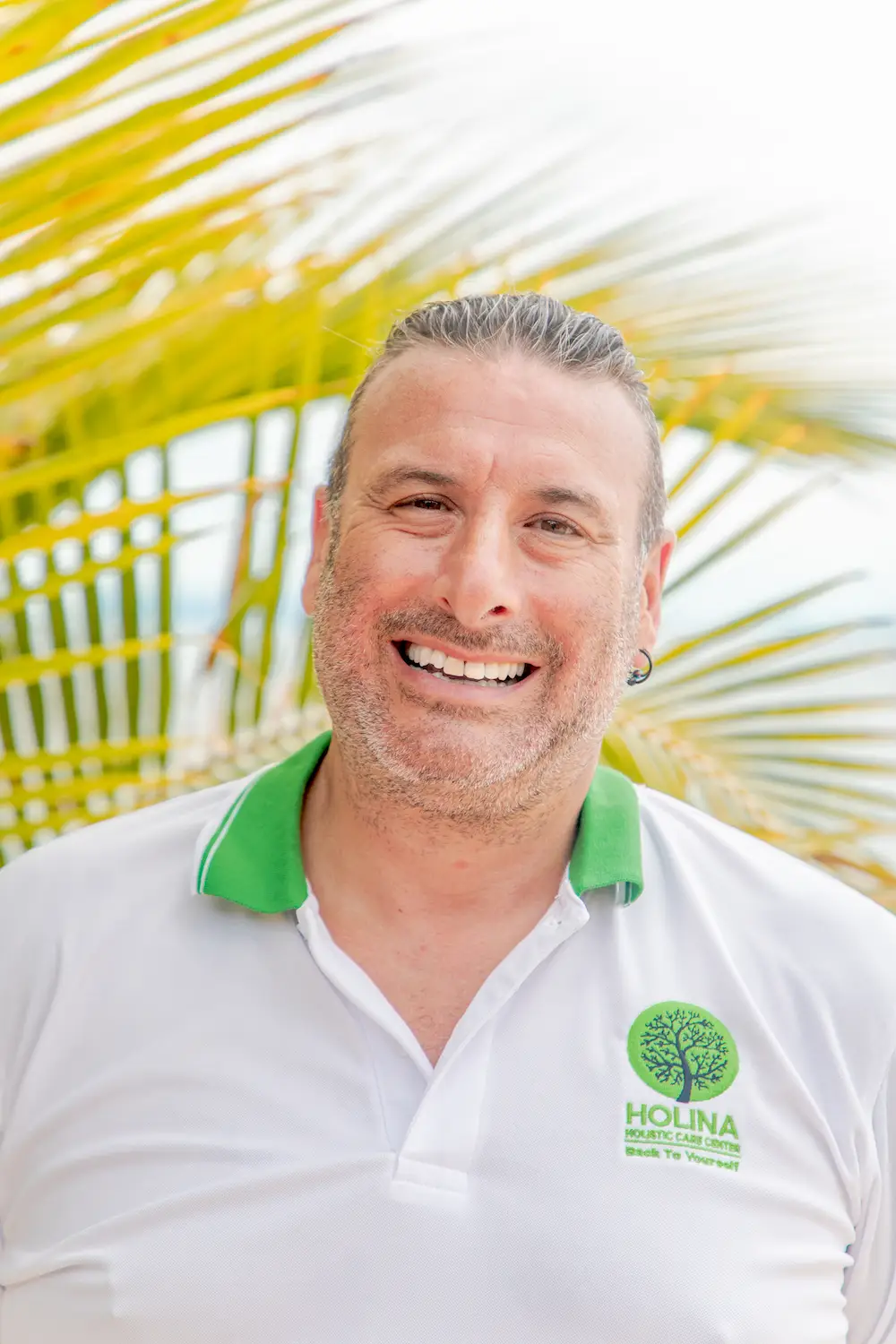
— Marc Rower, Trauma Therapist, Holina Rehab (draft comment, pending final sign-off)
What Our Clients Say
“I had an incredible experience here at Holina, really feel my time here was truly transformative. All staff from front of house to management were so caring understanding and supportive. The scenery, surroundings, rooms, group spaces meetings, restaurants, gym all 5*. The program they deliver and can also tailor to meet our needs was thorough, intense and very rewarding. I will carry so much from my stay on to the new chapter of my life. Thank you Holina.”
— Marlon Hulme, 3 October 2025
Frequently Asked Questions
Do I need to follow a religion to take part?
No. Holina’s programme is spiritually inclusive, not religious, and it is open to people of every belief system and none.
Is there any spiritual support on site?
Yes. Clients meet with a monk each week, and our team includes practitioners who bring Buddhist-informed mindfulness, meditation and body-based therapies. This is offered as an invitation, never a requirement.
Can spiritual practice be combined with clinical therapy?
Absolutely — that combination is the core of our holistic model. Spiritual practice sits alongside evidence-based clinical treatment, not in place of it.
Is 12-step work part of the programme?
Yes. A 12-step social model is available and integrated with trauma-focused therapy, but clients can also follow non-12-step pathways depending on what suits them.
Does Holina run a formal faith-based (religious) programme?
No. If you are looking for a programme built around a specific religion, a dedicated faith-based centre would be a better fit. Holina welcomes people of all faiths within a secular clinical setting.
Learn More
Explore how spirituality and recovery meet in practice in our related reading:
- Alcohol addiction treatment at Holina
- Buddhist mindfulness in addiction recovery — spiritual awakening without religion
- Alcohol and mindfulness: how Buddhist practices replace numbing behaviours
- Drug addiction treatment and our Dual Treatment programme
Recovery is not only physical — for many people, reconnecting with purpose and peace is part of building a life that lasts. To ask about programmes, current availability or rehab prices, get in touch with our team.
Ready to Start Your Recovery Journey?
Our clinical team is available to answer your questions and help you find the right programme for your needs.
Speak with Our Team →