
Benzodiazepine Detox in Thailand: A Safe, Gradual Taper
Benzodiazepine withdrawal is one of the few withdrawal syndromes that can be genuinely dangerous — stopping abruptly carries a real risk of seizures. At Holina Rehab in Koh Phangan, our physician-led team manages a slow, individually paced taper under 24-hour clinical supervision, then carries that stability directly into our full residential Dual Treatment programme.
- Licensed Facility
- Medical Detox Available
- Koh Phangan, Thailand
- 30–90 Day Programmes
Why Benzodiazepine Withdrawal Needs Medical Supervision
Benzodiazepines — including diazepam (Valium), lorazepam (Ativan), and alprazolam (Xanax) — work by enhancing GABA, the brain’s primary calming neurotransmitter. With regular use the brain adapts by down-regulating its own GABA activity, so when the medication is removed too quickly, the nervous system is left over-excited. This is what produces the hallmark symptoms of benzodiazepine withdrawal — rebound anxiety, insomnia, tremor, and, in more severe cases, seizures.
This is why benzodiazepine detox is never a “quick” process at Holina Rehab. Unlike detox from many other substances, current clinical guidance is unambiguous: anyone physically dependent on benzodiazepines should never stop abruptly, and dose reduction should proceed gradually, under medical supervision, at a pace the individual can tolerate.
Our on-site physician designs an individualised tapering protocol for every client, often cross-tapering from a short-acting benzodiazepine to a longer-acting equivalent first to smooth out the reduction. Detox is the first, most medically acute stage of care — it stabilises the body so that the anxiety, insomnia, or trauma that first led to benzodiazepine use can be properly treated in our residential Dual Treatment programme. Detox alone does not resolve those underlying conditions.
A 2025 joint clinical practice guideline from the American Society of Addiction Medicine (ASAM) and nine partner medical societies confirms that benzodiazepines should not be stopped abruptly in anyone likely to be physically dependent, and recommends dose reductions in the region of 5–10% every two to four weeks, paced to the individual (ASAM/AAAP Joint Clinical Practice Guideline, 2025).
The scale of dependency is significant: an analysis of national US survey data found that roughly 30.6 million adults (12.6%) reported past-year benzodiazepine use, of whom about 5.3 million (2.2%) reported misuse (NSDUH-based analysis, Psychiatric Services). The safety risk is equally real: the CDC WONDER data (via NIDA) recorded 10,870 US overdose deaths involving benzodiazepines in 2023, nearly 70% of which also involved illicitly manufactured fentanyl — exactly why unsupervised detox, and mixing sedatives with other substances, is so dangerous.

Holina Rehab — Koh Phangan, Thailand
Learn about our full Benzodiazepine Addiction Treatment programme →
What Does Benzodiazepine Withdrawal Feel Like?
Symptoms vary with dose, duration of use, and which benzodiazepine is involved, but the pattern below is common. This is exactly why detox needs to happen under medical supervision, not alone.
Rebound Anxiety & Panic
Anxiety that returns more intensely than before treatment began, often within days of dose reduction.
Insomnia & Sensory Hypersensitivity
Difficulty sleeping alongside heightened sensitivity to light, sound, and touch as the nervous system re-adjusts.
Tremor, Sweating & Rapid Heartbeat
Physical over-excitation of the nervous system as GABA activity rebalances during withdrawal.
Seizure Risk
The most serious risk of benzodiazepine withdrawal, and the single biggest reason abrupt cessation is unsafe without medical supervision.
Interdose Withdrawal
With short-acting benzodiazepines such as alprazolam, withdrawal symptoms can appear between doses, before the next one is due.
Cognitive Fog (“Benzo Brain”)
Memory difficulty, poor concentration, and a sense of unreality — distressing, but a sign the brain is recalibrating.
Gastrointestinal Distress
Nausea and digestive discomfort, reflecting GABA receptors present in the gut as well as the brain.
Protracted Symptoms
For some, low-level anxiety, sleep disruption, or sensory sensitivity can persist for weeks or months after the taper ends, gradually easing over time.
Depersonalisation & Derealisation
A disorienting sense of detachment from oneself or surroundings, which resolves as the nervous system stabilises.
How Does Benzodiazepine Detox Work at Holina Rehab?
Benzodiazepine detox at Holina Rehab is a slow, physician-led taper — never an abrupt stop — that stabilises the body before moving into the fuller therapeutic work of our residential Dual Treatment programme, overseen throughout by our clinical team.
Assessment & Stabilisation
Full clinical evaluation of dose, benzodiazepine type, and duration of use. An individualised taper plan is set from day one.
Cross-Taper
Short-acting benzodiazepines are often switched to a longer-acting equivalent to smooth out peaks and troughs before reduction begins.
Gradual Dose Reduction
The dose is lowered in small, symptom-led increments over weeks, never days, with 24-hour nursing supervision throughout.
Transition to Dual Treatment
Once medically stable, clients move into full residential care to address the anxiety, insomnia, or trauma underneath the dependency.
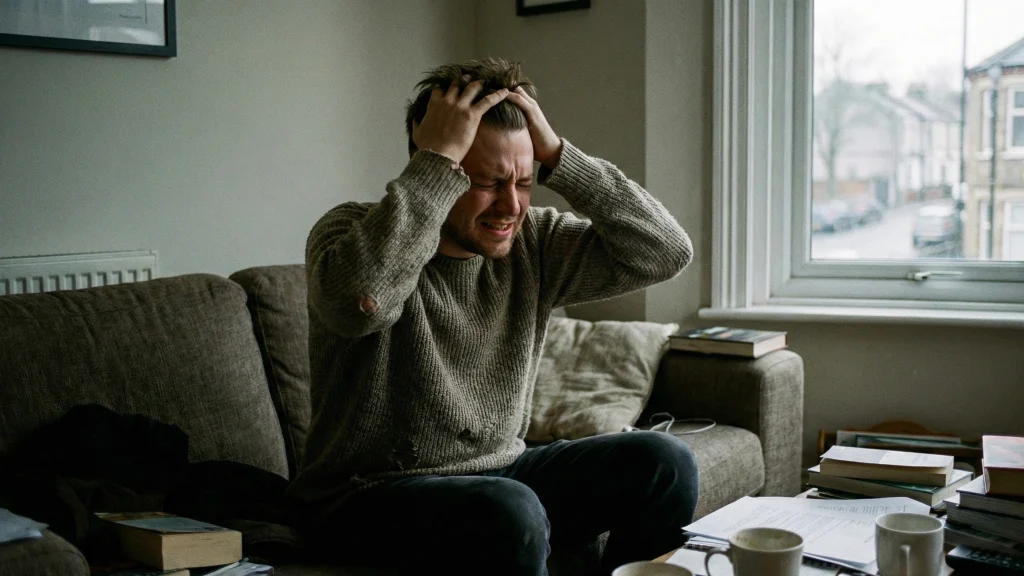
Slow. Individualised. Never Rushed.
-
Individualised Tapering Schedule
Our physician designs each taper around the client’s dose, drug, and history — informed by protocols in the widely used Ashton Manual and paced in line with current clinical guidance, rather than a fixed timetable.
-
24-Hour Medical Monitoring
Nursing staff track vitals and withdrawal severity throughout using validated clinical tools such as the CIWA-B scale, adjusting the pace of the taper if symptoms escalate.
-
Non-Addictive Adjunct Support
Where clinically appropriate, non-addictive medications such as beta-blockers can ease tremor and rapid heartbeat, alongside non-narcotic support for sleep — without replacing one dependency with another.
A Different Kind of Detox
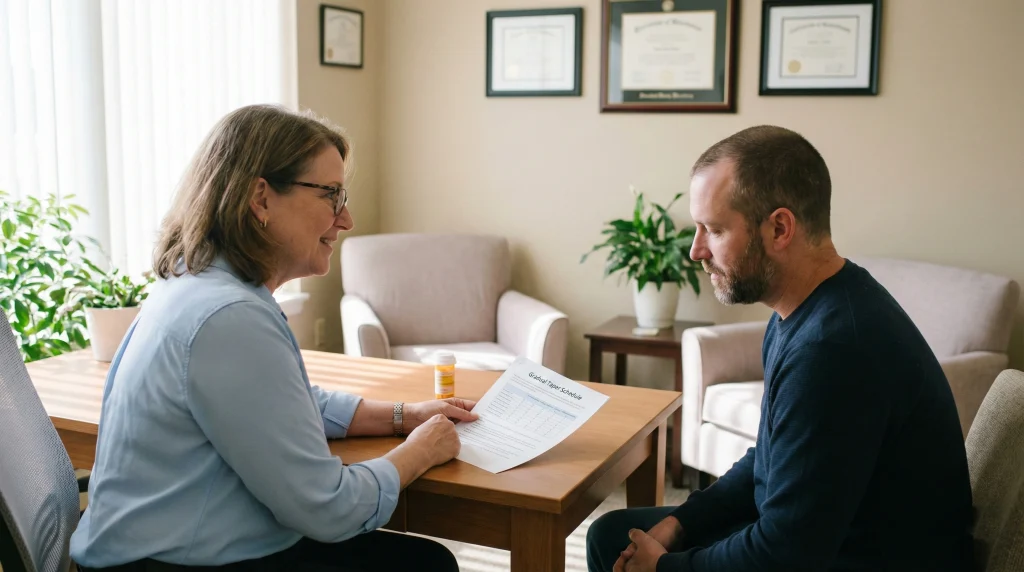
A Licensed Medical Detox, Not a Wellness Retreat
Holina Rehab is fully licensed by the Thai Ministry of Public Health. Our on-site physician and 24-hour nursing team manage the tapering process with the same clinical rigour as a hospital-based detox — but within a single, integrated residential setting, so there is no referral out and no gap in care once the taper is complete.
Medical detoxification, dual treatment for the underlying anxiety, insomnia, or trauma, and evidence-based therapy are delivered together from day one.

A Calm Environment for a Sensitive Withdrawal
Benzodiazepine withdrawal frequently brings sensory hypersensitivity — light, sound, and stimulation can feel overwhelming. Koh Phangan’s quiet, tropical setting, away from the noise of a hospital ward or city clinic, gives the nervous system space to settle during the most sensitive part of the taper.
Clients have access to private accommodation, beach and pool areas, and holistic therapies that support the body through withdrawal alongside the medical protocol.
Our Clinical Team
Treatment at Holina Rehab is led by qualified medical professionals and experienced addiction therapists. Every client is under active clinical supervision throughout their programme.


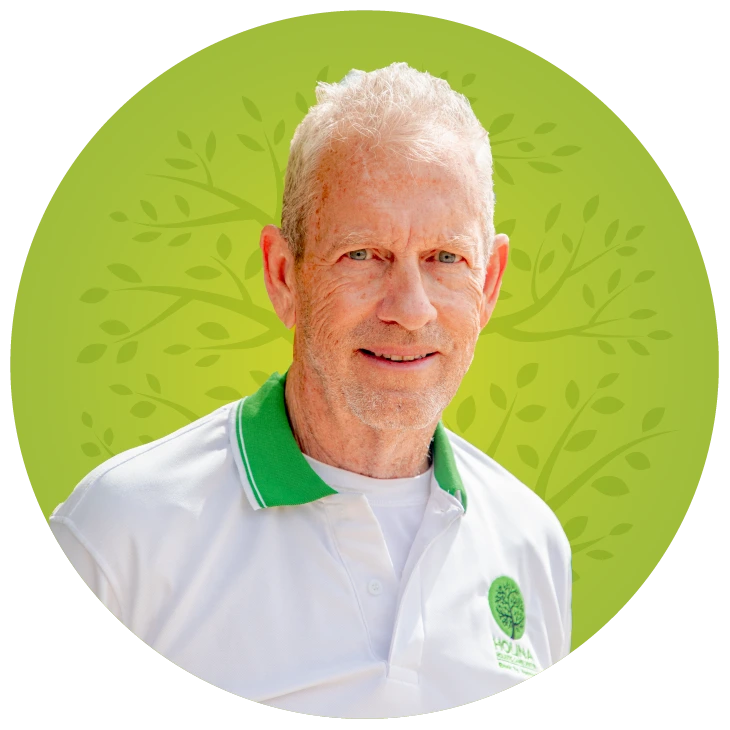
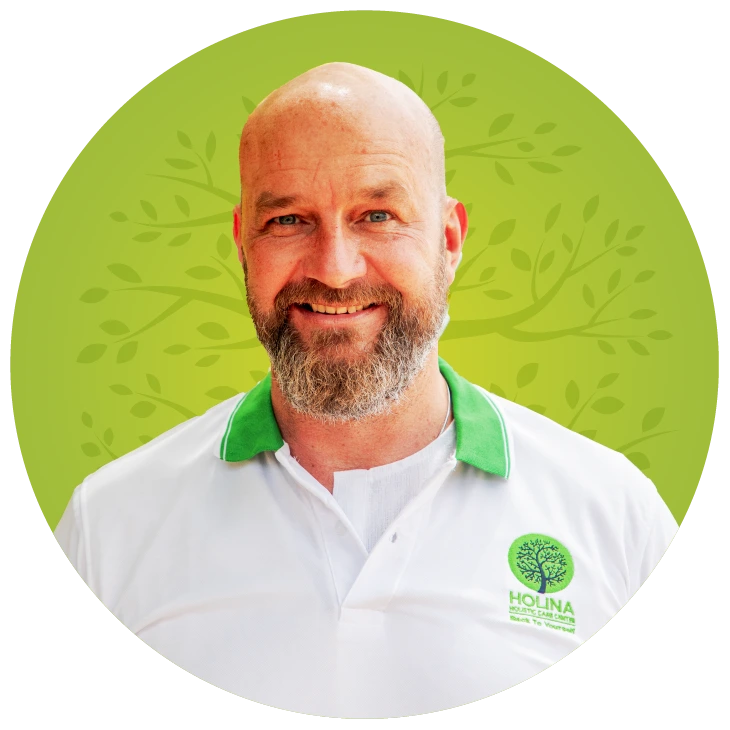
Licensed by the Thai Ministry of Public Health · Residential Rehab Licence #84-03-00294 · International Addiction Treatment Standards
“The experience was amazing, I decided to enroll my self and do the work to find my self again.”
— Leeshai Miller, Google Review, 28 Jun 2026 · ★★★★★
Benzodiazepine Detox: Frequently Asked Questions
Is it dangerous to stop taking benzodiazepines suddenly?
Yes. This is one of the few withdrawal syndromes that can be genuinely dangerous. Current clinical guidance from the American Society of Addiction Medicine and partner medical societies is clear: benzodiazepines should never be stopped abruptly in anyone physically dependent on them, because sudden cessation can trigger seizures. A slow, physician-monitored taper is the safe way to discontinue, which is why medically supervised detox is the first stage of treatment at Holina Rehab.
How long does a benzodiazepine taper take?
There is no fixed timeline. Clinical guidance generally recommends reducing the dose gradually, in small increments over several weeks, and pacing this to how the individual responds rather than following a rigid schedule. Higher doses and longer histories of use typically need a longer, more gradual taper than shorter, lower-dose use.
Why would you switch me to a different benzodiazepine before tapering?
Short-acting benzodiazepines such as alprazolam (Xanax) leave the bloodstream quickly, which can cause withdrawal symptoms to appear between doses. Cross-tapering onto a longer-acting equivalent first, such as diazepam, keeps blood levels more stable and makes the subsequent gradual dose reduction smoother and safer.
What is “protracted withdrawal” and will I get it?
For some people, low-level symptoms such as anxiety, sleep disruption, or sensory sensitivity can persist for weeks or months after the taper is complete, gradually easing over time. It is not permanent damage — it reflects the nervous system continuing to recalibrate. Our therapeutic team provides ongoing support and reassurance through this phase as part of residential care.
Is detox enough on its own to treat benzodiazepine dependency?
No. Detox safely manages the physical taper, but it does not address why the dependency developed in the first place — often underlying anxiety, insomnia, or trauma. At Holina Rehab, detox is the first stage of a fuller residential programme; once medically stable, clients move into our Dual Treatment programme to build the tools needed for lasting recovery without medication.
Can benzodiazepine detox be combined with detox from alcohol or opioids?
Yes, and it often needs to be. Many clients are dependent on more than one substance, and combinations involving benzodiazepines carry particular risk — CDC WONDER data (via NIDA) show that nearly 70% of US benzodiazepine-involved overdose deaths in 2023 also involved illicitly manufactured fentanyl, since both suppress breathing. Our medical team manages complex, multi-substance detoxes together and safely, under one clinical protocol.
Ready to Begin a Safe Detox?
Our admissions team responds the same day — seven days a week, in full confidence.
+66 (0) 82 113 0657 or contact us online ↓