

Clinically reviewed by Dr. Natalie Lindemann — Clinical Director, Holina Rehab. Last reviewed: 7 July 2026.
Why Staff Training Is Critical in Inclusive Recovery
Even the most carefully designed rehab facility will fall short if staff are not equipped to understand and support neurodivergent clients. Autism, ADHD, dyslexia, and sensory processing differences all require awareness, flexibility, and compassion from those providing care.
At Holina Rehab Thailand, we believe staff training is the backbone of a neurodivergence-affirming, trauma-informed program. By investing in education and skill development, we ensure every client feels safe, understood, and respected — an approach grounded in SAMHSA’s principles of trauma-informed care.
The Risks of Inadequate Staff Training
When staff lack awareness of neurodivergence, clients may experience:
- Misinterpretation: Autistic traits mistaken for defiance, ADHD traits labeled as laziness.
- Retraumatization: Sensory overload or rigid rules triggering past trauma.
- Disengagement: Clients dropping out because they feel misunderstood.
- Ineffective treatment: One-size-fits-all therapy failing to address unique needs.
This matters clinically: autistic people — especially those who also have ADHD — carry a substantially higher risk of substance-use problems (Butwicka et al., population cohort study), so getting their care right — including through our dual treatment programme for co-occurring conditions — is not a nicety but a safety issue.

What Neurodivergence-Affirming Staff Training Includes
1. Understanding the Neurodiversity Paradigm
- Viewing autism, ADHD, and other conditions as natural variations — not deficits.
- Recognizing strengths alongside challenges.
2. Recognizing Trauma in Neurodivergent Clients
- Identifying unspoken signs of trauma, such as masking or shutdowns.
- Avoiding retraumatization through safe, supportive interactions.
3. Adapting Therapy Approaches
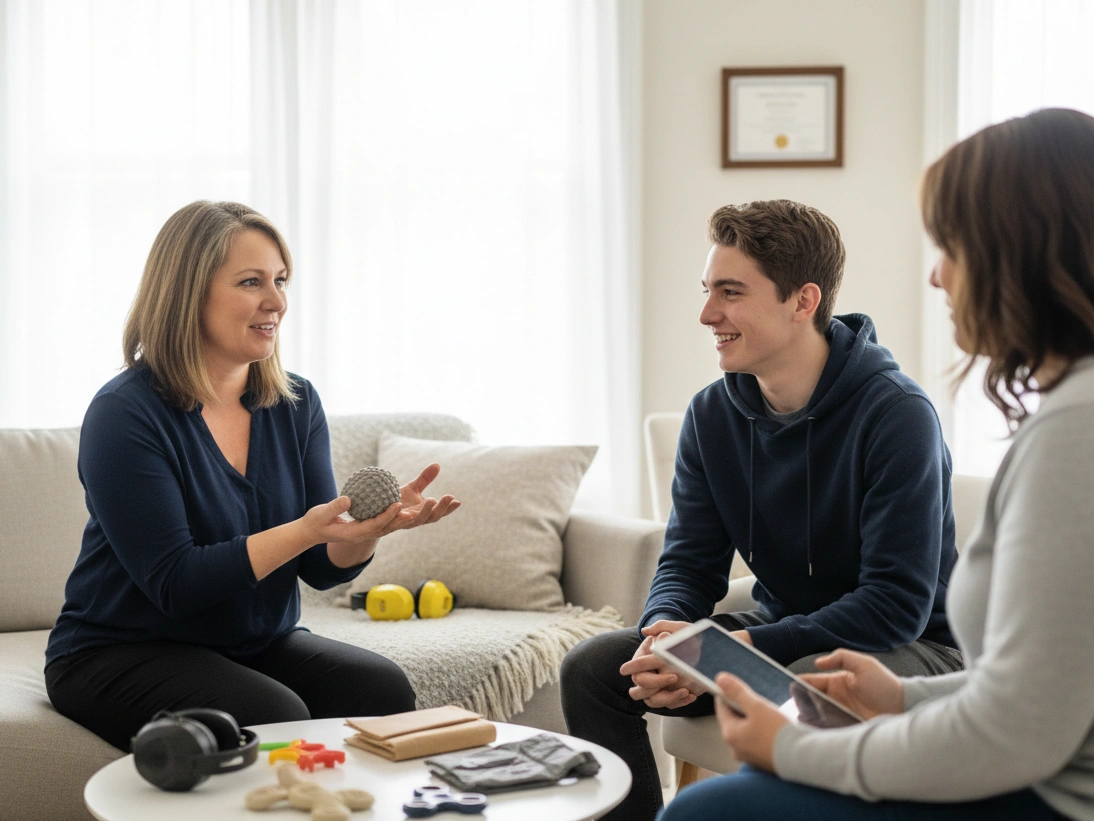
- Using visual aids, written supports, and flexible pacing.
- Offering creative outlets like art, sound, and movement for non-verbal expression.
4. Sensory Awareness and Accommodation
- Providing quiet spaces and low-light environments.
- Understanding sensory overload and co-regulation techniques. Hyper- or hypo-reactivity to sensory input is a recognised DSM-5 feature of autism, so sensory literacy is core to the role.
5. Building Trust and Empathy
- Practicing compassionate communication.
- Empowering clients through collaboration and choice.
How Holina Implements Staff Training
- Specialist workshops on autism, ADHD, and trauma-informed care.
- Ongoing education to ensure practices stay up-to-date with research.
- Role-playing and case studies to prepare staff for real-life scenarios.
- Collaboration with neurodivergent consultants to ensure lived experience informs training.
“The staff didn’t just do their jobs – they really cared, listened, and supported me through every step. What I loved most was the sense of family and community.”
The Benefits of Staff Training for Clients
- Improved engagement: Clients feel seen and understood.
- Reduced relapse risk: Trauma and sensory needs are addressed effectively.
- Higher completion rates: Flexible, supportive approaches keep clients in treatment.
- Inclusive practice: Families trust centers with properly trained staff.
“A confident, well-trained team is the single biggest safeguard against a neurodivergent client being misread or retraumatised. We treat neurodiversity and trauma awareness as core clinical competencies, not optional extras.”
— Dr. Natalie Lindemann, Clinical Director, Holina Rehab (quote drafted for this article, pending specialist approval)
FAQs About Staff Training in Rehab
Q1: Why is staff training important in rehab?
Because neurodivergent clients need adapted approaches, and untrained staff may unintentionally cause harm.
Q2: What does neurodivergence-affirming training look like?
It includes education on autism, ADHD, trauma, sensory needs, and person-centered care.
Q3: Does Holina provide this training?
Yes. Holina staff receive specialist training in neurodiversity and trauma-informed practice.
Q4: How often is staff training updated?
Regularly. Holina integrates current research and client feedback into ongoing professional development.
Q5: Does this benefit neurotypical clients too?
Yes. Compassionate, flexible care improves recovery outcomes for all clients.
Conclusion: Training Staff, Transforming Recovery
At Holina Rehab Thailand, we know that inclusive recovery starts with people, not just programs. By investing in staff training for neurodivergence and trauma-informed care, we create a rehab where every client — neurodivergent or not — can heal with safety, respect, and dignity. Learn more about our clinical team and how their expertise carries through to our secondary care treatment.
Ready to Begin?
Contact Holina Rehab today to start your healing journey:
- Phone: +66 82 113 0657
- Email: info@holinarehab.com
- Website: www.holinarehab.com
Ready to Start Your Recovery Journey?
Our clinical team is available to answer your questions and help you find the right programme for your needs.
Speak with Our Team →